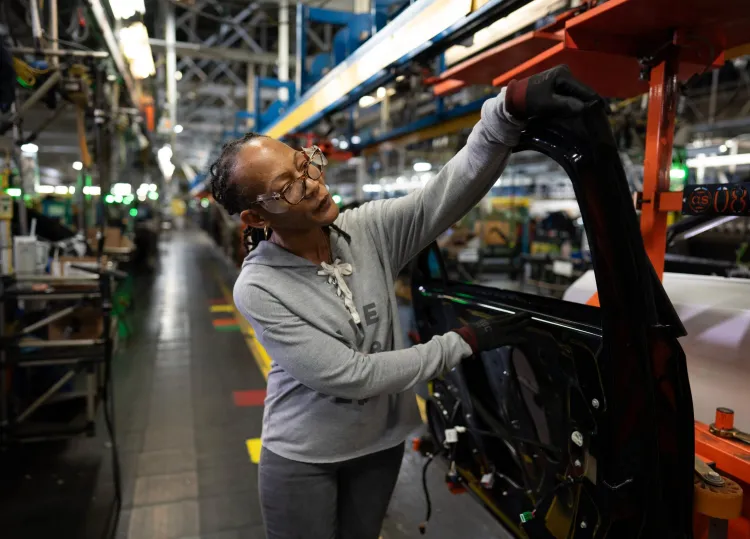
Wisconsin serves as a critical manufacturing hub in the U.S. The sector contributes almost$70 billionannually to the state’s economy, equating to 19% of its total economic output, and employs 575,000 workers across more than 92,000 manufacturing firms.
How has Wisconsin manufacturing evolved over the centuries? Who are the most prominent manufacturers operating there today? And what does the future hold?
History of Wisconsin Manufacturing
The “Badger State” owes its nickname to its long manufacturing heritage. In the 1820s and 1830s, lead mining brought thousands of poor workers to the state, and they survived its harsh winters by burrowing holes into the hillsides for shelter. Wisconsin residents started to refer to them as badgers, owing to their animal-like behavior, and the association stuck; in 1889, the University of Wisconsin adopted the badger mascot.
By the mid-1800s, Wisconsin’s rapid population growth saw a sharp uptick in agricultural and industrial activity.
During the 1840s, 5,000 farms were established every year, with wheat being the state’s number one crop for around two decades. Later, agricultural workers turned to corn, oats, and hay to feed the thousands of cows that supported Wisconsin’s fast-growing dairy industry.
Meanwhile, in Milwaukee, a growing number of small but skilled craft shops—typically run by hardworking immigrants—used the state’s abundant natural resources, including timber, water, and minerals, and provided a useful foundation for the large-scale manufacturing facilities that would follow.
In the 1850s, manufacturers located along Lake Superior and Lake Michigan started building ships, and by World War II, they were tasked with supplying cargo vessels.
The state’s iron and steel industries were way ahead of the curve, with facilities including the Milwaukee Iron Company opening in 1870, long before comparative plants opened in other manufacturing hubs, such as Pittsburgh, Cleveland, and Chicago.
The nation’s first steam-powered, self-propelled vehicle was produced in Wisconsin in 1873, while large-scale papermaking began along the lower Fox River in the early 1880s.
By the turn of the century, Wisconsin was a major producer of lumber, agricultural equipment, ships, paper, and countless other manufactured goods.
Wisconsin Manufacturing Today
Thanks to hundreds of years of innovation, investment, and dedication, Wisconsin has established itself as a center for industrial excellence.
Today, its manufacturers are leveraging cutting-edge technologies, embracing sustainable business practices, and championing new talent to keep pace with a rapidly evolving business landscape.
The state’s top-ranked colleges, tech schools, and apprenticeship programs provide manufacturers with immediate access to a new generation of skilled and tech-savvy industrial workers. Wisconsin currently has 17 engineering-related schools, and the University of Wisconsin system has more than 100 different manufacturing programs.
Collaborations between industry organizations and academic institutions are also commonplace. For example, the UW-Stout Manufacturing Outreach Center works with small and mid-size manufacturers to improve processes, develop products, train workforces, and improve financial results.
Consequently, Wisconsin is a prominent manufacturer across multiple industries, including biohealth, water technology, advanced manufacturing, forest products, energy, power, controls, and food and beverage.
The Badger State also leads the country in producing several crops, including snap beans, cranberries, canning beets, and corn, and the number of dairy cows, producing 15% of the nation’s milk.
Wisconsin’s Biggest Manufacturing Companies
Wisconsin’s skilled and sizable workforce, its focus on innovation, and a long history of manufacturing prowess have made it home to a diverse range of well-known manufacturers.
Founded in 1873 in Sheboygan, Wisconsin, Kohler Co. is a recognized global leader in kitchen and bath design. It also produces engines, power generator systems, furniture, and accessories.
Kohler Co. is currently headquartered in Kohler, Wisconsin. The small village, previously known as Riverside, was renamed to honor the manufacturer’s founder, John Michael Kohler, who built his first plant there in 1900.
Today, the family-run company employs 40,000 people and operates over 50 manufacturing locations worldwide. Its revenue was $9 billion in 2024.
Founded in 1903, Rockwell Automation provides industrial automation power, control, and information systems. Headquartered in Milwaukee, Wisconsin, the company employs 29,000 people and serves customers in 100 countries. In 2024, its revenue reached $8.26 billion.
In the modern day, the company is committed to making the world more productive and sustainable and enabling the next generation of smart manufacturing.
In 2023, it announced plans to build a first-of-its-kind hydroponic vertical farm within its Milwaukee headquarters. Once operational, this highly automated, 7,300-square-foot plant — named Clock Tower Farms — will produce 540,000 plants and 149,000 pounds of food annually.
Founded in Milwaukee, Wisconsin, in 1874, A.O. Smith is a world leader in water heating and treatment solutions, selling many residential and commercial water heaters, boilers, tanks, and treatment products.
Today, the manufacturer employs more than 12,700 people, with operations in the U.S., Canada, Mexico, China, India, the UK, and the Netherlands. In 2024, its revenue was $3.82 billion.
Oshkosh Defence is a global leader in the design, production, and sustainment of best-in-class military vehicles and mobility systems.
Founded in 1917 as the Wisconsin Duplex Auto Company, the Army first used the manufacturer’s trucks in 1939, with a larger-scale military contract issued a few years later.
Oshkosh Defence has delivered and sustained more than 190,000 combat-ready vehicles across 20 countries. Its Global Technology Center in Oshkosh, Wisconsin, is powered by over 1,000 engineers, who use cutting-edge technologies to ensure exceptional vehicle performance.
In 2024, Oshkosh’s revenue was $10.76 billion.
Founded in 1903 in Milwaukee, Wisconsin, Harley-Davidson is an iconic motorcycle manufacturer that also sells a wide range of motorcycle gear, parts, and accessories.
The company’s first factory was nothing more than a wooden shed, built in the backyard of Founder William Davidson’s family home. This historic site remains the company’s corporate headquarters to this day, with the main lobby open to visitors during business hours.
Harley-Davidson currently employs 5,900 people. It has U.S. manufacturing facilities in Wisconsin and Pennsylvania and overseas facilities in Brazil and Thailand. In 2024, its revenue was $5.19 billion.
Future of Wisconsin Manufacturing
Wisconsin manufacturing is thriving, but the sector is not without its challenges.
The latest Wisconsin Center for Manufacturing & Productivity (WCMP) report offers data-driven insights into the industry’s challenges, opportunities, and future outlook. It lists workforce shortages, economic uncertainty, and financial constraints blocking automation efforts as some of the biggest challenges facing Wisconsin manufacturing today. Still, it credits the state’s diverse and long-established manufacturing base as an instrument of stability and resilience.
“By embracing new technologies, addressing workforce challenges, and capitalizing on industry strengths, we can build a more resilient and innovative manufacturing sector,” said Buckley Brinkman, Executive Director and CEO of WCMP.
Image credit: zmotions/Shutterstock