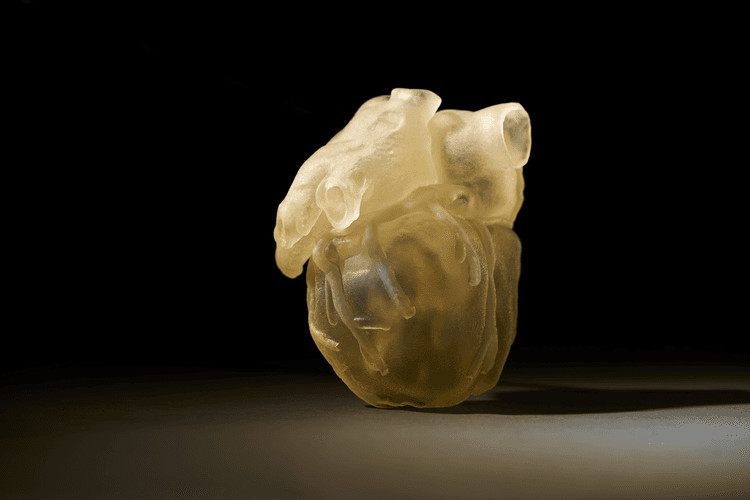
This week, Stratasys unveiled the new J750 Digital Anatomy 3D Printer, which can build anatomical models that mirror the look, feel, biomechanics, and even responsiveness of living counterparts.
According to the company, the system will improve surgical preparedness and training and possibly render old-school cadavers and animals obsolete. It could also help expedite the design, development, and marketing processes for medical devices.
The problem with cadaver models is that they don’t feel like living tissue and they demand a controlled environment. According to Stratasys, the new 3D printer can recreate the lacking tissue response.
The printer was recently tested by Buffalo, New York-based Jacobs Institute, a medical innovation center. Jacobs has been using the device to re-create vascular components for advanced testing and training.
Jacobs Institute Chief Medical Officer Dr. Adnan Siddiqui says, "3D printing has been wonderful for recreating patient-specific anatomy.” He believes the models can help recreate human physiological conditions to simulate actual clinical situations. The models can also be used to study new devices before trying them on patients.
The announcement comes with the introduction of three new materials: TissueMatrix, GelMatrix, and BoneMatrix. The three are used to create cardiac, vascular, and orthopedic applications. A blood vessel cleaning station is also being released to remove support material from inside 3D-printed blood vessels.
According to the company, the primary market includes medical device companies looking to improve time-to-market and academic medical centers.
The Digital Anatomy 3D printer builds off of the original J750 released in April 2016 to give design engineers a more user-friendly 3D printer.