
Living in the U.S., where we take sanitation for granted, it can be hard to believe that:
- Every year, 827,000 people worldwide die as a result of inadequate sanitation and poor water and hygiene.
- Improved sanitation could save the lives of 297,000 children under the age of five each year.
- One-third of people around the world do not have access to a toilet.
- One billion people worldwide are forced to openly defecate, contributing to the cycle of disease and poverty.
- In India, more than 50% of the population is affected by toilet scarcity. The lack of toilet facilities and sanitation in remote areas is partly due to a dearth of skilled plumbers to install them.
In an attempt to tackle these issues, in 2010 the UN General Assembly recognized access to safe and clean drinking water and sanitation as a human right, calling for adequate and equitable sanitation for all by 2030.
How 3D Toilets Are Helping to Flush out Sanitation Problems
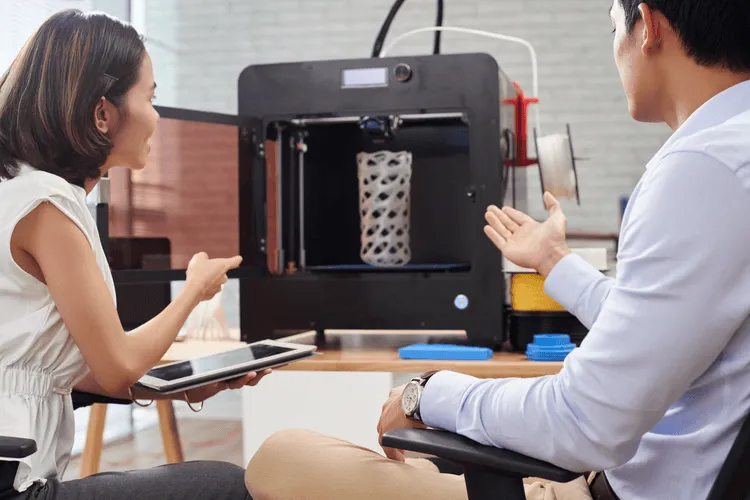
In recent years, technology advancements mean 3D printing has become quicker, cheaper, and easier, driving innovation around the world.
Importantly, the technology is increasingly being applied to 3D-printed toilets, tackling poor sanitation worldwide and helping the UN realize its goals. Some of the organizations developing the technology are outlined below.
Spark Architects
On November 19, 2019 — World Toilet Day — SPARK Architects launched their 3D-printed toilet module, designed specifically for use in India. Known as “Big Arse Toilet,” the module is made from bamboo fiber and gum resin and is cost-effective, sustainable, and easy to transport and assemble.
As well as addressing the open defecation and lack of sanitation in remote Indian communities, the module is able to convert human waste into electricity via a micro combined heat and power unit, solving another major issue in these isolated areas. The toilets and accompanying biogas domes, which are used to generate electricity, have a 10-year lifespan, and can power a community of eight dwellings.
Hamilton Labs
Much like SPARK, Singapore-based Hamilton Labs has also focused its attention on addressing the poor sanitation in India via the installation of cost-effective, 3D-printed toilets. Following an agreement made with India’s Center for Rural Information and Action (CRIA), the company’s robotic HamilBot Mark 1 will be used to print concrete toilets in Bihar. The toilets are made using recycled fly ash cement, a product of coal combustion, which is readily available in India due to their use of coal-fired power plants.
WinSun 3D
In 2015, China launched its toilet revolution with the aim of improving sanitation in the country’s most touristy locations. WinSun, an organization that specializes in 3D architecture, has been at the forefront of this revolution. The company’s restrooms are 3D-printed in their entirety, from the underground infrastructure to the decorations surrounding the toilets. The restrooms feature a truss design, using a mixture of recycled construction waste and cement.
Sanergy
Every year, 60 million people move to urban areas, and 25% of them live in slums with little or no access to basic services. Sanergy is working to address the sanitation crisis in urban areas with their Fresh Life toilets. With funding from Oxfam, they have developed a 3D toilet that has been tested in Kenya.
With two billion people still without access to a safely managed sanitation system, communities around the world will see an unprecedented improvement in health and sanitation when 3D-printed toilets are delivered on a mass scale.