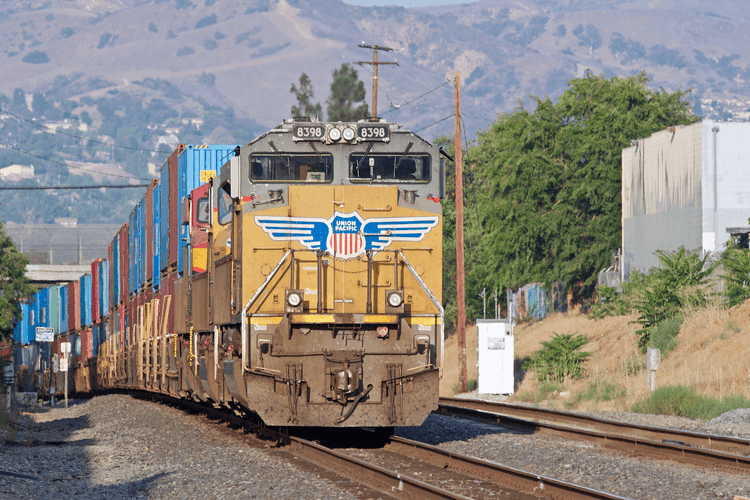
At the beginning of the year, Union Pacific Corporation (UNP) announced plans to assemble the world’s largest fleet of carrier-owned battery-electric locomotives in freight services. The North American railroad giant ordered 20 battery locomotives for trial runs in yard operations.
What Do We Know About This?
In December 2021, Union Pacific released its first comprehensive Climate Action Plan, describing its objective to reduce its environmental footprint and work towards reaching a net zero emission by 2050. The battery-electric locomotive fleet was a critical investment to reach this objective.
UNP will purchase the fleet from locomotive innovators Progress Rail and Wabtec Corporation. Union Pacific expects the first locomotive fleet to arrive in late 2023; the remaining units will be complete by late 2024.
What Should We Know About Battery-electric Locomotives?
Battery-electric locomotives are ideal alternatives to their electric and diesel counterparts. According to RailFreight.com, battery-powered locomotives use thousands of storage cells. Most battery-electric locomotives use lithium batteries, which preserve high voltages without losing speed.
Battery-electric locomotives come with alternative charging options tailored to operation needs. They also come with an integrated battery and energy management system that optimizes battery performance and, in some cases, recharges them.
How Much Will It Cost?
In addition to the 20 battery locomotives, UNP also announced an upgrade to the yard’s infrastructure, catering to the new fleet. The railway company invested more than $100 million in the combined venture, making it the largest investment in battery-electric technology by a Class I railroad.
How Will This Benefit the Industry?
Environmental Sustainability
UNP’s CEO, Lance Fritz, states that battery locomotives fundamentally change the use of fuels, reducing greenhouse gas emissions. UNP also says that the locomotives will eliminate about 4,000 tons of carbon annually. Battery-powered trains also cut down on noise pollution.
Reduce Fuel Cost
Fuel costs account for the largest component of railroad operational costs. General Electric notes that battery-electric locomotives can reduce fuel consumption by 15%. Using battery-powered locomotives will save tens of thousands of dollars used on fuel.
Rail is the most fuel-efficient option for freighting goods in the U.S. With the introduction of battery-electric locomotives, fuel emissions should reduce, providing sustainable railway freight service.