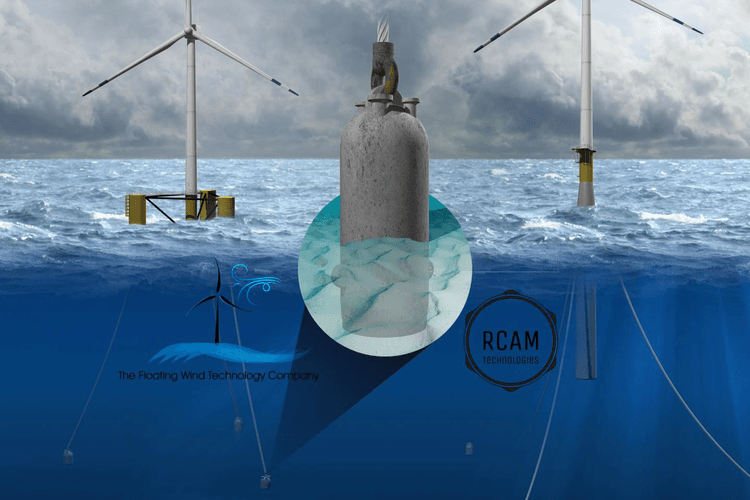
Purdue University engineers are researching how to use 3D-printed concrete to make wind turbine parts, aiming to provide material that is both less expensive than traditional parts and can be floated to their final location.
Finished steel structures are one of the current materials commonly used to produce anchors for floating wind turbines. However, they are considerably more expensive than concrete. The university also noted that normal concrete manufacturing methods need a mold that shapes concrete into its desired structure, a method with limited design options and added costs. With 3D-printed concrete, those molding expenses are eliminated.
Funded by the National Science Foundation’s INTERN program, Purdue’s researchers are collaborating with additive concrete manufacturing startup RCAM Technologies, which specializes in production for both onshore and offshore wind energy technology and is looking to build 3D-printed concrete structures that include wind turbine towers and anchors.
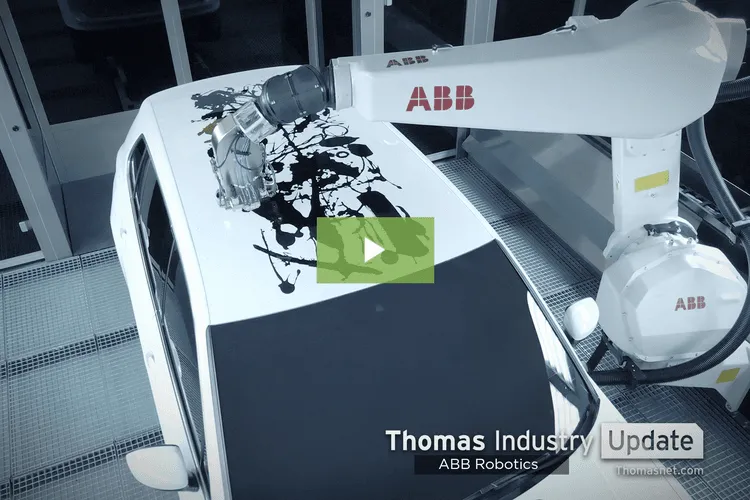
Together, the team is working on a method using a robot arm integration to a concrete pump to make wind turbine substructures and anchors. Currently, Purdue’s engineers are researching scaling up their 3D printing by creating concrete that uses a mixture of cement, sand, aggregates, and chemical admixtures for shape stability when in a wet state.
"Offshore wind power is a nearly perfect platform for testing 3D printing,” said Jeffrey Youngblood, a Purdue professor of materials engineering.
Purdue said the overall goal of the project is to understand the feasibility and structural behavior of 3D-printed concrete made on a scale larger than what its team has studied in the lab.
As of the end of 2019, the only U.S. offshore wind energy farm is located off of Block Island, Rhode Island, which opened in 2016. But a December 2019 report from CNBC said that a coalition of Eastern Seaboard states from Maine to Virginia is eyeing a large-scale project that could develop 8,000 megawatts of power by 2030 and create 36,000 full-time U.S. jobs across 74 different occupations. That would be an astronomical leap compared to the 30 MW of electricity the Block Island farm currently produces.