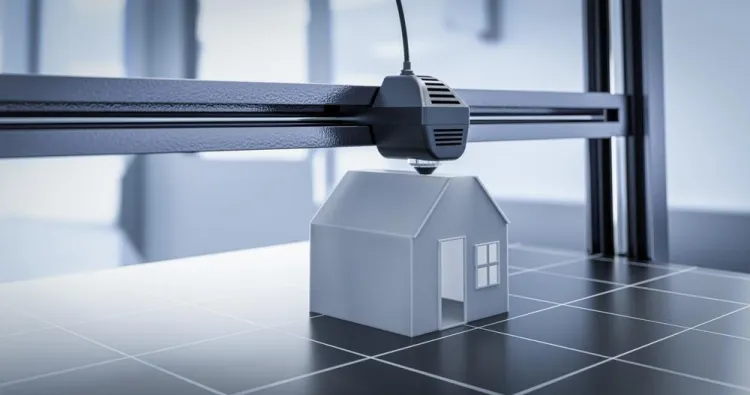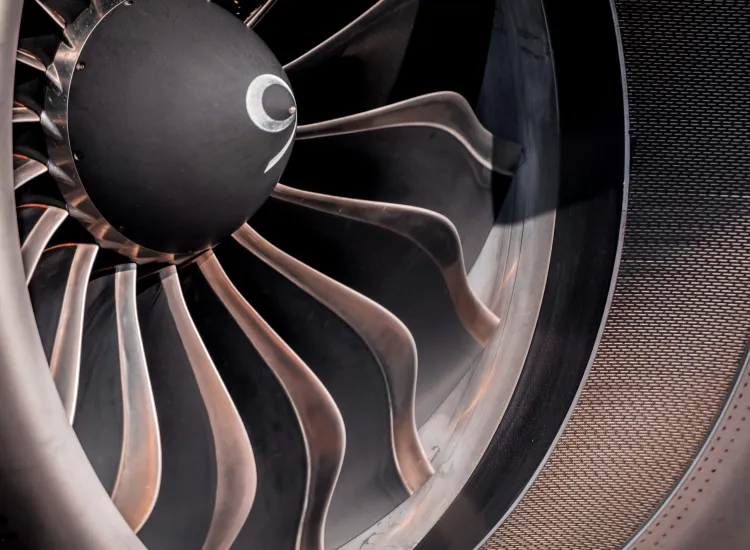

In aerospace engineering, technological innovation is the key to soaring new heights. One such innovation that has revolutionized traditional manufacturing processes within this industry is additive manufacturing, commonly known as 3D printing. This transformative technology has catalyzed a paradigm shift in aerospace, offering unprecedented advantages encompassing design, performance, and materials.
Let’s examine the pivotal role of additive manufacturing processes, materials, and designs in crafting lightweight structures that redefine the boundaries of what is possible in aerospace engineering.
As we navigate this journey, we will examine the advantages that additive manufacturing brings to the aerospace sector and scrutinize the challenges. In particular, we’ll look at challenges related to design optimization and material considerations that engineers and manufacturers grapple with as they embrace this groundbreaking technology.
5 Advantages of Additive Manufacturing in Aerospace
Additive manufacturing (AM), often called 3D printing, has ushered in a new era of possibilities within the aerospace industry, offering many advantages that have reshaped how aircraft and spacecraft are designed and produced.
1. Freedom of Design
One of the most profound advantages is the unparalleled design freedom additive manufacturing grants engineers. With AM, the constraints of traditional manufacturing methods are loosened, allowing for the creation of intricate, complex geometries that were once deemed impractical or impossible.
This newfound freedom empowers aerospace designers to craft components with optimized shapes with fewer parts without sacrificing structural integrity. This additive technology helps streamline production, improve quality, and ensure safety for passengers in the aircraft.
2. Lower Costs
Cost reduction is another compelling advantage of additive manufacturing in aerospace. Unlike subtractive manufacturing methods, which often result in significant material waste, 3D printing builds components layer by layer, utilizing only the necessary material. This efficiency translates into cost savings through reduced material consumption and less energy-intensive processes.
3. Rapid Prototyping
Additionally, AM enables rapid prototyping of aerospace parts, allowing engineers to iterate and test designs, reducing the time and expenses associated with traditional prototype fabrication. This nimbleness in the development phase can be instrumental in fine-tuning aerospace components to meet stringent performance and safety requirements.
4. Efficient Supply Chain
Furthermore, AM enhances supply chain efficiency. The capacity for on-demand production and localized manufacturing reduces the need for extensive warehousing and long lead times, enabling aerospace companies to respond more swiftly to market demands and changes in design specifications.
5. Ability to Customize
Lastly, the customization potential of AM ensures that aerospace manufacturers can tailor components to meet specific requirements, whether for different aircraft models or individual customer preferences. This further cements 3D printing’s position as a game-changer in the aerospace industry.
4 Applications of Aerospace Additive Manufacturing
Additive manufacturing has been integrated across a broad spectrum of aerospace applications. Among its most pivotal roles is producing engine components, where performance and weight savings are paramount.
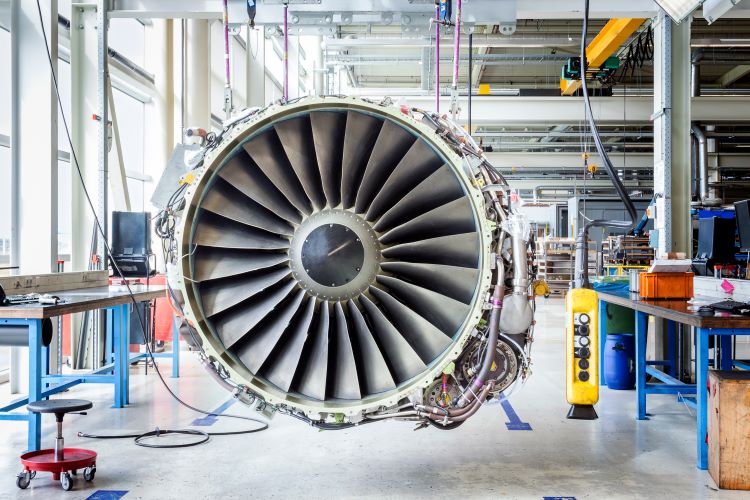
1. Improved Cooling for Engine Components
3D printing has redefined the production of critical parts like fuel nozzles and turbine blades. By utilizing complex geometries and high-strength materials, additive manufacturing has led to significant advancements in engine efficiency. The technology enables the creation of intricate internal cooling channels within components, enhancing heat dissipation and overall performance.
2. Lightweight Engine Parts
Additionally, 3D-printed engine parts are often lighter than their traditionally manufactured counterparts, contributing to reduced fuel consumption and emissions — a vital consideration in the quest for more sustainable aviation. In this way, additive manufacturing has become the driving force behind developing cutting-edge propulsion systems, propelling the aerospace industry toward greater efficiency and environmental responsibility.
3. Improved Structural Components
Beyond engine components, additive manufacturing plays a multifaceted role in aerospace. It offers unparalleled versatility in producing structural parts, tooling, and prototypes. Structural components, such as aircraft brackets and interior fittings, benefit from the ability to design and print complex shapes that optimize strength-to-weight ratios.
4. Better Tooling Through Additive Manufacturing
Tooling, which is essential for manufacturing and repair processes, can be rapidly and cost-effectively produced through 3D printing. This can include fixtures that hold components during traditional manufacturing methods or tooling to assemble or disassemble parts of a commercial jet engine.
Furthermore, in repair and maintenance, 3D printing has proven invaluable. It enables the efficient creation of replacement parts on-site, reducing downtime and costs associated with sourcing hard-to-find components. This versatility across diverse aerospace applications showcases the transformative potential of additive manufacturing, making it an indispensable tool in the arsenal of aerospace manufacturers and maintenance teams.
Materials and Processes in Additive Manufacturing for the Aerospace Industry
Materials and processes are the cornerstone of additive manufacturing in aerospace, where the quest for lightweight yet robust components is paramount.
Metal Components
In recent years, the advancements in metal additive manufacturing have been nothing short of revolutionary. Aerospace engineers have harnessed the potential of high-performance alloys, such as aerospace-grade aluminum and titanium, to craft components that exhibit exceptional strength-to-weight ratios. Titanium, in particular, has emerged as a star player thanks to its outstanding properties, including corrosion resistance, high strength, and low density.
Once challenging to process using traditional methods, these materials can now be precisely shaped and integrated into complex designs with the precision and efficiency of metal AM. As a result, critical aerospace components, from turbine blades to structural brackets, are now being produced with unparalleled performance and durability.
Composite Components
At the same time, polymer composites have carved out their own niche within additive manufacturing systems. These materials, which combine the strength of fibers like carbon or glass with the versatility of polymers, offer an exceptional combination of lightweight characteristics and structural integrity.
In aerospace, where every ounce matters, polymer composites have been instrumental in reducing the overall weight of aircraft and spacecraft, leading to enhanced fuel efficiency and payload capacities. Moreover, the ability to tailor the composition of these composites allows engineers to fine-tune material properties to meet the specific requirements of a given application.
Manufacturing Processes
The techniques employed in aerospace AM, such as powder bed fusion and direct energy deposition, play a crucial role in material processing. Powder bed fusion employs a layer-by-layer approach, using a laser or electron beam melting to melt metal or polymer powders selectively. At the same time, direct energy deposition involves the precise deposition of material through a focused energy source. Both methods allow for intricate control over the build process.
Nevertheless, post-processing steps are often essential to refine the surface finish, mechanical properties, and overall quality of AM components. These steps, which may include heat treatment, CNC machining, or surface coatings, ensure that the final part meets or exceeds the rigorous standards required in the aerospace industry.
The synergy between advanced materials and precise processes, along with meticulous post-processing, is instrumental in unlocking the full potential of additive manufacturing for aerospace applications.
3 Additive Manufacturing Aerospace Challenges
Additive manufacturing technology in the aerospace industry also faces its fair share of challenges, and it demands a forward-looking perspective.
One of the paramount concerns is the certification and qualification of 3D-printed components. Ensuring the reliability and safety of these parts is non-negotiable in aviation and aerospace, where lives are at stake. Establishing rigorous standards and procedures for certifying additive manufacturing processes and materials is imperative.
1. Industry Standards and Regulation Development
Industry and regulatory bodies must work hand in hand to develop and validate protocols that guarantee the integrity of 3D-printed components, ensuring they meet or exceed the stringent requirements that current conventional manufacturing processes are held to. These processes should encompass the end product and the entire manufacturing ecosystem, from design to post-processing, to ensure comprehensive quality assurance.
2. Quality Control
Quality control is another critical pillar that supports additive manufacturing’s future in aerospace. The ability to consistently monitor and verify part quality is essential to maintaining the highest safety and performance standards.
Aerospace companies employ cutting-edge inspection and testing methods, such as non-destructive testing and digital twin technology. These measures allow for the early detection of defects and variations in material properties, enabling rapid corrective actions.
3. Scalability
Another challenge to additive manufacturing in aerospace is the scalability and integration into existing manufacturing processes. While the technology has demonstrated its prowess in producing complex, one-off components, its true potential will be realized when it seamlessly integrates with traditional manufacturing methods for large-scale production. Achieving this integration involves optimizing the manufacturing process, adapting supply chains, and standardizing materials and design practices.
Collaboration between industry leaders, research institutions, and government agencies will be pivotal in navigating these challenges and charting a course toward a future where additive manufacturing is integral to the aerospace business landscape. Together, these efforts will pave the way for a transformative era in aerospace manufacturing, where 3D printing’s potential is fully harnessed to create safer, more efficient, and innovative aerospace systems.
Future Perspectives on Additive Manufacturing in the Aerospace Industry
Additive manufacturing is poised to reshape the aerospace industry profoundly, ushering in an era of innovation, efficiency, and unprecedented possibilities. However, the road ahead is not without its hurdles. Certification and qualification processes, stringent quality control measures, scalability challenges, and industry-wide collaboration are paramount to ensuring the safe and reliable integration of 3D printing into the manufacturing landscape of the aerospace industry.
The aerospace industry must continue to invest in research, development, and cooperation to overcome these challenges. Doing so can unlock the full potential of additive manufacturing, where complex, lightweight, and highly customized components become the norm, paving the way for a future where aerospace systems are not just advanced but also safer and more sustainable.
Get More Insights on Aerospace
- Aerospace AI: Aircraft Design, Quality Control, and Air Traffic Management
- Titanium in Aerospace: Advantages, Applications, and Manufacturing
- America’s 10 Best Schools for Aerospace Engineering in 2023
Find Thomasnet Suppliers and Services
- Additive Manufacturing – 3D Printing
- Aerospace & Aircraft Fabrication
- Aircrafts