
This article is sponsored by Infor, a global provider of business cloud software products for companies in specific industries.
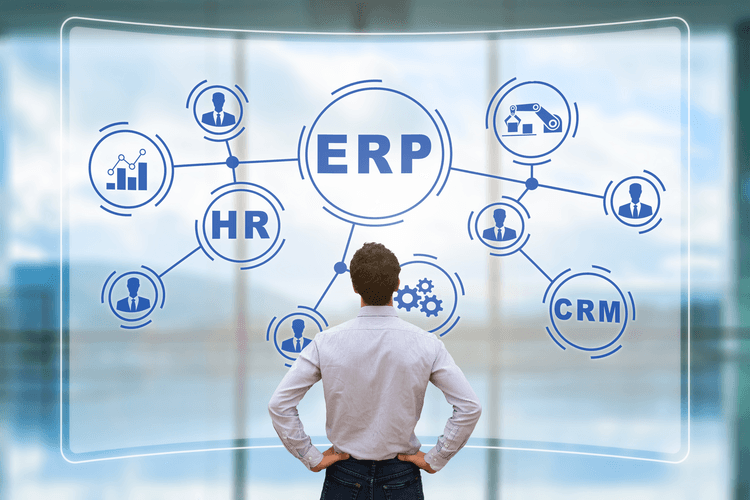
Enterprise resource planning (ERP) is intended to effectively manage activities all across organizations, from research and development to sales and marketing.
“Businesses of all sizes use ERP systems to manage day-to-day business activities, such as procurement, project management, operations, financials, and sales,” says Matthew Addley, senior director, product and industry market strategy, at Infor, a manufacturer of web-based enterprise resource planning (ERP) software.
From aerospace and defense to automotive, and from electronics to industrial machinery, discrete manufacturers use ERP software for planning, scheduling, project lifecycle management, and ensuring quality. Consumer industries from food and beverage to retail also benefit from ERP systems for traceability and service support.
ERP software decreases information silos, thereby increasing real-time visibility. This allows for better collaboration and faster, data-driven decision-making.
As your organization begins searching for the appropriate ERP system to improve performance and streamline operations at your business, keep these guidelines in mind.
Establish Requirements
Your first step should be to do some research on what functions an ERP could perform within your business model. From there, look at where an ERP’s strengths could benefit the most. Generally speaking, these systems are great with analytics, reporting, and managing multiple automated processes. Think about how those functions could benefit your organization.
You’ll also want to factor in any points based on priority, like important metrics and mobile applications while you’re shopping for a system that suits your needs.
Shop for Systems
You’ve figured out what you want to get out an ERP so it’s time to go shopping. You’ll want to look for systems that meet all the needs that you’ve laid out. As you are looking at the features of each system, ask which challenges could be solved by the use of the ERP. Examine how potential ERPs will integrate with current systems.
Ideally, you’ll want to see the systems in action. Ask your vendor for a demonstration of the ERP in an organization of similar size and structure to yours. An ERP should be easy to use across your organization.
Be sure you also address whether self-help documents or systems are in place so that users don’t have to run to IT or your provider every time a problem arises. Is there a customer service team available to answer any additional questions that may arise? How often are they available – only during business hours, or 24/7?
Here are some additional questions to consider at this point:
- Is the program adaptable enough to handle future organizational changes?
- Can it handle your tech needs?
- Is it capable of handling the operations you want it for at speeds that are functional for your organization?
- Is a ready to install system best or do you need a customized system to accommodate your needs?
Consider Cost vs. Value
Ultimately, when you’re looking at the cost of ERP systems, the most important number to consider is value. Based on the capabilities of the system, will your organization benefit monetarily? Will it save your team time, energy, and stress? Will your clients benefit from the improved production internally?
Obviously, the system will need to fit into your pre-established budget. Ask how payment for the system works. Is it a one-time fee or a monthly subscription? Are maintenance and updates included in the initial price or will it cost extra? It’s important that you assess the overall cost to determine if it’s worth the investment.
Vet Your Vendor
The ERP itself is important, but the supporting vendor has as much of an impact on the benefits of the systems as choosing the right program.
Ask about the provider’s experience. Do they have references or reviews available for you to read? Have they been involved in past projects of similar scope (i.e., same or applicable industry, company size, important functions, goals)? How long have they been offering these services and what does their track record look like?
Make sure you feel comfortable with both your selected system and its vendor before moving forward with your final ERP system selection.










![AI, AI, AI! The Tech Is Everywhere — But Why Is It Evolving So Fast? [Thoughts After Dark]](https://machinerys.net/upload/cache/202507/ai-ai-ai-the-tech-is-everywhere-but-why-is-it-evolving-so-fast-thoughts-after-dark.webp)