Since the mid-2010s, the world has been experiencing the Fourth Industrial Revolution, also known as Industry 4.0. This revolution, according to the World Economic Forum, is defined by the combination of artificial intelligence (AI), advanced robotics, additive manufacturing (3D printing), and the Internet of Things (IoT) to make manufacturing more efficient.
Machine learning is bringing a new phase to the industrial revolution of the future. What some experts are already calling “Industry 5.0” is well underway, with AI-powered tools and platforms taking on the repetitive, low-value tasks that otherwise detract from human productivity. Here’s what Industry 5.0 could look like — and how machine learning is driving this change.
Industry 1.0 to Industry 5.0
Industry 1.0 refers to the original Industrial Revolution, which took place in the late 18th century in Britain. This was the first time mass production was made possible using water and steam power, instead of manual physical labor from humans and animals. Manufacturing harnessed the power of machines to completely revolutionize society.
Then, Industry 2.0 occurred a century later. Assembly lines and the use of oil, gas, and electric power — as well as advanced communications such as the telephone — enabled the manufacturing industry to level up. To a small degree, automation entered the manufacturing process, enabling mass production to grow and advance.
Industry 3.0 refers to the advent of computers in the mid 20th century, when digitization, telecommunications, and data analysis further impacted manufacturing. Automation advanced with the digitization of factories and the use of programmable logic controllers (PLCs) that automated even more processes and started collecting basic data.
This brings us to Industry 4.0, or the Fourth Industrial Revolution. Sources vary on when Industry 4.0 officially started, but sometime between 2011 and 2016, manufacturing was hit with a new wave of technological advancement brought by data, increasing automation, and the creation of smart machines and smart factories. We’re currently still experiencing a radical shift in how the internet connects machines — a shift that some are already calling Industry 5.0.
Are We Experiencing Industry 5.0?
Some experts contend that the advent of the COVID-19 pandemic has accelerated the shift to Industry 5.0.
“The Fifth Industrial Revolution is evolving from a concentration on the digital experience to one where humans are back in charge,” wrote Dan Gamota, VP of manufacturing, technology, and innovation at Jabil. “The results will combine the skill and speed of automation with humans’ critical and creative thinking.”
The European Union predicts that Industry 5.0 will prioritize “the wellbeing of the worker” and take a societal approach to the manufacturing sector. Influenced by the need to reduce our carbon emissions, as well as the need for workers to find new ways to engage, connect and complete their work, the new industrial revolution will be human-centric.
To some extent, we’re already seeing signs of this change. Between April and August of 2021, nearly 20 million employees voluntarily resigned in what is now known as the Great Resignation. These workers cited burnout and stress as two of their top reasons for quitting. Many workers needed time off to recalibrate and re-charge, while others faced home stress like caregiving, homeschooling, or trying to manage feelings of isolation.
What Does Technology Look Like in Industry 5.0?
Despite the human-centric approach that experts are predicting for the fifth industrial revolution, this change will still be fueled by technology. Machine learning presents a solution to covering repetitive, manual tasks that can lead to worker burnout with bots and AI-powered tools that offer the potential to minimize worker stress and maximize productivity.
“The convergence of human cognition and artificial intelligence is poised to produce a slew of new use cases in the near future,” wrote Gamota. “The possibilities are plentiful when we contemplate what is possible when people and collaborative robots, virtual assistants, digital twins, and avatars work side-by-side or enjoy truly immersive experiences in ways not fully imagined before Covid-19.”
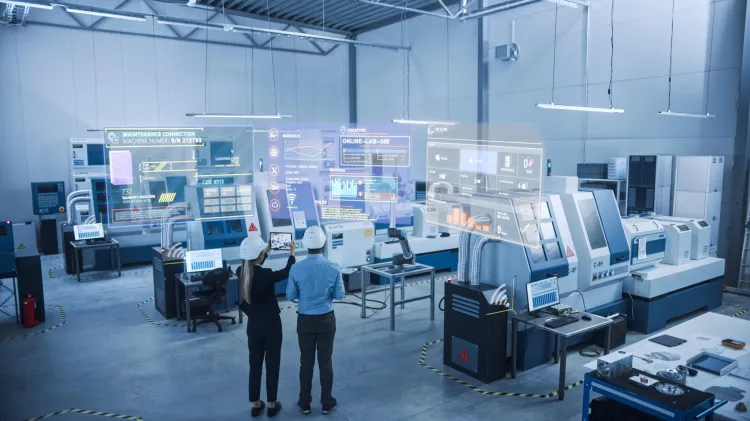
Alongside AR and VR machine learning, AI-powered bots are expected to play a major role in Industry 5.0. These technologies allow manufacturing to optimize outcomes while minimizing the need for human intervention in assembly and production.