
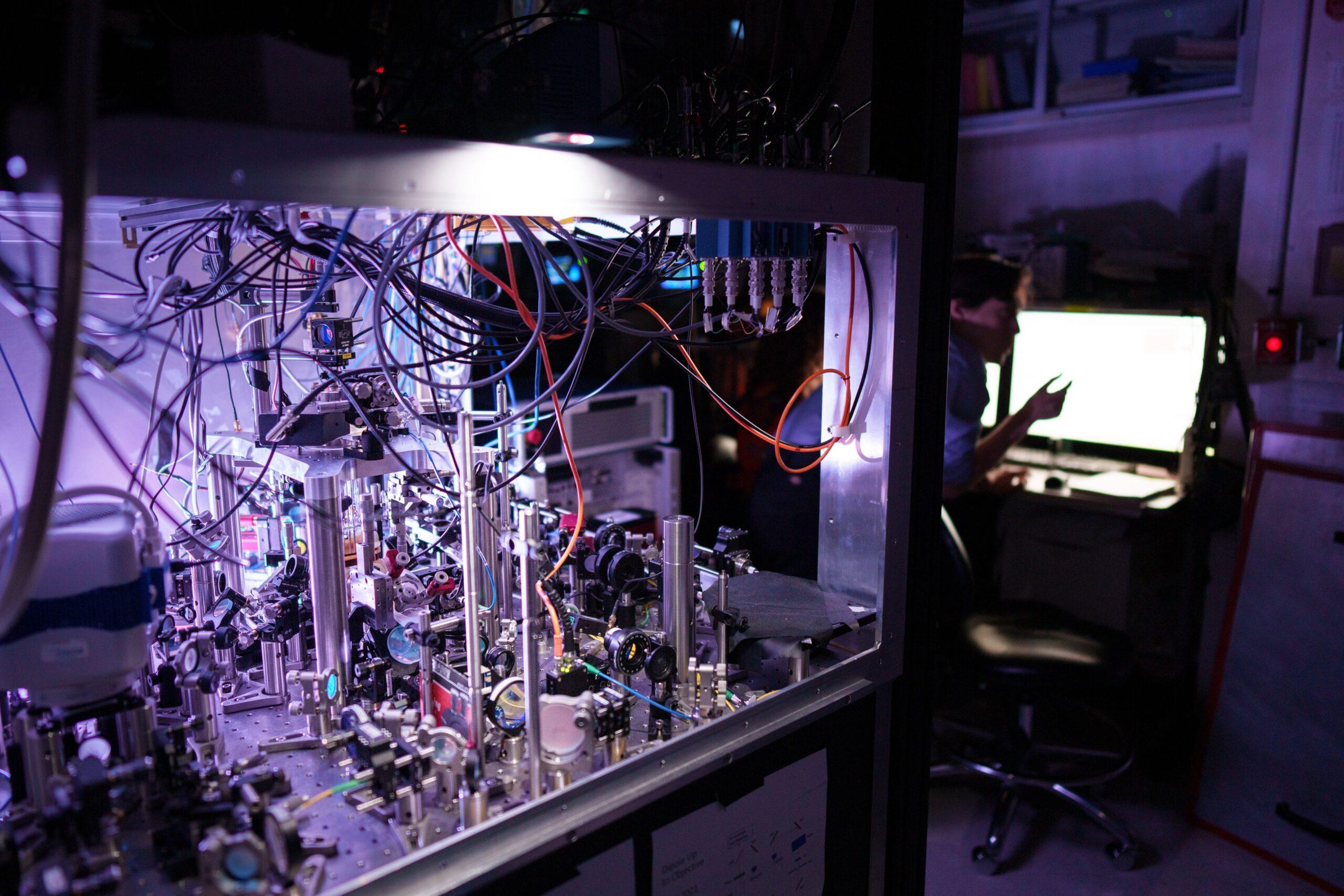
Everyone goes through losses — atoms included. ‘Atom loss’ is a pressing matter in quantum computing, and scientists at Sandia National Laboratories and the University of New Mexico (UNM) have developed a method of detecting atom loss without disrupting a qubit’s quantum state.
But before we dive into the discovery, here’s a quick overview on what atom loss is.
What is Atom Loss?
Atom loss occurs when qubits — atoms storing quantum information — unexpectedly disappear due to temperature fluctuations or malfunctions in the electromagnetic traps holding them in place.
Quantum computers require millions of qubits, and the loss of even one of them can cause a complete calculation breakdown, rendering the data useless.
A New Technique to Detect Atom Loss
It has been nearly impossible to detect atom loss in quantum computers. Scientists have tried but have ended up disturbing the fragile quantum states of the qubits, rendering the results invalid.
Sandia and UNM’s new technique sidesteps this issue with the help of a Leakage-Detection Unit (LDU). The LDU has proven to be 93.4% accurate. It detects atom loss by mapping this information onto a separate ancilla qubit, which acts like an ‘observer’ without disturbing the qubit.
What This Means for the Future of Quantum Computing
Quantum computers could revolutionize everything from artificial intelligence (AI) to drug discovery — provided they find a way to mitigate the effects of atom loss.
Thanks to their non-destructive method of detecting atom loss, the Sandia-UNM team believes their breakthrough represents a major advancement in quantum computing.
It puts to rest a major error in quantum computing, paving the way for more stable and reliable quantum systems, while also ensuring quantum computers can run longer, more complex algorithms without losing critical data.
Image Credit: Sandia National Laboratories/Craig Fritz