The electric vehicle (EV) market is seeing exponential growth, withsales exceeding$10 millionin 2022. Alongside sedans, consumers are increasingly interested in electric trucks due to their ability totow, transport, and excel in off-road conditions.
In fact, by 2030, the global electric truck market is projected to grow at a compound annual growth rate of more than26%. Of the many electric truck manufacturers, the largest include well-known industry giants.
Market Presence
According to a recent report, theelectric truck market sizewas made up of 100,500 units in 2022 and is slated to hit more than one billion units over the next seven years.
Below, we explore the companies spearheading the revolution ofbattery-drive vehiclesand heavy-duty e-trucks.
Different Electric Truck Models and Companies
1. Ford’s F-150 Lightning
Landing Kelley Blue Book’s best e-truck of 2023,Ford’s F-150 Lightning has a starting price of $49,995 and extends to $91,995 for the F-150 Lightning Platinum Extended Range.
The vehicle’srange varies from the standard 240 miles to the Extended Range’s 320 miles, but both drivetrains offer a prodigious 775 lb-ft of torque. The standard version boasts 452 horsepower and accomplishes 60 mph in 5 seconds, while the Extended Range sprints to 60 mph in 4.5 seconds with 580 horsepower.
TheF-150 Lightning Extended Range’s maximum payload is 2,235 pounds, and its towing capability is 10,000 pounds, with onboard scales that calculate range and help plan routes.
2. Rivian’s R1T
Rivian’s R1T, starting at$73,000, has a low center of gravity for roll-over resistance. It’s also fortified with aluminum alloy, ultra-high-strength steel, and carbon fiber materials for enhanced safety.
In the vehicle, independent air suspension controls six inches of vertical adjustment, and active damping analyses driver and environmental input every five milliseconds to adjust the suspension.
The R1T can ford over three feet of water, handle a 100% grade, drive for 400 miles, and achieve 0-60 mph in three seconds. Haul-wise, it has a tow rating of 11,000 pounds and a payload of 1,760 pounds.
Rivian’s R1S
Like the R1T, Rivian’s R1S model offers multi-faceted functionality, including sports car performance with 15-inch ground clearance to hurdle offroading obstacles. The difference between the two models is that the R1S is an SUV rather than an electric pickup truck. Prices start at $78,000.
3. General Motors’s 2023 GMC Hummer All Electric Pickup Truck
A few years ago, the iconic Hummer went electric and received one of the EV industry’s biggest battery packs. That’s why theGMC Hummer EV Pickupcan reach 60 mph in just 3.3 seconds. The vehicle starts at $87,000.
The vehicle includes a three-motor, 1,000-horsepower powertrain and “Watts to Freedom” launch control, but it has one really amazing feature. The car’s “CrabWalk” steerability allows the rear wheels to mimic the angle of the front wheels to navigate rugged terrain better.
The Hummer EV Edition 1 has an estimated range of329 milesand up to 11,500 lb-feet of torque. Due to its lack of agility, slow braking, and size, Car and Driver calls this EV more of a toy than a tool.
General Motor’s 2024 Chevrolet Silverado EV
The first all-electric Silverado is set to be released later this year with an estimated starting price of $52,000. Multiple models, including the line-topping RST First Addition, will be available, priced at $106,895. GM estimates the Sliverado’s range at 400 miles, with its most mighty powertrain delivering 754 horsepower and 785 lb-feet of torque, propelling the Silverado to 60 mph in 4.5 seconds.
The2024 Chevrolet Silverado EVhas available Level 2 charging, and DC charging can provide 100 miles in 10 minutes. Its Energy Assist plans routes to avoid charging shortfalls, and the base model received a fuel economy rating of 67miles per gallon-equivalent(MPGe) city and 59 MPGe highway.
General Motor’s 2024 Sierra EV Denali Edition 1
GM will have two electric pickup trucks in its lineup once itsSierra EV Denali Edition 1hits roadways. The vehicle has a starting price of $108,000.
The truck features a max trailering of 9,500 pounds and the same power and mileage as the Silverado EV. Running on the Denali Ultium battery platform, the impressive vehicleincludeshands-free driver assistance, a four-wheel steering system with CrabWalk, and an expandable bed spanning 11 feet.
4. Stellantis
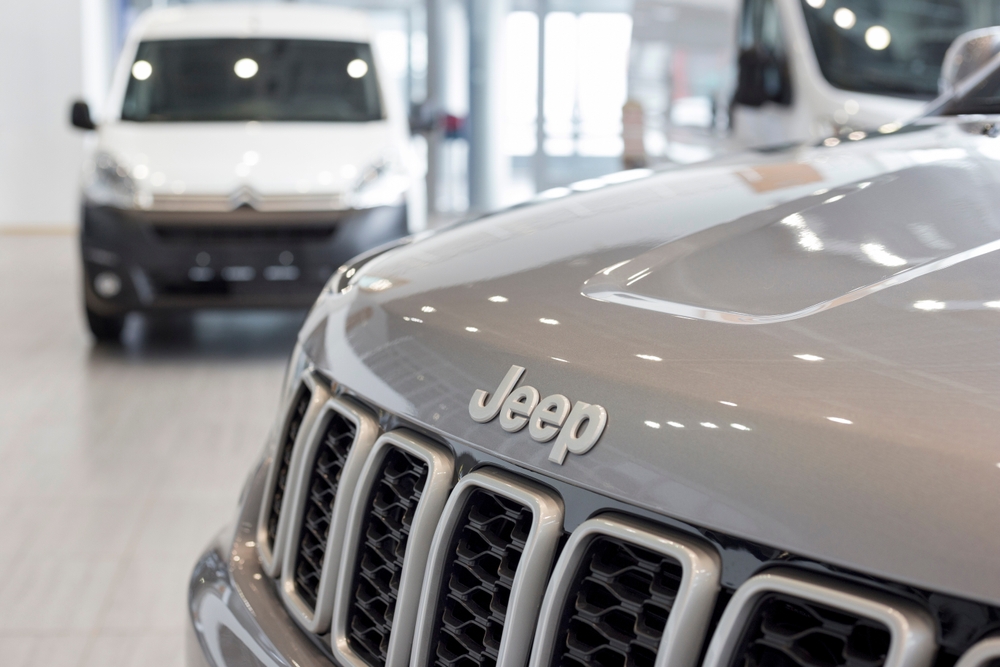
Stellantis is a multinational constellation of brands comprising Dodge, Ram, Jeep, Chrysler, Alfa-Romeo, Maserati, Peugeot, Citroën, and others.
Stellantis’ 2025 Ram 1500 REV
Set to debut in late 2024, the zero-emission, all-electric2025 Ramhas two range options: a standard 168-kilowatt-hour battery pack with a projected 350-mile range or a 229-kilowatt-hour battery pack with a 500-mile range.
The vehicle’s payload capacity is projected at 2,700 pounds, with towing capabilities of up to 14,000 pounds. Like its GM competitors, this Ram can add 100 miles of charge in just 10 minutes.
Bidirectionalcharging technologyallows the Ram to power home appliances, tailgate parties, or other outings. The vehicle can also ford 24 inches of water and reach speeds of 60 mph in just over four seconds, thanks to its 654 horsepower powertrain.
5. Tesla’s Cybertruck
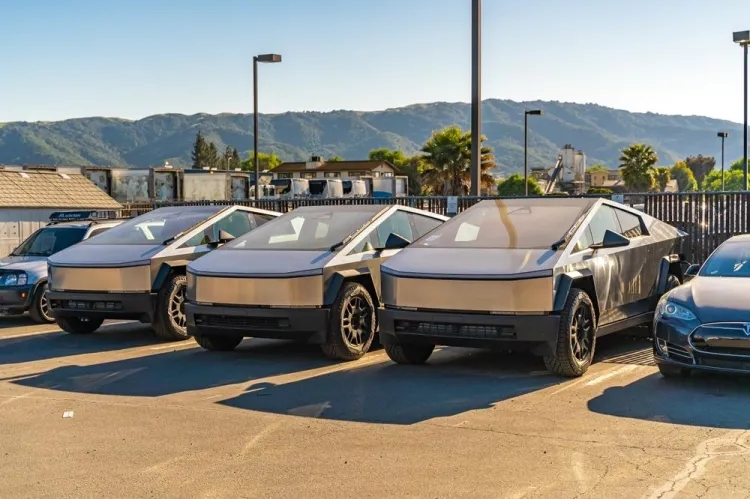
Tesla’s angular e-truck — also known as the Cybertruck — has attracted much attention. Its Tesla armor glass and cold-rolled stainless-steel structural skin give the vehicle unmatched protection.
TheCybertruckcan handle 3,500 pounds of payload capacity and has a towing capability of 14,000 pounds. It also boasts 100 cubic feet of exterior lockable storage, including beneath the bed, in the sail pillars, and in thefrunk.
The truck is estimated to have a500-mile rangeand a starting price of $60,000. The vehicle will come in three versions — powered by one, two, or three motors. The single-motor can reach 110 mph, while the tri-motor model has a top speed of 130 mph.
Tesla Semi Class 8 Electric Truck
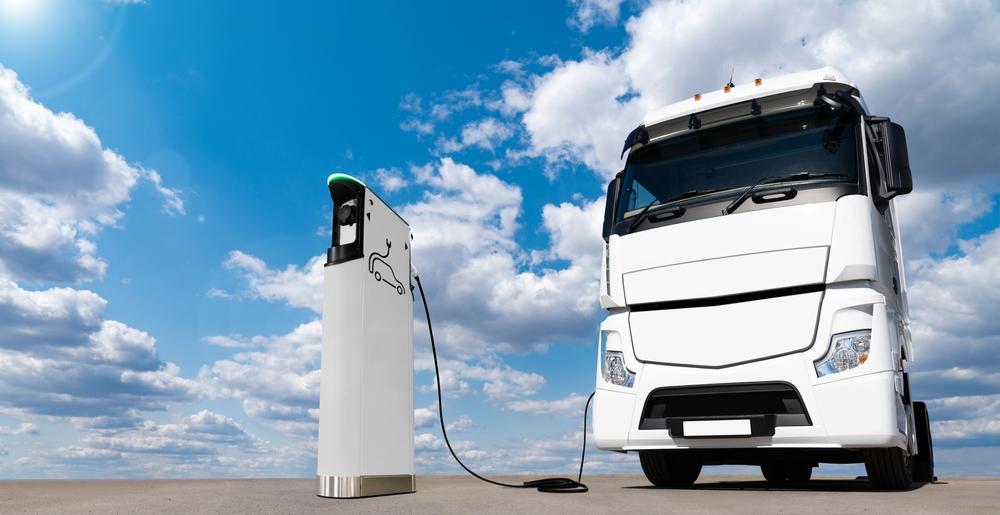
The Tesla Semi, orClass 8 all-electric truck, is still somewhat mysterious. However, Pepsi’s significant purchase agreement revealed some exciting specs for the zero-emission transportation vehicle.
After landing a$31 million grantfrom the California Air Resources Board, Pepsi received a fleet of Tesla Semis.The food, snack, and beverage corporation said its Sacramento plant would use21 electric semisfor local deliveries. In contrast, its Frito-Lay manufacturing plant in Modesto, California, would use 15 of the vehicles. PepsiCo has also installed four 750-kilowatt Tesla charging stations at both facilities.
The Tesla vehicles at the Pepsi plant range around 400 miles and can charge up to 85% in just 30 minutes. According to the company, the Tesla Semi hasthree timesthe power of an average diesel semi, 1,020 horsepower, and 1,050 lb-feet of torque.
Tesla hopes to bolster e-truck adoption by adding 750 kW chargers along 1,800 miles of highway from Texas to Tesla’s Fremont, California, factory.
What Are Electric Trucks?
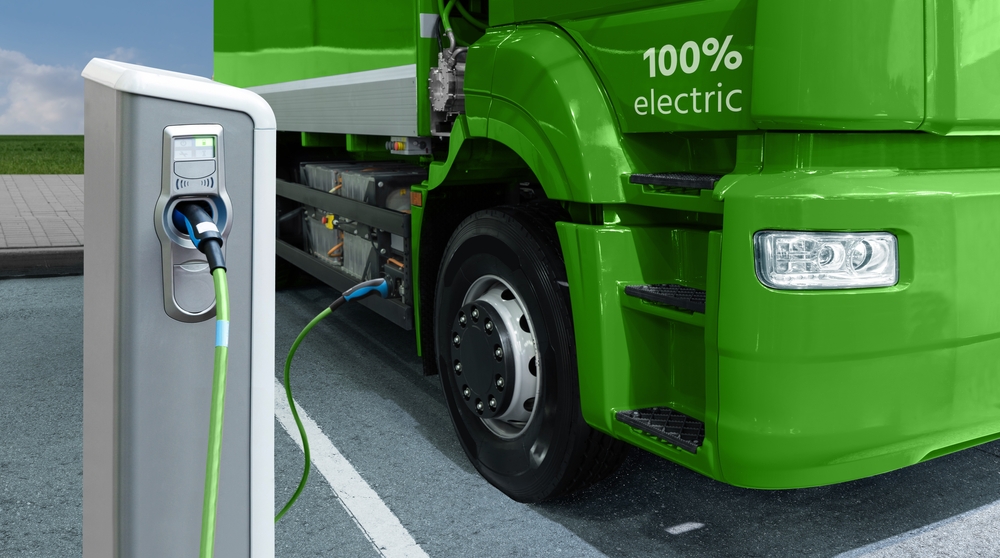
E-trucks are a type of zero-emissions transportationpowered by batteriesrather than an internal combustion engine (ICE). With commercial and personal utility, e-trucks are poised to shake up the transportation industry.
Shifting Electric Attitudes
Theglobal EV marketis set to grow at a CAGR of 19% between 2022 and 2030. While sedans and coupes have traditionally dominated the EV market, the demand for light-duty trucks is rising.
However, automotive companies aren’t just pushing pickup trucks but medium-duty vehicles and heavy-duty trucks at increasing rates. In fact, the market for electrified trucks of all types and ranges couldrev up from$700 million to $11 billion between 2022 and 2030, growing at a CAGR of 31%.
By discarding gas-powered engines, EVs offer equal range while reducing greenhouse gas emissions. While EVs aren’t totally emission-free when considering their battery lifecycle, the vehicles are more sustainable than ICE vehicles.
Electric Truck Company Investments and Partnerships
Strategic partnerships and collaborations can boost investments and raise funds for EV automakers. Below are a few examples of EV investments and partnerships.
1. GM and LG Energy Solution
Ultium Cells, a joint venture between GM and LG Energy Solution, assembles Ultium EV batteries.
By 2026, GM says that all Ultium-equipped cars will includevehicle-to-home (V2H)bidirectional charging technology. This affords the ability to power a home in disastrous situations.
By 2024, the Chevrolet Silverado EV RST, the Sierra Denali EV Edition 1, and Cadillac’s introductory EVs will have bidirectional charging capabilities.
2. Ford and VW
Three years ago, Ford and VWpartneredto produce several vehicles, including Ford’s VW-based electric crossover for Europe. Now, the two automotive giants are working on several other cars, including VW’s Amarok pickup,based onFord’s Ranger.
The two automotive companies also joined forces to back Argo AI in developing autonomous vehicle advancements. Now that Argo has shuttered, Ford and VW have absorbed its operations.
3. Rivian and Amazon
In 2019, Amazon agreed to purchase100,000electric delivery vans from Rivian. So far, Amazon has only ordered 10,000 trucks, which has led to renegotiations. If a new deal isn’t soon met, the e-truck manufacturer may begin selling its EVs to other organizations.
4. Stellantis and Everyone
Stellantis has its eyes on the prize, and it’s a big undertaking. Currently, the automotive giant is working with more than 1,000 partners to realize160 projects. Below are a few examples of the company’s partnerships and goals.
Stellantis aims to improve car positioning, cybersecurity, and connectivity to create a smarter and more adaptable automobile powered by machine learning.
Challenges and Opportunities for E-Trucks
Electrifyingvehicle fleetsbenefits various industries. However, multiple challenges currently hinder the heavy-duty e-truck industry, including battery technology limitations, cost considerations, supply chain fluctuations, and critical material availability.
E-truck prices are also higher than their gas-powered counterparts, and charging infrastructure is often limited. The energy grid must also double its capacity to support electrification goals by 2050.
Taking Charge of an Increasingly Electric Economy
Some states, like California, are taking charge of a totally electric future. In 2022, Governor Gavin Newsom introduceda historic$10 billion zero-emission vehicle (ZEV) package to reduce emissions, decrease fossil fuel reliance, increase EV adoption, and build a bevy of charging stations. In turn, California currently represents around half of the U.S. ZEV market.
California’s ZEV package includes funding for:
As a result of various green policies, California is four years ahead of its scheduled goal of reducing emissions, and the state has created 485,000 clean energy jobs in the process. It’s no surprise, then, thatother states are following suitand adopting similar EV allocations.
Environmental Impact and Sustainability
Broader e-truck acceptance presents many environmental benefits, such as:
According to the EPA, the total greenhouse gas emissions produced across an EV’s lifecycle aretwo times lowerthan that of a gas-powered vehicle in grams per mile driven. Concerning weight, a gas-powered car accounts for nearly three times as many emissions as an all-electric vehicle.
In turn, the U.S. has set a goal for EVs to make up half of all car sales by 2030.
Converting Gas-Powered Vehicles to Electric Vehicles
Medium and heavy-duty vehicles are notorious gas guzzlers, but fleets of e-trucks can perform green deliveries and haul goods and equipment without requiring gas. To satisfy these demands, electric pickups typically have a better battery range than other EVs and can easily exceed 400 miles.
Towing capacities are not capricious either, withelectric version trucks capable of towing over 10,000 pounds for long trips. In some vehicles, such as the Atlis XT, the towing capacity is a massive 35,000 pounds.
The best way to spursustainable transportis to create something consumers need and want.
Future Trends in the Heavy-Duty Electric Trucks Industry
Electrification trends, like increased demand and advanced technologies, are making e-trucks gradually more accessible and affordable for consumers.
Whether one desires additional legroom, offroading capabilities, extra space, or hauling power,electrified pickupsbenefit from numerous advancements like more mileage, faster charging, autonomous transport, and more infrastructure.
Availability isn’t an issue either, as more and more companies are producing all-electric pickup trucks, includingsmaller companies and startupslike the Alpha Motor Corporation, Atlis, Canoo, and Lordstown Motors.
In the future, electric models will be able to haul even heavier loads, travel more than 500 miles on a single charge, and match supercar speeds. Companies are already boosting their production methods, with Rivian’s Illinois plant planning to roll out more than150,000R2 trucks annually.
E-Truck Price Projections
Based on market projections from the EIA, by 2050, battery prices will have declined by between 51% and 56% compared to 2022 prices. Electric motors, wiring, and other costs will also drop, with the retail price equivalent expected to settle somewhere between $105 and $118 per kilowatt-hour (kWh).
EVs with a 150-mile range may reach price parity with comparable gas automobiles by 2029, and those with 151 to 250-mile ranges may achieve equality by 2038. However, light-duty EVs such as trucks are not expected to reach price parity with their gasoline counterparts, though they are expected to fall within 5% of that price by 2040.
Additionally, legally enforceable state minimum EV requirements, such as California’sAdvanced Clean Cars, are set to boost EV sales. Fifteen other states have adopted these initiatives through Section 177 of the Clean Air Act.