
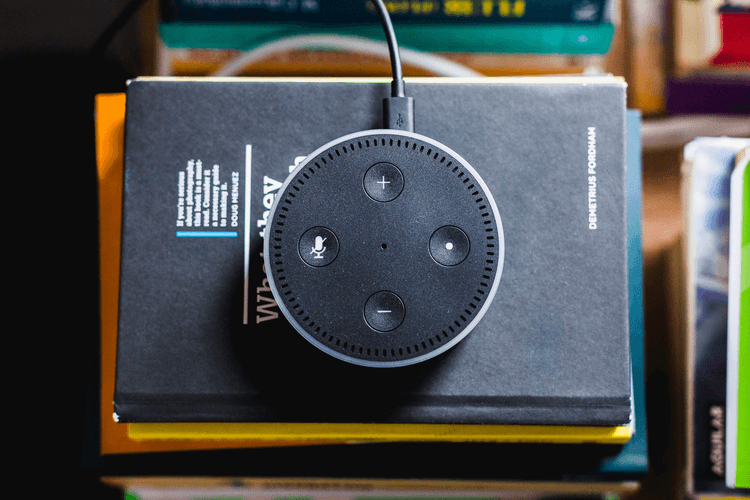
More than 60 million Americans (24% of the population) own a smart speaker such as Alexa, HomePod, or Google Home. As the technology continues to expand across multiple industries, it’s becoming a prominent tool in healthcare applications.
The global health virtual assistant market will hit a predicted $3.5 billion by 2025. Already, 19.1 million people are using voice assistants to help with their healthcare and more than 50% of people have expressed an interest in doing so.
How Will Voice Technology Change Healthcare?
Both patients and medical practitioners can benefit significantly from voice technology. For a start, any opportunity to streamline processes and drive efficiency within an industry that spends 6.5 trillion globally per year is welcome.
If patients can leverage their voice assistants to receive 24-hour care, medical advice, medication reminders, and remote diagnoses, they’ll save money and time on in-person appointments and hospital visits. This could also reduce the costs and rate of hospital readmittances associated with poor medication adherence.
Medical staff spend a great deal of time inputting data, writing up patient notes, and updating records. Specially designed voice assistants that understand medical jargon and technical terms could lessen the time spent on administrative tasks to free up time for patient care.
Looking ahead, voice assistants could even be trained to diagnose patients based entirely on their speech patterns, facilitating the provision of preventative medicine.
Here are just a few of the numerous possibilities for voice technology in healthcare applications.
Diabetes Management
Sugarpod by Wellpepper is an interactive type 2 diabetes management solution that consists of a foot scanner, a mobile interface, and Alexa-integrated voice functionality.
The solution provides patients with personalized service to help them manage medications, create care plans, and track their progress. The foot scanner, for example, is capable of identifying the early signs of diabetic foot ulcers – something which costs the health system $9 billion a year and can even lead to death.
Medication Reminders
While two-thirds of Americans take some form of prescription medication, around half of those people do not take their medications as instructed. Medication non-adherence results in 125,000 preventable deaths each year and costs the healthcare industry around $300 billion.
Orbita, a voice platform startup, has designed an Alexa-compatible skill that reminds elderly patients when it’s time to take their medicine.
Pharmacy Refills and Medication Management
Amazon recently partnered with Giant Eagle Pharmacy (a regional pharmacy chain based in the Midwest and East Coast) to launch a medication management service. Voice assistant, Alexa, will set a patient’s medication reminders and order refills in an effort to reduce medication non-adherence, particularly among millennials.
While big players like Walmart are unlikely to join forces with Amazon, it’s predicted that smaller, regional pharmacies will follow in the footsteps of Giant Eagle Pharmacy. It’s also highly likely that Amazon will integrate these same services with PillPack, the internet pharmacy it acquired in 2018.
Health Diagnostics and First Aid Advice
Dr. AI by HealthTap is another Alexa skill that leverages AI, deep learning and emotional intelligence to diagnose users. This virtual doctor has been trained by more than 107,000 U.S. doctors across 141 specialties to be able to highlight possible medical conditions based on a patient’s symptoms and circumstances.
Once you’ve been effectively diagnosed, a medical center is available to help with treatment. Mayo Clinic is a non-profit academic medical center that has built an Alexa skill for providing first-aid advice for a host of common medical problems such as treating a burn, managing a baby’s fever, or treating a cut.
While the advice offered does not replace real-life medical assistance in emergencies, it’s a useful tool for managing minor ailments.
Coronavirus Voice Detection
Voice assistant developer Voca.ai is working to develop voice technology in partnership with Carnegie Mellon University that could identify people who are infected with coronavirus simply by the sound of their voice.
The start-up is currently in the process of collecting data in the form of voice recordings in the hope of identifying patterns in the speech of those infected.
There’s Still Plenty of Work to Be Done
Last year, Luminary Labs CEO Sara Holoubek commented that “2019 will be the year of bad voice tech experiences.” While the potential for voice technology to transform the healthcare industry is promising and exciting, widespread adoption is still far off and the technology is some way from maturity.
Questions have also been raised regarding the lack of regulation surrounding the technology — will the advice be trustworthy and objective, or is a pharmaceutical company trying to sell you a drug?
In 2019, the biggest use (72.9%) of voice assistants for healthcare purposes was people querying their illness symptoms. While there’s no doubt users value this kind of service, virtual diagnosis technology risks becoming a hypochondriac’s nightmare, with one popular health portal being famous for nearly always telling users that they may have cancer, no matter how minor the ailment.
In time, voice technology will likely address major challenges within the healthcare industry on a larger scale, but there’s still work to be done.