Long gone are the days where ski and snowboard enthusiasts had to wait all year for deep winter and pray to the gods for heavy snow in order to partake in their favorite winter sports.
Nowadays, snow at winter resorts is pretty much guaranteed and these resorts can stay open much longer than the standard winter months thanks to the ability to create fake snow.
While this obviously thrills winter sports lovers and resort owners alike, environmental activists have ethical concerns.
How Is Fake Snow Made?
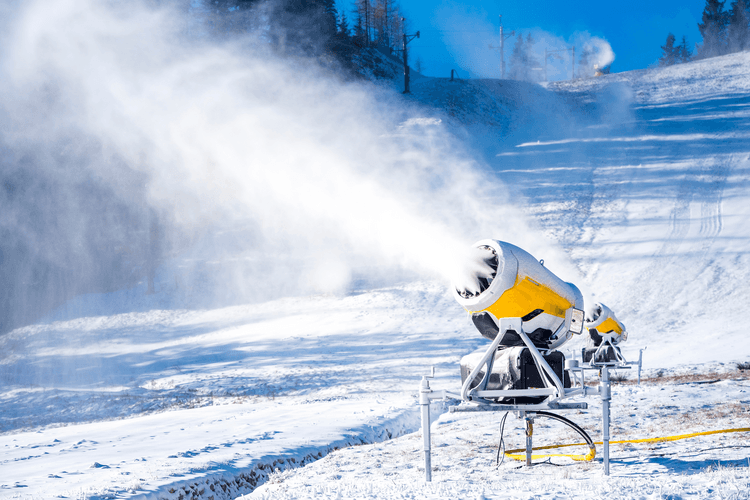
Artificial or technical snow is most commonly made using snow propeller cannons supplied with water and electricity to shoot snow out all over the air and ground. These machines mimic the natural way snow forms; simply, small droplets of water freeze thereby producing snow crystals.
Other machines for producing fake snow are snow lances, which blow out atomized water along with compressed air that creates snow dust, and artificial clouds, a new and highly advanced technology that includes a cloud chamber that can mix water droplets and ice grains which eventually metamorphosize into snow.
Is Fake Snow Ethical?
The sheer amount of electricity and water it takes to make fake snow is, understandably, concerning 一 even more so in this era of climate change and drought. Take just one resort as an example: Deer Valley in Utah. To coat 725 acres of land with artificial snow with a system which includes 250 snow guns, 40 miles of pipe, and 1,150 hydrants that operates 24 hours a day from October to January (or whenever the weather is cold enough), they use around 240 million gallons of water — per season.
However, many resorts, like Alta in Utah, are taking steps towards using renewable energy with solar panels, micro-hydro systems, and natural gas power plants. Some resorts even have their own reservoirs to collect spring runoff to recycle it for following winters, although, conversely, a 2018 three-year study published by the WSL Institute for Snow and Avalanche Research showed that evaporation can cause up to 40% sublimation of water, so this might not entirely stand true. Water will still be consumed. A lot of it.
On the plus side, the guarantee of snow 一 albeit fake 一 gets people out and about and active, providing cultural and health benefits. These are important aspects especially in the times we live in. In addition, the winter sport industry adds $20 billion into the U.S. economy annually, which is not something to be balked at.