![I Taste-tested My Way Through Manhattan’s First Whiskey Distillery to Open Since Prohibition [A Byte Out of the Big Apple]](/upload/20250615/4wzwcodfved.png)
A Byte Out of the Big Apple

New York City attracts captains of industry, innovators, and creatives. It’s home to iconic skyscrapers and intricate subway tunnels, the neon lights of Times Square and delicate flora of Central Park, brick-and-mortar shops and dotcoms — and they’re all driven by the manufacturing industry.
Join Thomas Insights Senior Editor Stephanie Nikolopoulos as she takes a "byte” out of the history and future of the Big Apple in this monthly column.
“We’re very proudly the first legal whiskey distillery since Prohibition in Manhattan,” says Dan McGinley-Aviles, a tour guide at Great Jones Distilling Co.
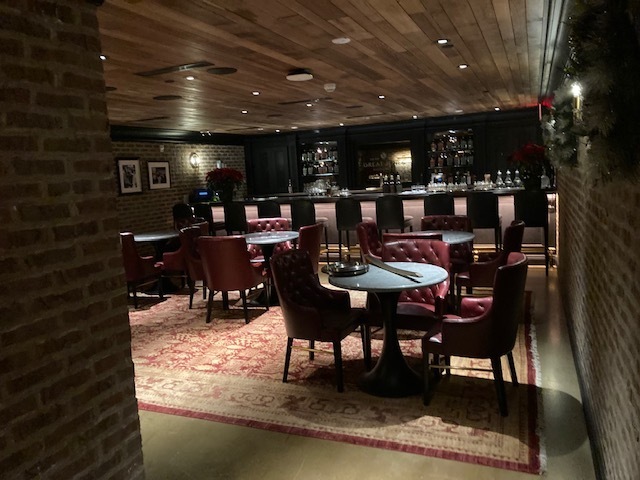
Just opened in the summer of 2021, Great Jones Distilling Co. was founded by Juan Domingo Beckmann, an 11th-generation spirits maker and CEO of Jose Cuervo. It pays homage to the bygone Prohibition era with the luxe Art Deco design of its restaurant and bars.
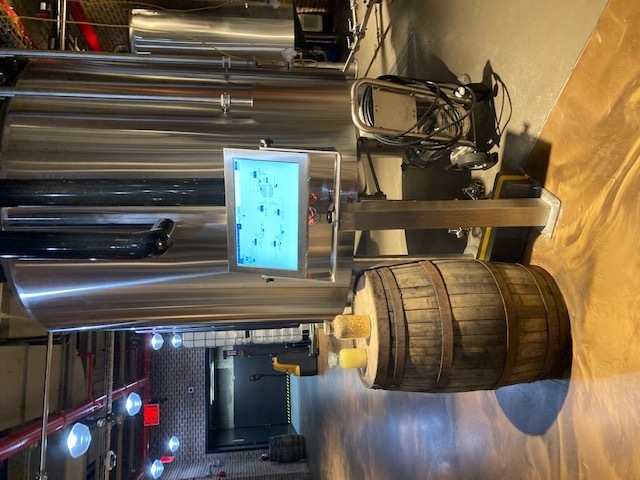
But I’m not here for fancy dining. I could get that anywhere. I am in search of the real whiskey experience. I’m here, flanked by fermentation tanks and copper stills, cautioned to stay within the margins of the taped path. I’m here to tour the on-premises manufacturing site.
When Manhattan Thrived on a Whiskey Economy
“A little over a hundred years ago there was a lot of distilling going on here,” says McGinley-Aviles. “Through a historical lens, we believe it to be somewhere in the thousands.“
He explains, though, that to avoid paying high taxes, a lot of businesses operated off the books. (New Yorkers weren’t the only circumventing taxes. History buffs may recall that our neighbors in Pennsylvania had taken to tarring and feathering tax collectors during the Whiskey Rebellion.)
It’s hard to imagine there being so many distilleries in New York state except that we have to remember that back then the whiskey business was more local, less commercial.
In fact, after the tour when I look into the matter on my own, I find that whiskey became popular in the U.S. because it was local. William Rorabaugh, the author of The Alcoholic Republic: An American Tradition, explained that domestic whiskey grew to prominence during the Revolution when the British cut off access to molasses and rum from the West Indies.
Prohibition Put an End to That
“Something happened in 1920 that wiped every one of those distilleries off the map…” McGinley-Aviles leads. On cue, our young, diverse tour group responds with, “Prohibition.” The 18th Amendment to the U.S. Constitution prohibited the production, transportation, importation, and sale of alcohol.
“There were lots of legal loopholes that companies followed to stay in business,” says McGinley-Aviles. “Unfortunately, none of the New York distilleries legally stayed in business through Prohibition. I say legally because we don’t necessarily think they shut their doors either.”
“In fact, when we were building this very building, we found what we believe to be an old rum runners tunnel. It goes from just under Great Jones Alley behind the building into the subway tunnel under Broadway.”
My curiosity sparked, I later look into this further and find that, according to the National Archives, there were 30,000 to 100,000 speakeasies in New York City alone by 1925. The ban on alcohol lifted, these days there are about 2,000 bars and clubs in New York City, amounting to a $2 billion economic output. Two speakeasies that operated in New York City during Prohibition are still around. In a cheeky nod to the past, Great Jones Distilling Co. has a speakeasy below street level, where the rum runners tunnel is.
While a number of distilleries have popped up in the boroughs, for just over a century, Manhattan has been without its own whiskey distillery. Great Jones Distilling Co. is changing all that.
“Even though Prohibition was only 13 years, the craft and tradition of distilling never returned here to Manhattan,” says McGinley-Aviles. “Fast forward to 2021, Great Jones Distilling Co. opened with the idea of making a whiskey that would not only represent New York State but New York City as well.”
100% New York-sourced Ingredients in Craft Whiskeys
“We have what we call a Manhattan attitude,” boasts McGinley-Aviles. “We take everything to the limits.” Great Jones Distilling Co. isn’t just a distillery situated in New York — 100% of the ingredients that go into its whiskeys come from New York.
Earlier on the tour, McGinley-Aviles had set the scene: “Distilling was a farm activity, and we were a farm economy.”
“No one’s growing grain in Central Park. There’s no orchards left on Orchard Street,” he notes now. “But, we go about as local as we can just a little over an hour away to what’s called the Black Dirt region of Orange County. It’s on the border with New Jersey. It’s pretty much directly west of here.”
He says it’s “some of the richest soil in the world.”
“It imparts something extra on everything grown there,” he says. “A beautiful spice to the corn. A lovely complexity to the rye. This great creaminess to the wheat. And this amazing nuttiness that you don’t usually get in North American barley.”
Making the Whiskey
Great Jones Distilling Co. brings these fresh farm ingredients to the heart of New York City, carrying them up from the busy sidewalks in totes on an elevator that we’ll later get to ride. They’ll then use buckets to pour the grain into the conveyer that does the mashing.
The secret to their whiskey could be in the tap water. According to McGinley-Aviles, New York City’s tap water, “Makes great pizza. Makes great bagels. Makes great whiskey.”
That’s apparently because the whiskey relies on yeast. According to Dan, “Yeast loves the hard water we have here in New York. High in calcium. High in magnesium. Really allows that yeast to thrive.”
The whiskey makers bring the corn, the rye, and the wheat just below a boil to make what will resemble a porridge, then they cool it down to 150 ℉. They’ve held back the malted barley because the enzymes, whose job it is to turn the starches into sugars, are quite temperature-sensitive. Once it’s cooled down to 90 ℉ they add the distiller’s yeast, which “allows the Black Dirt grain to stand out. It adds a little creaminess and a little bit of a fruitiness.”
Then it’s on to one of the six fermentation tanks. There, the yeast gobbles up the sugar, converting it into alcohol. In this process, “They’re basically belching out CO2 the entire time,” says McGinley-Aviles. To keep the CO2 from suffocating the yeast, there are pipes on the tops of the tanks. After about three days, you wind up with a product called distiller’s beer that’s potable but not too tasty.
So, the whiskey makers put the distiller’s beer into one of their three storage tanks, at a temperature of about 60-65 ℉. McGinley-Aviles says, “At that point, the yeast is going to say, ‘That’s too cold for me. I’m not doing my job.’ It stops producing that alcohol. Stops producing that CO2.” The liquid compresses on the grain, making a pudding, so the tanks are outfitted with propellers to keep the mixture from getting stuck on the bottom.
An Explosion-proof Room
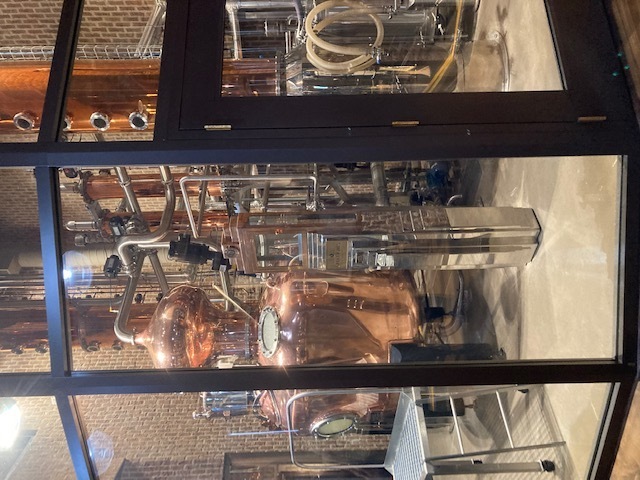
After two days, the mixture gets pumped into a still that’s kept in an explosion-proof room. Seriously.
McGinley-Aviles explains: “It’s one of the regulations we had to work with the city because we have residences on both sides. People are what makes Manhattan great so we had to keep those people safe. It didn’t do us any good to be the first whiskey distillery in Manhattan if we don’t have neighbors so we had to build the still in an explosion-proof room. Not much of a chance of anything exploding. Just one of the regulations we had to follow.”
“Just building this room was a massive undertaking,” relays McGinley-Aviles. “We literally had to peel off the roof to the building, hire a construction crane, shut down Broadway, and lower all the equipment into the room.”
All the New Yorkers in the room are stunned at the power behind Great Jones Distilling Co. to shut down Broadway.
Inside the room is their hybrid copper pot and column still that allows for a variety of ways they can run the spirits through the system. Although they’re currently only making three types of whiskey, they’ve invested in three stills now so they’ll be ready to pivot to vodka if that’s what New Yorkers demand.
Stills with History
McGinley-Aviles explains the historical significance of the stills:
“They were made for us by Vendome Copper & Brass Works out of Louisville, Kentucky. They’re one of the oldest still manufacturers in the world, and definitely the oldest in the U.S. They’ve been around since about 1900. They luckily were able to survive Prohibition by disassembling stills in Kentucky and taking them down to Mexico or up to Canada, where it was still legal to make whiskey.”
“So, come the end of Prohibition, 1933, [there’s a] long list of clients there in Kentucky who had the space, knowledge, and desire to run the whiskey companies but none of the equipment,” he says.
McGinley-Aviles says there’s still a waiting list for work with Vendome Copper & Brass Works. “Luckily, we were able to work them. They actually made pretty much all the equipment you see in this room.”
As most manufacturers will tell you, behind all the machines are great people who are knowledgeable about their craft. The same holds true at Great Jones Distilling Co. McGinley-Aviles says that the people making the whiskey “have very carefully trained noses and palates.” They check the aroma and sometimes the taste of the liquid in the still to see if it’s ready for the next stage.
The stills create eight temperature zones and three different liquids: the heads, the hearts, and the tails. They also pump in the feints, rich in ethanol, in a recycling technique that allows for a greater yield. Cold water condenses the vapors back to liquid, and then it’s basically alcoholic water.
Barrel It Up
The important part that comes out of the stills is the hearts. This clear liquid is 157 proof or about 77% alcohol. To this, they add distilled well water and lower it to 124 proof or 62% ABV.
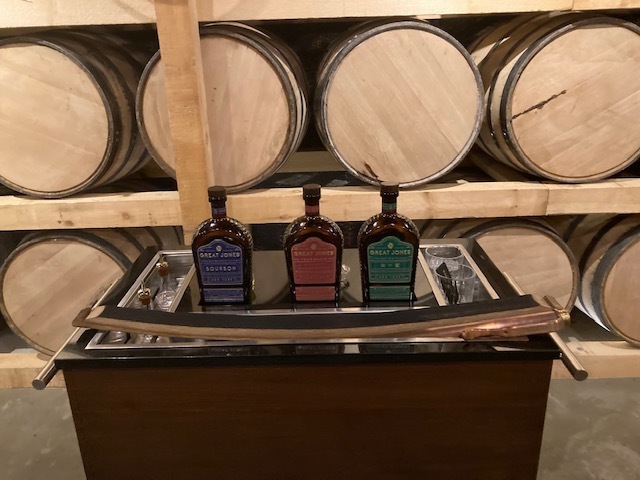
This goes into the American white oak barrels that are then taken off-premises to Great Jones’s Black Dirt Distillery in Warwick, New York. Then begins the waiting game. Like a cocooning caterpillar transforming into a butterfly, the barreled liquid metamorphosizes into whiskey. Over a minimum of four years, the clear liquid turns a rich amber color. It also gains 80% of its flavor during this aging process.
At this point in the tour, we travel down to the basement where we learn about the aging process while sampling the spirits:
- Straight Bourbon: This is 86 proof / 43% ABV. It is their lightest-bodied whiskey. It’s somehow both sweet and peppery.
- Four Grain Bourbon: This 90 proof / 45% ABV. It’s a medium-bodied whiskey. It’s oaky and buttery.
- Rye: This is 90 proof / 45% ABV. The website describes it as “Layered with notes of vanilla, dried fruit from the orchard, and iconic rye pepper,” saying it is, “a spicy love letter to our state’s hardiest grain.” I say it is my favorite of the three, though the tour group is divided quite evenly on favorites.
Walking back to the subway, I have gained a new appreciation not just for the whiskey manufacturing process but for New York agriculture. I am in awe of New York City’s tenacious past and the innovative spirit that keeps the city thriving today.
Take Another Byte Out of the Big Apple:
- After COVID-19, We Need to Bring Back the Automat
- The Technology Pumping Out 50 Dumplings a Minute at Chinatown’s Oldest Restaurant
- How the Times Square New Year’s Eve Ball Has Transformed
- Does Gracie Mansion Have a Secret Passageway?