
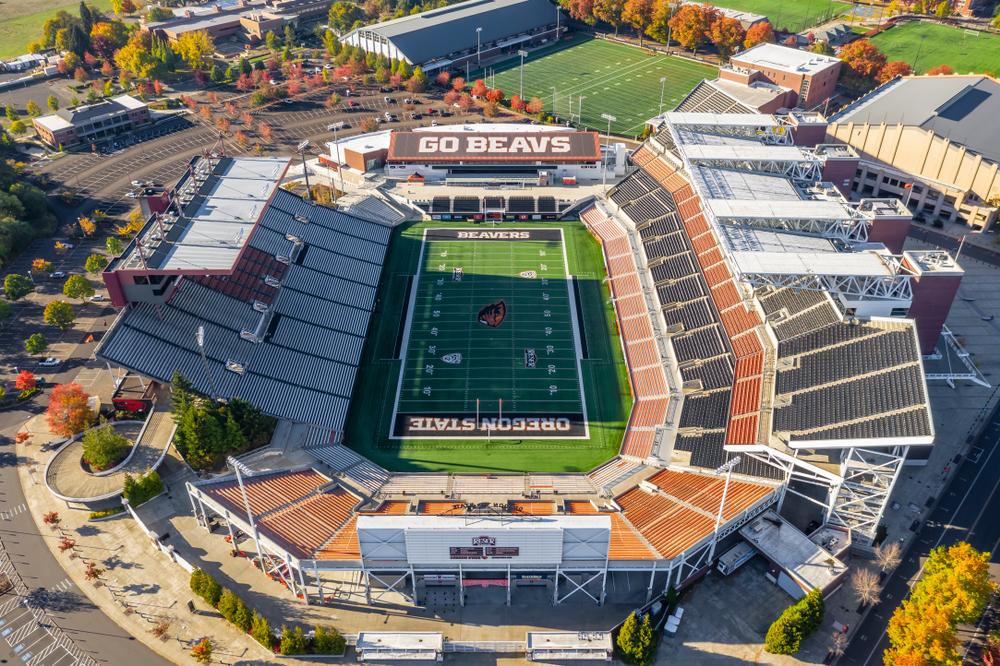
Theoldest known stadiumwas built for the first ancient Olympic Games in Greece in 776 BC. At the time, the competition consisted of a single sporting event, a 200-yard sprint, and up to 4,000 spectators sat on the grassy slopes surrounding the oblong arena.
Harvard Stadium, which was built in 1903 at Harvard University, is widely regarded as the first modern-seater stadium. It was built as a gift from the Class of 1879 in honor of their 25th anniversary and, with a seating capacity of 25,000, remains in regular use today.
Newer venues are staggering feats of engineering, not least for their size. The world’s largest stadium, the Narendra Modi Stadium in India, has a seating capacity of132,000and spans 63 acres of land.
But what about the biggest and most impressive venues in the United States? Here’s a rundown of the top 10 stadiums in the United States, which includes The Royal-Texas Memorial Stadium, Beaver Stadium, and Tiger Stadium.
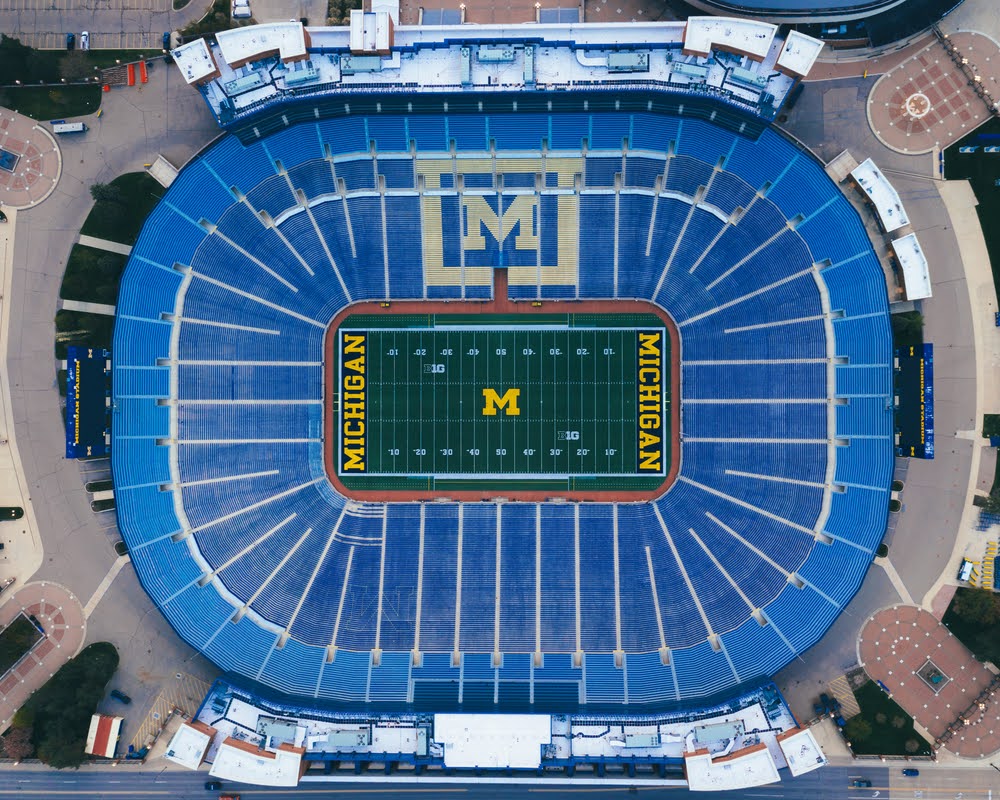
1. Michigan Stadium
Michigan Stadium — nicknamed “The Big House” — is the largest football stadium in the United States and the third-largest stadium in the world.
In the aftermath of the First World War, the popularity of American football skyrocketed, which motivated the University of Michigan’s coach and athletic director,Fielding Yost, to pursue the development of a state-of-the-art, large-capacity venue.
Following numerous setbacks, the Michigan Stadium was completed in 1927 for more than$950,000. Today, it has a capacity of109,901and is best known for hosting the games of the college football team the Wolverines. Michigan Stadium is also used for lacrosse, hockey, and soccer matches, university graduation ceremonies, and private weddings.
The venue features an “extra” seat (hence its seating capacity of 109,901), which was dedicated to the university’s long-standing football coach, Fritz Crisler, in 1956.
2. Beaver Stadium
Located on the campus of Pennsylvania State University, Beaver Stadium is the second-largest stadium in the United States and the fourth-largest stadium in the world, with a capacity of106,572.
Beaver Stadium has more than doubled in size since it was moved to its current location in 1960. In 2001, a major expansion and renovation effort began, which resulted in an extra 12,000 seats, 60 enclosed skyboxes above the East stands, additional restroom and concession facilities, new scoreboards, and improved access for fans with access needs.
The venue most frequently plays host toPenn State Nittany Lions Football. Games at Beaver Stadium often exceed official capacity, with the record crowd being 110,889, for a game between Penn State and Ohio State in September 2018.
3. Ohio Stadium
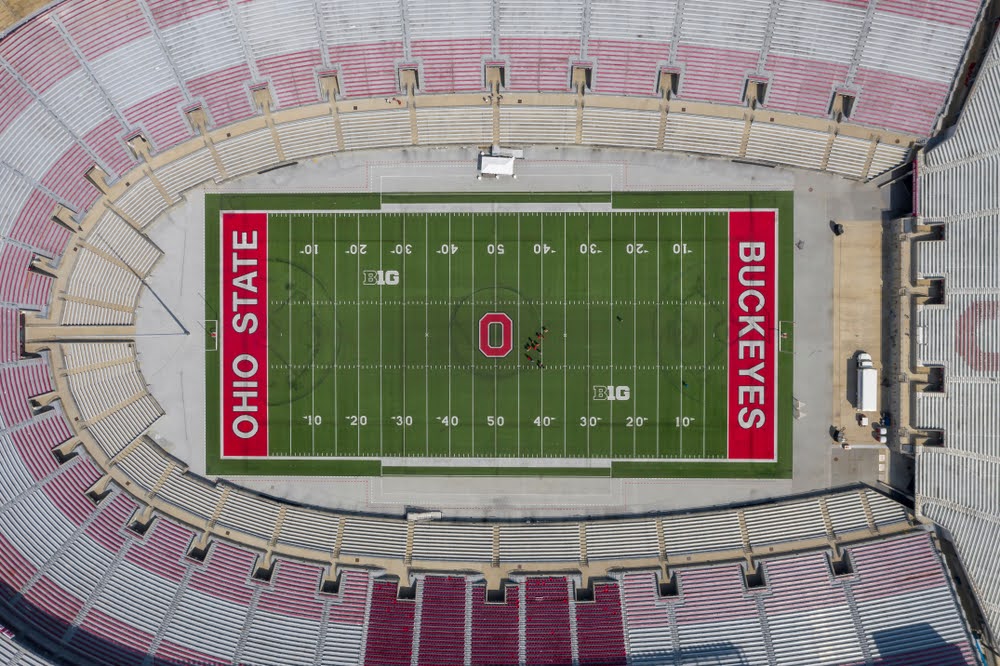
Ohio Stadium, also nicknamed “The Horseshoe”, "The Shoe”, and "The House That Harley Built,” is the home of Ohio State Buckeyes football. This iconic horseshoe-shaped venue was designed by architect Howard Dwight Smith and completed in 1922 for around $1.3 million.
Following its most recent refurbishment, which started in 1999 and finished before the 2001 football season, the football stadium has a capacity of 102,780.
Ohio Stadium also plays host to the university’s spring commencement ceremonies, the Buckeye Country Superfest, and various summer concerts. Thanks to its unique architecture, it is listed in the National Registry of Historic Places.
4. Kyle Field
Kyle Field Stadiumis located on the campus of Texas A&M University and has been home to the Aggies — a college football team — since its completion in 1927. Following significant renovations in 1953, 1967, 2003, and 2014, the venue has a seating capacity of 102,733.
Following the most recent development in 2014, which cost $485 million, the Aggies have hosted more than 100,000 fans per match. This includes a record 110,633 people for the Ole Miss game in October 2014.
Kyle Field Stadium is named after the university’s dean of agriculture and athletic council president, Edwin Jackson Kyle, to acknowledge his donation of a 400×400-foot area, which had previously been assigned to him for horticultural experiments.
Because the university wasfounded as a rural military and agricultural school, some of the longest-lasting Aggie rituals are rooted in military history. For example, the student body stands throughout the game and if a player suffers an injury, they step off of the bleachers and onto the concrete.
5. Tiger Stadium
Tiger Stadium, nicknamed “Death Valley,” has been the home stadium of the LSU Tigers football team since 1924. Having opened with a capacity of 12,000, the venue has since undergone six major expansions.
Tiger Stadium currently houses 102,321 football fans and is considered one of the most raucous stadiums in all of college football. The venue is also known for being extremely photogenic, with astudy published by OBLGciting it as one of the most Instagrammable sports venues in North America.
“It’s Saturday night in Death Valley, and here come your fighting Tigers of LSU,” is how the teamis introducedfor each home game when, remarkably, the stadium transforms into one of the largest cities in Louisiana.
6. Neyland Stadium
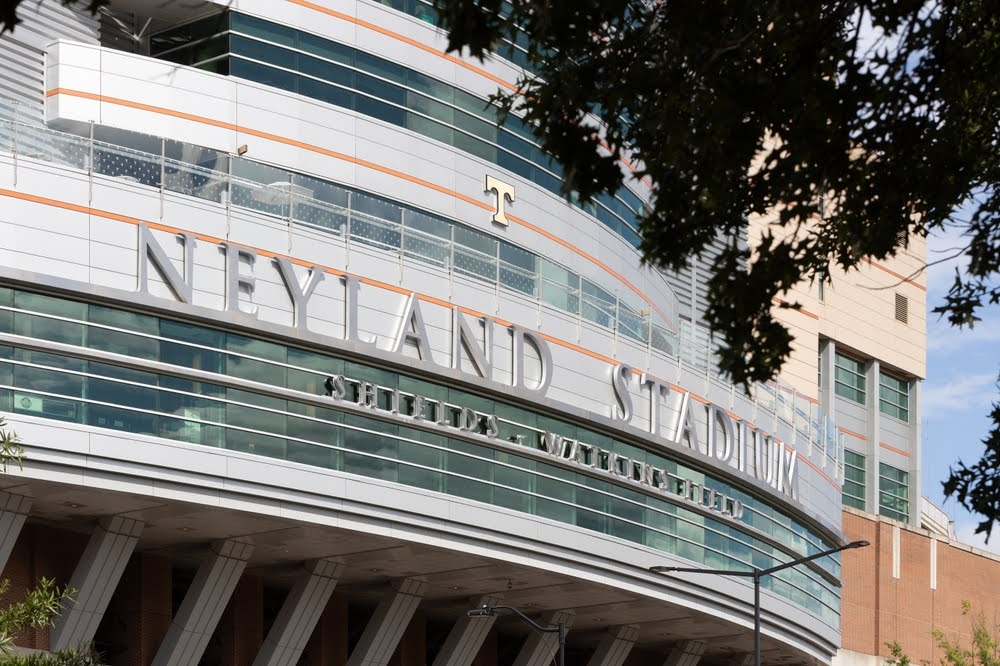
Neyland Stadium, which belongs to the University of Tennessee, is the fifth-largest stadium in the United States and the sixth-biggest stadium in the world. It is named after General Robert R. Neyland, who served as the university’s head coach from 1926-1952.
Previously known as the Shield-Watkins Field, the football stadium hosted its first game in September 2021, when its college football team — the Tennessee Vols — defeated Emory & Henry 27-0. Since then, the venue has increased its seating capacity from 3,200 to 101,195.
Renovations in the past few years have seen the addition of several premium-seating sections including social deck spaces, concession facilities, a second video board, and bronze statues to honor four of Tennessee’s Black football trailblazers. An ongoing $337-million project will see further enhancements between now and 2026.
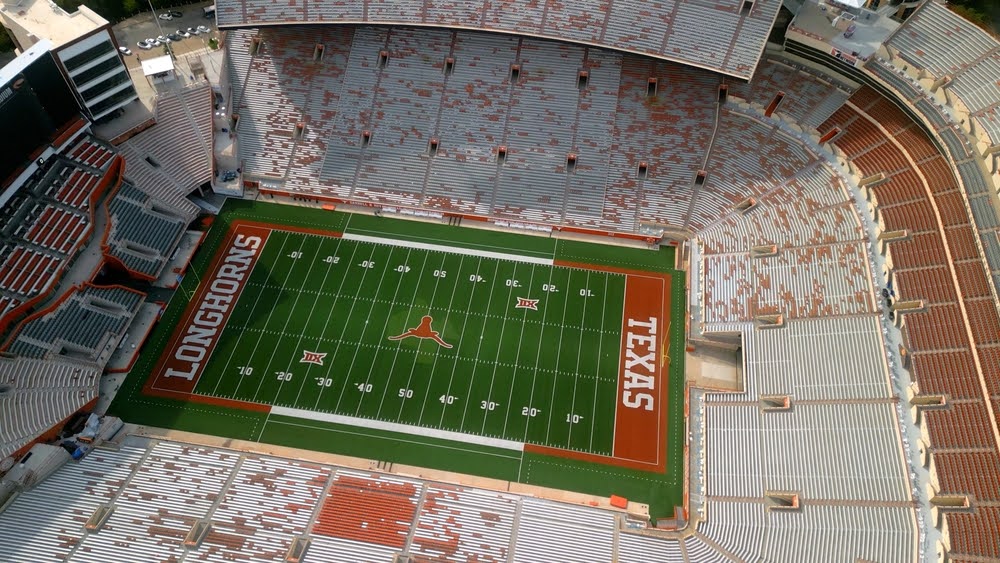
7. Darrell K Royal-Texas Memorial Stadium
TheDarrell K Royal-Texas Memorial Stadiumis in its 100th season of operation.
From May 2019 to August 2021, the Royal-Texas Memorial Stadium underwent a $175 million transformation, which included the addition of a 106,000-square-foot training facility, an end-zone seating area of more than 4,500 seats, and a 160-foot by 44-foot videoboard.
The Royal-Texas Memorial Stadium was formerly known as the War Memorial Stadium. It was dedicated to the 198,520 Texans who fought in The First World War on Thanksgiving Day in 1924, and later in 1977 dedicated to veterans of all wars.
8. Bryant-Denny Stadium
Based on the campus of the University of Alabama, theBryant-Denny Stadiumis the eighth-largest stadium in the United States, with a capacity of 101,821.
The stadium was completed in 1929, with a capacity of just 12,000. The university’s Crimson Tide football team played its first game at the venue on September 28, 1929, beating Mississippi College, 55-0.
As the team’s popularity grew in the decades that followed, the venue underwent a series of major expansions. As part of the more recent refurbishments, luxury skyboxes, large scoreboards with video replay capabilities, reception areas, and wrap-around display boards were installed.
Formerly known as the Denny Stadium, the venue was officially renamed in 1976 to celebrate the school’s legendary coach, Paul Bryant.
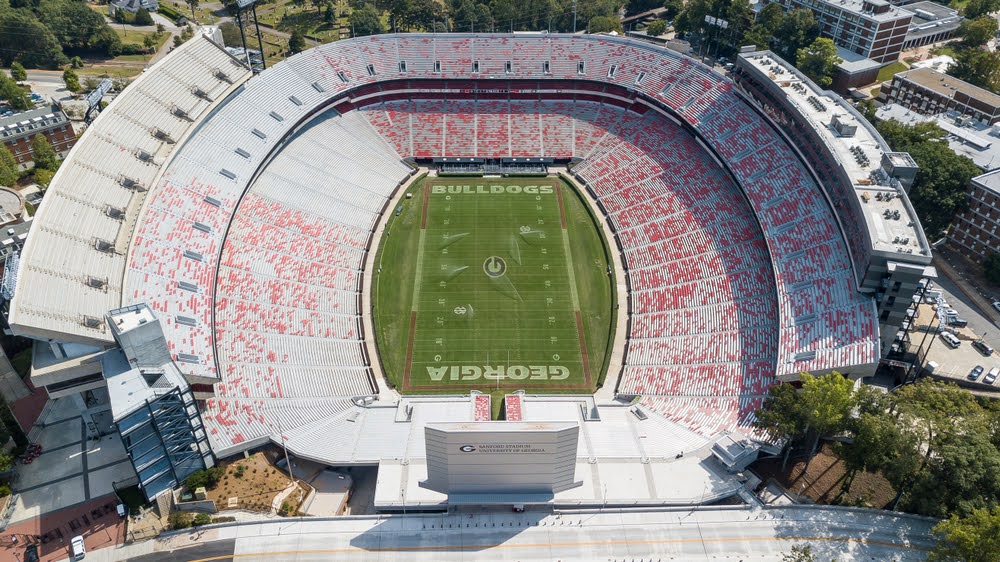
9. Sanford Stadium
Home to the Georgia Bulldogs,Sanford Stadiumsits on the campus of the University of Georgia and has a capacity of 92,746.
The stadium was completed in 1929 for a mere $360,000, and an overflow crowd of 30,000 people attended the first game on October 12.
Since then, the Sanford Stadium has benefited from several major enhancements. In 1940, for example, lights were added to the field level to accommodate night games. In 2003, a $25 million expansion was completed, followed by an $8 million expansion in 2004. In 2018, a team locker room, space to host prospective student-athletes, a larger video board, and a plaza for the fans were installed.
The stadium is named after Dr S. V. Sanford, a former president of the University and Chancellor of the University system.
10. Cotton Bowl
TheCotton Bowl Stadium, based in Dallas, Texas, has a seating capacity of 91,000. Built for $328,200, the venue first opened in 1930 as a 46,000-seat venue called Fair Park Stadium. At the time, it most often played host to the SMU Mustangs football team. The Cotton Bowl Stadium was also the site of the first game played by the Dallas Cowboys (in September of 1960), who played there until 1971.
The stadium has undergone several changes in recent decades. In 2008, for example, a $50-million project expanded the venue’s capacity to more than 92,000. A pressbox, luxury seats, video scoreboards, new lighting fixtures, and additional concessions were also installed.
Today, the Cotton Bowl, which has been designated as a State Antiquities Landmark, hosts the iconic Red River Showdown football game between the University of Texas and the University of Oklahoma.
What Is the Construction Method of a Stadium?
To construct a stadium, the following steps are required:
Since stadiums are mammoth structures, finding a suitable plot is far from straightforward. Developers must consider location, population density, land quality and availability, and transportation links.
There’s a lot of work to be done before meaningful architectural design and development can commence. This includes site analysis, project and financial planning, and sometimes fundraising.
Architects produce an initial design, which will determine which materials are required to build the stadium.
At this stage, a team of engineers, architects, and construction workers will determine building requirements, carry out testing, and identify what quantity of each construction material is required.
Once the above steps have been completed, a final design is produced, and the development team can start to source materials.
The development stage includes excavation, foundation laying, enclosure and stadium building, and field installation.
Once the stadium’s core components have been built, the construction team can install features such as concession stands, toilets, and customer car parks.
What Are The Most Common Materials Used in Stadium Construction?
The most common materials used in stadium construction are:
Related Insights
How Much Does Stadium Construction Cost?
The cost to build a state-of-the-art modern-day stadium can vary from hundreds of millions of dollars to several billion dollars.
NFL stadiums are among the most costly to build. Indeed, the most expensive sports stadium ever built is theSoFi Stadiumin Inglewood, California, which was completed in September 2020 for an estimated cost of$4.9 billion.
Of course, many of the United State’s biggest football stadiums were constructed in the early 1900s for much lower costs but have since undergone multi-million dollar expansions.The main factors to impact construction costs include size, design, location, labor rate, and the supply of critical materials, including concrete and steel. At present, rising inflation rates are driving up the costs of labor and raw materials. In fact, in the past few years, inflation has driven up the price of big construction projects by35-40%.