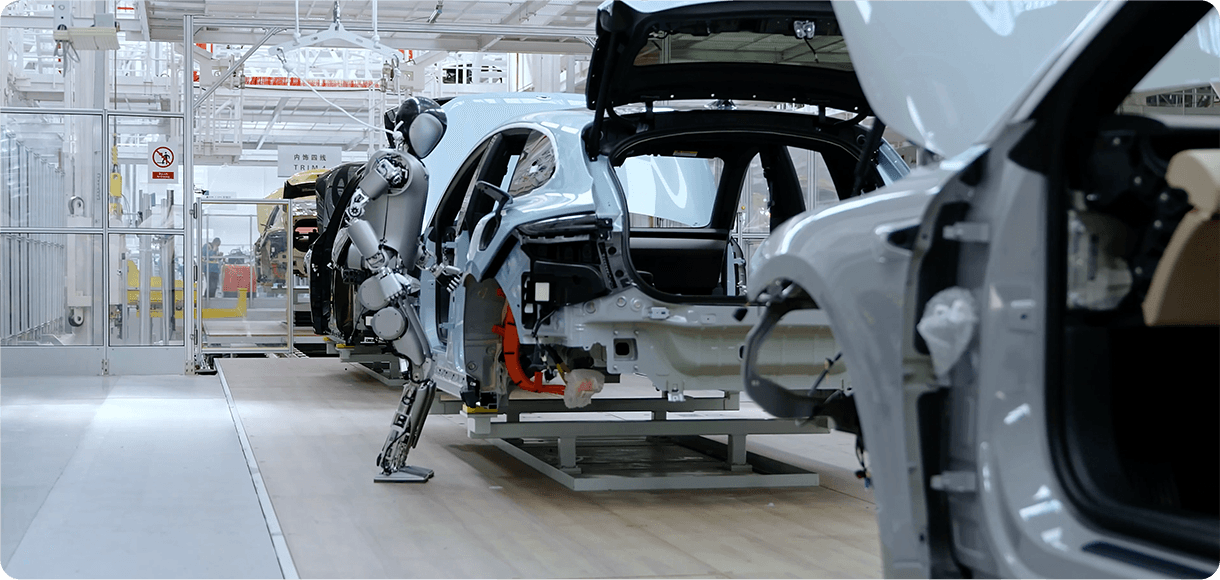
Guess what has joined the dock to ease the Chinese manufacturing industry’s growing labor shortage? The humanoid robot Walker S1.
Already deployed at BYD, the world’s largest EV maker, this new robot could revolutionize production lines worldwide and alleviate labor shortages in key sectors.
What is Walker S1?
Developed by Chinese robotics company UBTech, the Walker S1 stands 5.6 feet tall and weighs 167.6 pounds, making it a direct competitor to other humanoids like Tesla’s Optimus, Apollo’s Apptronik, and Phoenix’s SanctuaryAI.
Walker S1 can perform a variety of tasks, such as visual inspections, parcel carrying, component assembly, and screw tightening. It is also one of the most advanced humanoid robots globally, as it can be integrated with unmanned vehicles and intelligent manufacturing systems.
Walker S1 to Help Solve Labor Challenges in China
UBTech’s current goal is to reduce human labor in automated factories to just 10%. And the company is doing just that by delivering 500 Walker S1s to BYD.
Other automotive big names lining up for the humanoid S1 are Dongfeng Motor, FAW-Volkswagen, and Volvo’s Geely.
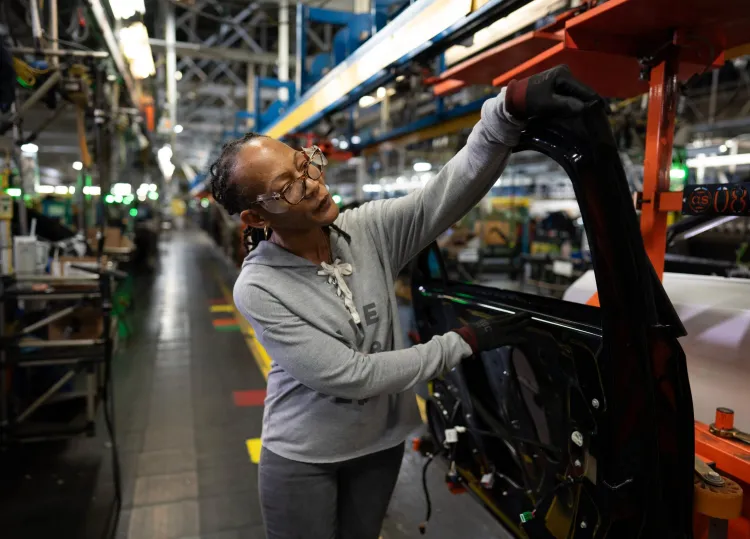
While UBTech numbers seem ambitious, they have been greeted with great enthusiasm by the Chinese manufacturing sector grappling with unprecedented labor issues—key industries like automotive manufacturing could face a shortage of up to 30 million workers by 2025.
The Benefits of Industrial Robots
While the focus on industrial robots like Walker S1 has often been on how they may replace human workers, it bears considering how these robots could help improve workplace safety and increase efficiency.
For instance, they can perform tasks in dangerous environments, handling hazardous materials or heavy lifting, which would otherwise put human workers at risk. These robots can also augment workers’ capabilities and allow them to focus on higher-level tasks.
Image credit: UBTech