If hobbyists can use a Raspberry Pi for remote monitoring applications like tracking weather or observing bird nests, it would seem like a logical fit that manufacturers can use Pi for IoT-enabled industrial applications.
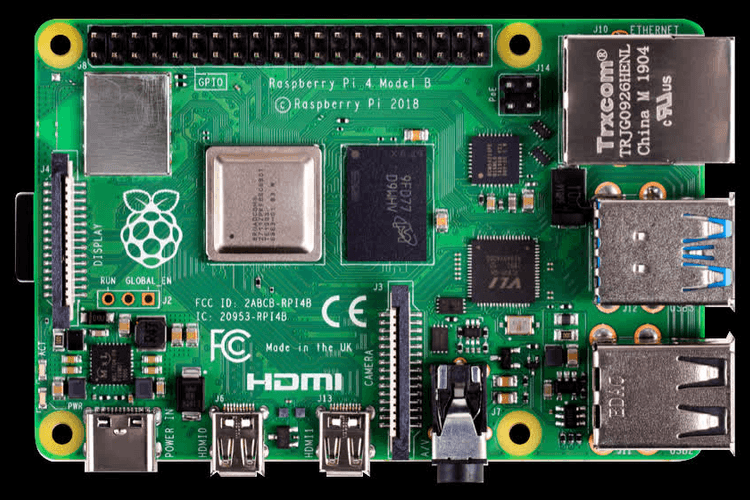
Retailing at around $35 for a 1 GB board, the Raspberry Pi is a cheap, credit-card sized computer that plugs into a monitor and a keyboard or mouse. Originally developed as a computer science education tool to increase computer literacy everywhere, including third-world classrooms, students use Raspberry Pi to learn how to program in Python and Scratch. It can do everything a desktop computer can, such as operating an office package, playing videos, music, and games, and browsing the internet. Most Pis are manufactured by Sony in Wales, UK, but are also manufactured in China and Japan. Over 17 million units have been sold worldwide to date.
The exciting thing about the Raspberry Pi is that is has been taken to places that its original designers may never have dreamed about. It’s known for its affordability, portability, robustness, and ability to connect to real-world objects. Hobbyists use add-on boards such as PiFace (a sensory module) to experiment with electronics; webcams can be added to create homemade security systems, and robot arms can be mounted along with a robot chassis for additional capabilities.
For manufacturers, the Pi has become a popular, low-cost tool for industrial control and regulation tasks. SUSE gives examples of industrial use-cases including monitoring long-lived capital equipment such as robotic screwdrivers, inexpensive shop-floor computers with a simple touchscreen for workers to flag problems, digital signage, and IT/network monitoring.
What Raspberry Pi Brings to the Table
Cost
While the Pi itself costs five times less than comparable IoT monitoring equipment, even tailor-made solutions (add-ons) are low-cost compared with the typical costs of industrial computer technology.
Accessibility
The creators of the Raspberry Pi embrace an open-source philosophy with accessible and free software libraries, manuals, and programming languages.
Scalability and Flexibility
Attachable add-on modules can create additional interfaces, which can help manufacturers implement prototypes directly into production with easy adaptation.
Where Raspberry Pi Falls Short
Connectivity
While Gbit Ethernet and WiFi connectivity make the Pi an ideal solution in an industrial IoT environment, it lacks key industrial interfaces. But other developers have released modules based on the Pi model such as Techbase’s Linux-based Modberry, which has interfaces including RS-485/232 serial ports, CAN, and economical 1-wire buses, and digital and analog inputs and outputs.
Durability
While the advertisements for Raspberry Pi geared toward educators and hobbyists often mention its robustness, the original creators could not have imagined the board being used in harsh industrial environments with high temperatures and strong vibrations. Adverse conditions lead to performance losses and damage to the Pi. However, ruggedized products such as the PiXtend and Arduino can resist temperatures of up to 50° and are robust enough to be installed directly into a control box.
Memory Use
The microSD cards can only retain a limited amount of information, making them unsuitable for industrial applications involving the storage of large amounts of data.
A Sony factory managerclaimed a 30% increase in efficiency due to the installation of 60 Raspberry Pis which monitor proximity, vibration, energy usage, and temperature, sending information on irregularities to a database. Sony now intends to install a similar number of Pis in three other factories.
Gartner analyst Dan Bieler told Forbes that the Raspberry Pi’s popularity is due to its position as a cheaper alternative to expensive IoT monitoring equipment, which does not always offer a return on investment.








![Internet at the Speed of Li-Fi [Flash Forward Fridays]](https://machinerys.net/upload/cache/202507/internet-at-the-speed-of-li-fi-flash-forward-fridays.webp)
![Living on the Edge with Edge Computing [Flash Forward Fridays]](https://machinerys.net/upload/cache/202507/living-on-the-edge-with-edge-computing-flash-forward-fridays.webp)