On June 26, 2024,NASAchose a new concept that could grow homes for astronauts from fungi. Further research for the project, conducted by NASA researchers at the Ames Research Center in Silicon Valley, CA, willbe fundedby the agency’s Innovative Advanced Concepts (NIAC) program.
NASA’s Mycotecture Off Planet Project
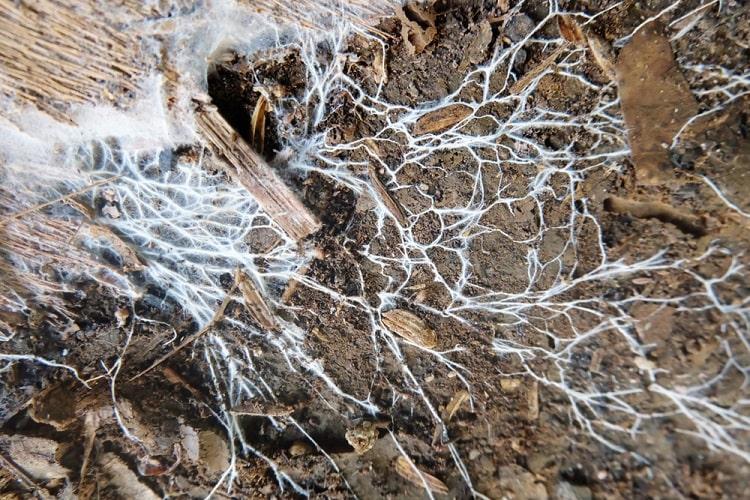
Senior research scientist at Ames, Lynn Rothschild, is leading the team of researchers in theMycotecture Off Planet(MOF) project which aims to find technologies that will enable habitats to be grown on Mars and the Moon using fungi and mycelia (fungi’s underground threads).
Over the next couple of years, NASA will give $2 million towards Phase III of the NIAC program that will go towards MOF in the hopes of getting it ready for demonstration, and even testing it out in Low Earth Orbit.
Fungi Habitats in Space
While astronaut habitats currently consist of rovers and landers during missions, future missions that are intended to last a lot longer will need more substantial housing.
The researchers are looking for ways to make lightweight compact habitats from dormant fungi and its mycelia that can be easily transported.
Growing Fungi in Space
When in space, the fungi could grow around these compact structures into larger, safe, and functional human habitats—all they’ll need to do is add water and wait for it to take form.
As well as being an asset for construction in space, this new versatile material could also prove valuable for various Earth applications, including water filtration, and wastewater mineral extraction systems.
NASA’s Fungi Habitats
The project’s research team has already created many fungal-based biocomposite combinations, prototyles, and designs.
They’ve experimented with adding extra perks like radiation protection, and tested materials in a planetary simulator. In addition, they’ve produced and demonstrated a proof of concept.
Image Credit: Shutterstock/Mohammed_Al_Ali