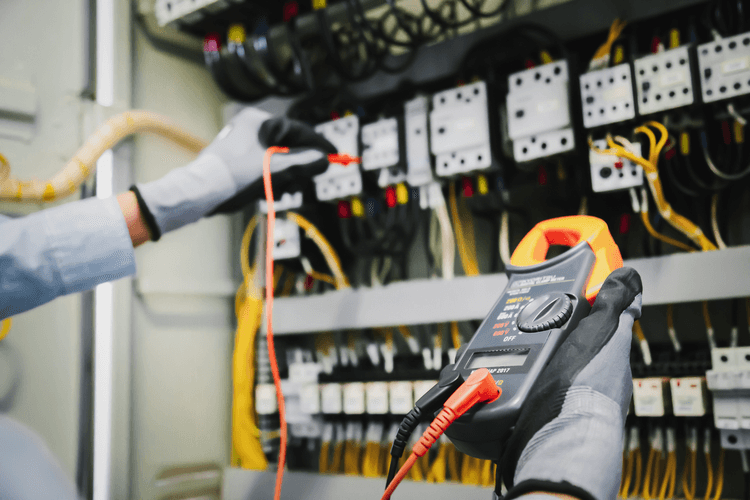
An electrical inspection checklist aids in the execution of an electrical system inspection for both residential and commercial properties.
A checklist of this kind provides several benefits to industrial organizations:
- Identifies faulty or dangerous electrical systems. Not only is this important for ensuring the health and safety of employees, but a glitch or fault in a single unit can lead to failures across the entire system, ultimately requiring costly and time-consuming repair work.
- Verifies the safety, accuracy, and efficiency of a new or replacement electrical installation or production line.
- Verifies the safety, accuracy, and efficiency of an electrical installation or production line that is being relocated or reconfigured. It’s not uncommon for a serious problem to present itself long after an electrical installation is complete. For this reason, electrical systems ought to be re-inspected whenever a change is made.
- Confirms that electrical systems comply with NEC electrical safety guidelines.
- Drives efficiencies to reduce costly electricity bills.
- Highlight opportunities for electrical system upgrades.
- Improves worker productivity and satisfaction, as workers are happier when they feel comfortable and secure.
Below are six important things to consider when creating an electrical system checklist.
1. Invest In a Checklist App
Both iOS and Android devices offer a range of easy-to-use checklist apps.
These apps allow users to customize templates to address the specific requirements of their industrial business, inputting information such as due dates, reminders, and employee tasks. It’s a good way to keep on top of to-dos and streamline processes.
2. Check for Faulty Equipment
Health and safety inspections of electrical systems should be completed on a semi-regular basis, regardless of whether changes — such as new installations — have occurred.
This might involve:
- Inspecting electric meters for defects,
- Inspecting all equipment for signs of water damage such as rust and contamination by foreign materials,
- Verifying that equipment is securely mounted,
- Inspecting wires for damage and fraying; all wires must be properly encased, protected from damp or wet areas, and properly secured so as not to present a trip hazard. If hazards are identified, the electrical inspector can provide recommendations on how to address them,
- And inspecting the circuit breaker for signs of water damage, corrosion, or mechanical issues that might spark a fire. An electrical inspector can also confirm if the circuit breaker is at risk of overload.
3. Confirm GFCI Outlets are Correctly Wired
Ground fault circuit interrupters (GFCIs) ensure the health and safety of industrial employees. These quick-acting circuit breakers protect from electrocution or electric shock by shutting down electric power in the event of a ground fault.
Confirming that these devices are in proper working order is a vital part of any electrical inspection.
4. Inspect Electrical Systems for NEC Compliance
As per the National Electric Code (NEC) rules, certain electrical systems will require specific approvals or evaluations.
When it comes to installing new equipment, electricians can typically be relied upon to adhere to NEC requirements. Nonetheless, it’s worth assessing all existing electrical systems for NEC compliance.
5. Inspect Electric Systems for Manufacturer Compliance
An electric inspection should confirm that all electrical systems have been installed per the manufacturer’s instructions. Knowing how and where to implement new equipment will ensure it is fully functional and reduce instances of equipment failure or break-down.
6. Review Electrical Systems for Optimal Output
NEC guidelines ensure that electrical systems are hazard-free. But an electrician isn’t required to install or relocate equipment with efficiency, convenience, or longevity in mind.
Industrial businesses should leverage the expertise of an electrical inspector to make design enhancements and identify areas where upgrades or replacements may be worthwhile.
As mentioned, it’s also important to re-test all electrical systems following a new installation, reconfiguration, or relocation. For example, industrial businesses should log voltage and current readings before and after a production line is relocated to validate a new setup.
7. Limit Voltage Drops
A voltage drop (VD) occurs whenthe voltage at the end of a run of cable is lower than at the beginning.
The NEC advises that a VD from the last fuse or circuit breaker in a supply to the equipment farthest from the supply be no greater than 3%. Adhering to this guideline will help reduce loss of power to equipment, motor burn-out, damage to wires and cords, and safety issues.