
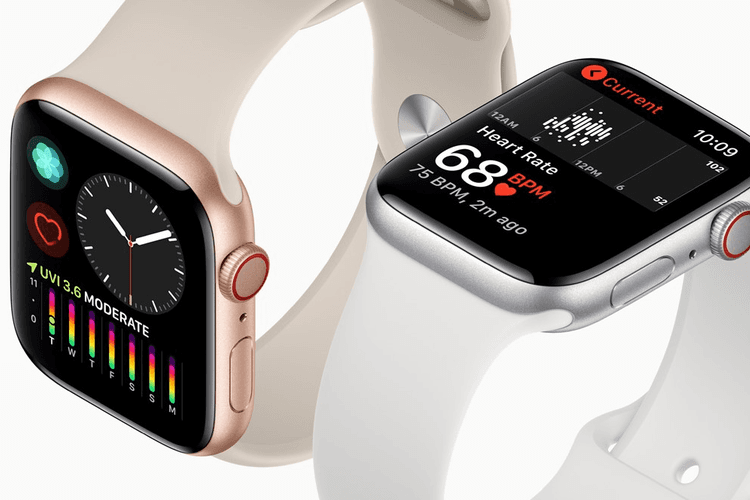
The Apple Watch Series 4 (and new models) includes built-in technology that allows users to take an electrocardiogram, also known as an ECG or EKG, by utilizing the connected ECG app.
An ECG uses electrical sensors to record the strength and timing of the heart’s electrical signals and identify irregular rhythms that could be a sign of atrial fibrillation (AFib). AFib is a potentially serious condition leading to heart failure, strokes, and blood clotting.
Apple Watch wearers can take an ECG at any time and are alerted via the watch’s optical sensor with an "irregular rhythm notification” whenever an irregular pulse pattern is detected. The ECG will give one of the following results (accompanied by the relevant medical explanation and advice):
- Sinus rhythm
- Atrial fibrillation (AFib)
- Low or high heart rate
- Inconclusive
The resulting electrocardiogram, a graph recording of the heart’s electrical pulses, can then be sent directly to a doctor for review.
Are Smart Watches Replacing Their Medical-grade Counterparts?
In comparison to a hospital-grade ECG, the Apple Watch version is significantly less precise, so it can’t serve as a replacement just yet.
It uses one lead (with two electrodes) as opposed to a standard twelve lead (with 10 electrodes) ECG, which involves placing electrodes over the patient’s torso and limbs to take readings in twelve directions. The twelve lead ECG can inform the doctor reading the electrocardiogram exactly where any irregularities are stemming from.
Apple Watch’s ECG capabilities have been cleared – but not approved – by the FDA. In order to be fully approved, the technology must be subjected to significantly more rigorous testing and data analysis. Concerns have also been raised that wearable technology like this could result in higher patient anxiety, increased hospital visits, and more false positives.
Having said that, a clinical trial of 600 subjects revealed Apple’s ECG to be 98.3% accurate for AFib classification. Approximately 6.1 million Americans live with AFib but most people are unaware of these dangerous spikes, which can lead to blood clots, strokes, and even heart failure. The initial "quiver” of an AFib often dissipates before patients can get to a doctor for an ECG, making the condition very hard to detect; stored information within the watch and its associated app can be helpful for diagnosis in those situations.
While Apple’s technology won’t help with existing diagnoses or detect the vast majority of heart rhythm abnormalities, it can assist in the early detection of heart conditions and help wearers to constantly monitor their heart rates. By providing more information to doctors in the process of diagnoses, treatment, or even early detection, the watch and app could result in quicker and more effective treatment.