“Practice makes perfect” never rings more accurate than in a medical setting. And yet, for most procedures and surgeries, clinicians have just one shot to get it right.
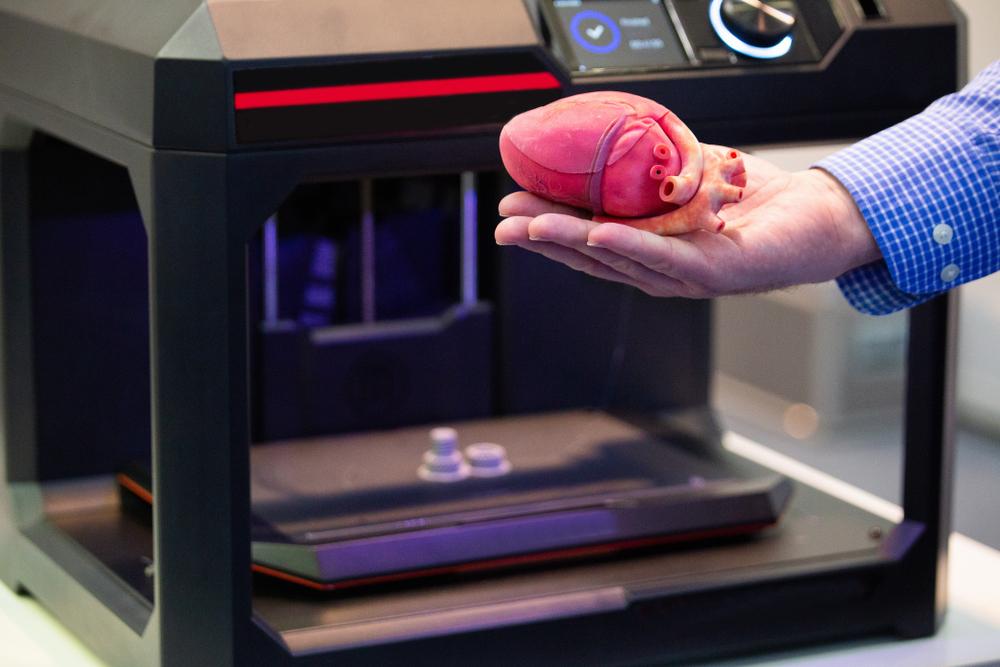
Enter 3D printed medical modeling, a rapidly evolving and expanding market that promises to transform the healthcare industry. The technology is used to develop intricate and often patient-specific anatomical models of body parts, systems, and organs. These models are used to train junior medical professionals, facilitate better communication with patients, improve diagnostics, and enhance surgical planning.
As 3D printing technology becomes increasingly affordable and its output more sophisticated, its applications in healthcare will continue to expand. In fact, the global 3D printed surgical models market size was valued at$530 million in 2022and is expected to grow at a compound annual growth rate (CAGR) of 15.2% from 2023 to 2030.
Applications of 3D-Printed Medical Models
Some of the main applications of 3D-printed medical models include:
Training and education are among the most common uses for 3D-printed medical models, benefiting healthcare professionals at every stage of their careers.
Students, for example, can learn basic anatomy engagingly and interactively, while newly qualified clinicians can practice procedures before tending to live patients. For the most senior surgeons, medical models provide opportunities to learn about delicate or never-performed surgeries in a risk-free environment.
Using CT and Magnetic Resonance Imaging (MRI) scans, medical models can form exact replicas of a patient’s organs and systems. These patient-specific models enable surgeons to meticulously plan every step of long and complex medical procedures, all before stepping foot in an operating room.
This approach to surgical planning also encourages communication and collaboration among healthcare professionals, leading to better surgical outcomes.
Medical modeling is also used to create patient-specific medical devices. These custom devices are tailor-made to suit an individual’s unique needs and specifications.
Anatomical models are an invaluable visualization tool when patients struggle to absorb complex medical information. Clinicians can demonstrate how a condition or disease affects the body and the expected impact of the proposed medications and surgeries.
As a result, patients are put at ease and can more actively contribute to their treatment plans.
Clinicians use medical models for before-and-after comparisons, noting even the most minor improvements or setbacks as treatment progresses.
Benefits of 3D-Printed Medical Models
The top benefits associated with 3D-printed medical modeling include:
Models that represent patient-specific anatomy enable healthcare professionals to accurately visualize an anatomical area before a surgery is performed. Surgeons sometimes practice entire operations to predict outcomes better and reduce intra and post-operative risks.
Not only do these efforts lead to better surgical results, but they also limit surgical and hospitalization time.
Surgical procedures informed by medical modeling are typically more efficient and less invasive, accelerating recovery time and leading to happier patients.
Fewer complications also result in a reduction ofmedicolegal issues.
Advancements in 3D printers facilitate the seamless creation of cost-effective and highly accurate medical models.
Often, these devices are stationed in hospitals and operated remotely, which means a physical model of an organ or system can be in the hands of a surgeon in hours.
Medical modeling allows students and junior clinicians to practice and hone their skills in a risk-free environment.
Creation of 3D-Printed Medical Models
The first step in developing patient-specific 3D medical models is to leverage scanning techniques such as MRI, ultrasound, and X-ray.
Next, computer-aided design (CAD) software segments the scans to isolate areas of interest and create 3D computer models. These models are further enhanced in preparation for 3D printing. For example, the model’s surfaces might be partitioned to enable easy dissection and disassembly.
Once ready, the computer model is exported to a 3D printer, which calculates the movements and materials required to reproduce it in physical form.
Research is ongoing to determine the 3D printing techniques and materials that will produce the best outcomes for the medical industry.Stereolithography (SLA), for example, uses a wide range of materials to create high-quality, isotropic, and watertight models, whileFused Deposition Modeling (FDM)is simple and cost-effective.
Selective Laser Sintering (SLS)is an increasingly popular technique in 3D medical modeling, combining design freedom with high accuracy.
Case Studies and Success Stories
Though 3D medical modeling is not yet prolific in the healthcare industry, several success stories exist.
In Dubai, doctors saved the life of a patient who had suffered from a cerebral aneurysm with the help of acustom 3D-printed modelof the patient’s brain-dilated arteries. This was a rare and complex case, and the medical model helped surgeons to safely navigate the patient’s blood vessels.
At Great Ormond Street Hospital, a specialist children’s hospital in London, England, 3D-printed medical modeling helped surgeons prepare for akidney transplanton a three-year-old girl. Models of the father’s kidney, who was the donor, and the patient’s abdomen were produced, which allowed surgeons to assess the feasibility of the operation and accurately plan the highly complex procedure to minimize risks.
At Nicklaus Children’s Hospital in Miami, surgeons performed alife-saving operationon an eight-year-old boy with a difficult-to-treat tumor. The team leveraged a 3D-printed model of the patient’s skull to envision how best to proceed. The tumor was eventually successfully removed through the patient’s mouth, which prevented a scar.
Challenges and Limitations
Some of the challenges and limitations associated with 3D-printed medical models include:
The costs associated with installing and maintaining a 3D printer are high, and that’s not to mention the materials required to print 3D medical models.
Depending on the complexity of an item being printed, a single model can cost anything from a few dollars to more than $1,000. For many healthcare providers, these costs are too high.
Because 3D printing is a relatively new technology that continues to advance rapidly, existing regulations are pretty vague.
This is a far bigger concern when implants and prosthetics are involved, but ensuring that medical models are used safely and effectively is still important.
Although costs are dropping and technology is fast-advancing, scalability remains a limitation for 3D-printed medical models.
Healthcare facilities that do have the funding and space to install a 3D printer may struggle to hire the skilled professionals needed to design the 3D models and operate the printers.
Further, if more clinicians come to depend on 3D medical modeling to do their jobs, 3D printers will likely struggle to keep up with demand.
3D-printed medical models leverage a wide range of printing materials, but some are more abundant and more malleable than others. It will be a while before 3D printers can work effectively with all the materials required to produce perfect replicas of human organs and systems.
Collaboration Between Medical Professionals and Engineers
3D printers can produce highly accurate and minutely detailed anatomical models, models that not only mimic human anatomy but also some of the mechanical properties of a patient’s organs and systems.
Achieving such feats of innovation requires the input and expertise of interdisciplinary teams composed of clinicians, surgeons, radiologists,medical device manufacturers, engineers, and designers. Close collaboration ensures that medical models are both medically accurate and technologically innovative, resulting in better outcomes for patients.
Ethical and Regulatory Considerations
Continued advancements in 3D-printed medical modeling could lead to more widespread adoption, which raises important questions relating to ethics and regulations.
The first centers on consent. How and when will patients be asked to consent to their medical scans being used for medical modeling? Patients must understand the processes involved in creating a medical model and how their data will be used.
Secondly, do organizations in the healthcare industry have the means to develop robust data privacy policies to ensure the security of sensitive medical data?
Thirdly, it might be necessary to secure regulatory approvals before 3D-printed models can be used in a medical setting. Regulations change all the time and vary around the world.
Finally, medical models should adhere to stringent quality standards. Healthcare facilities must carefully consider who to partner with and how to manage quality assurance and quality control.
Future Trends in 3D-Printed Medical Models
So, what’s next for 3D-printed medical models?
Already, the technology is facilitating the rise of personalized medicine since clinicians can prepare to treat patients’ specific anatomies. The healthcare industry is also experimenting with personalized surgical kits to improve precision and efficiency. These efforts are leading to reduced operating times and better patient outcomes.
Biofabrication, which describes the use of 3D printing in the field of tissue engineering, is another exciting technology. Living cells, matrices, biomaterials, and molecules are used to produce ultra-realistic medical models that can simulate a variety of live-tissue characteristics. For medical training and surgical planning purposes, this is of enormous value.
Telemedicine connects healthcare providers with patients via phone calls, video calls, and remote monitoring systems. The use of medical models intelemedicinecould support quicker and more accurate diagnoses, enhance communication between clinicians and patients, and improve patients’ access to critical care.
Artificial intelligence (AI) is increasingly being used in medical modeling to optimize designs to ensure durability and cost-effectiveness, monitor 3D printers to enable predictive maintenance, conduct quality control checks, and analyze patient data.
Transforming Medical Practice
There’s no question that 3D-printed medical modeling has transformative potential in the healthcare industry. Large-scale adoption would enhance medical training, inform surgical planning, educate patients, and drive personalized medicine.
This benefits both patients and healthcare providers by improving surgical outcomes and patient well-being, driving operational efficiencies, and reducing costs.
To drive the technology forward and overcome challenges relating to costs, scalability, and material limitations, integration with other emerging technologies, the establishment of interdisciplinary teams, and comprehensive strategies for managing regulations, data security, and quality are needed.
Image Credit: Scharfsinn/Shutterstock