
As 3D printing finds its way into more and more viable applications there are, of course, variables to consider — namely, the way these products are discarded, and whether or not it’s safe for the planet.
Questions have been raised pertaining to the popularity of 3D printed circuits and how their applications within single-use electronics often leave them destined for a landfill, often carrying with them conductive inks formulated using heavy metals or petroleum-based polymers.
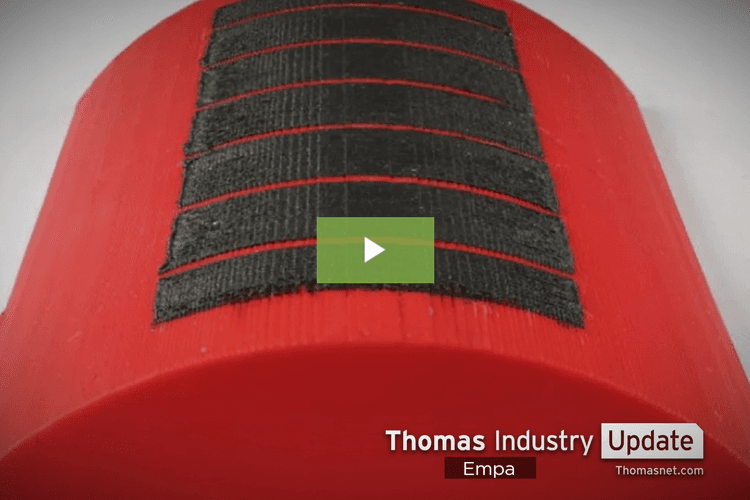
Scientists within Switzerland’s Empa research institute have been working toward ways of replacing this potentially toxic ink with a more eco-friendly alternative and may have made some progress on a biodegradable version.
According to a paper published in the research journal Scientific Reports, Empa’s undertaking explores how elongated graphite platelets can offer conductivity within the modified ink, and carbon black links them together. Then, says a follow-up report in New Atlas, “the two inexpensive forms of carbon are contained with a matrix of shellac, which is derived from resin secreted by the lac insect.”
The report says the end product, after some trial and error, of course, was one that could be 2D or 3D printed and offers flexible, waterproof, and highly conductive properties. Even better, the ink is formulated to break down after being exposed to the elements and can even be removed with alcohol.
Researchers believe this could have strong applications within smart packaging including in the food and medical markets.









![I Taste-tested My Way Through Manhattan’s First Whiskey Distillery to Open Since Prohibition [A Byte Out of the Big Apple]](/upload/20250615/4wzwcodfved.png)