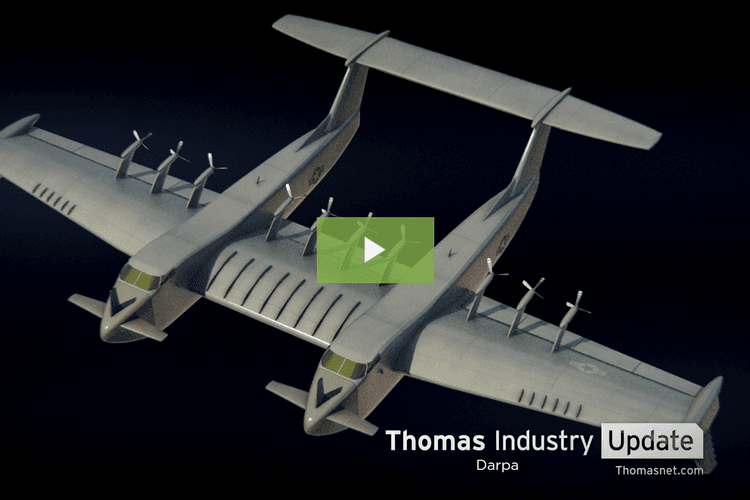
Darpa recently launched the Liberty Lifter project, an effort to develop a massive seaplane capable of advanced long-haul operations built with more economical production.
The long-range X-plane, or experimental aircraft, will ideally carry very large, heavy loads with the ability to take off and land in the water. The agency wants low-cost design and manufacturing, yet a plane capable of highly controlled flight — even when close to turbulent water surfaces — and sustained flight at altitudes up to 10,000 feet.
While current sealift, or cargo ships, transport large payloads, they are vulnerable to threats, require functional ports, and result in longer transit times. Airlift is faster, but planes have a limited ability to support maritime operations. They also have limited payloads and need, you know, runways.
Previous attempts to create an aircraft "wing-in-ground effect,” which means flying no more than the length of its wingspan above ground or water, have been limited. The most well-known, according to Darpa, were ekranoplans used by Soviet and Russian navies from the late 1980s and most of the 1990s.
When flying just above the ocean, the wings push air downwards where it is compressed between the wings and ocean surface to create a lift or "ground effect.” However, Ekranoplans still required runways, had limited maneuverability, and only worked on calm waters. They were even classified as ships rather than aircraft.
The Liberty Lifter program will focus on three main challenges at the beginning: maritime operations, affordable production, and complex controls.
A big challenge will be "creating high-lift abilities at low speeds to reduce wave impact load during takeoff and landing,” as well as a design that can absorb wave forces. The project will also address the risks of vehicle collision during high-speed operations in congested environments. The endgame is to have a vehicle that can operate at sea for weeks and at low altitudes without any land-based maintenance.
To make it more affordable, Darpa is prioritizing "easy-to-fabricate” designs rather than low-weight concepts. They want to keep it simple. The materials used will be more affordable than conventional aerospace manufacturing and purchasable in large amounts.It’s more of a ship-building approach to manufacturing — buying by the ton, not by the pound.
Finally, the program will develop advanced sensors and control schemes to avoid large waves and handle aero/hydro-dynamic interactions during takeoff and landing.