
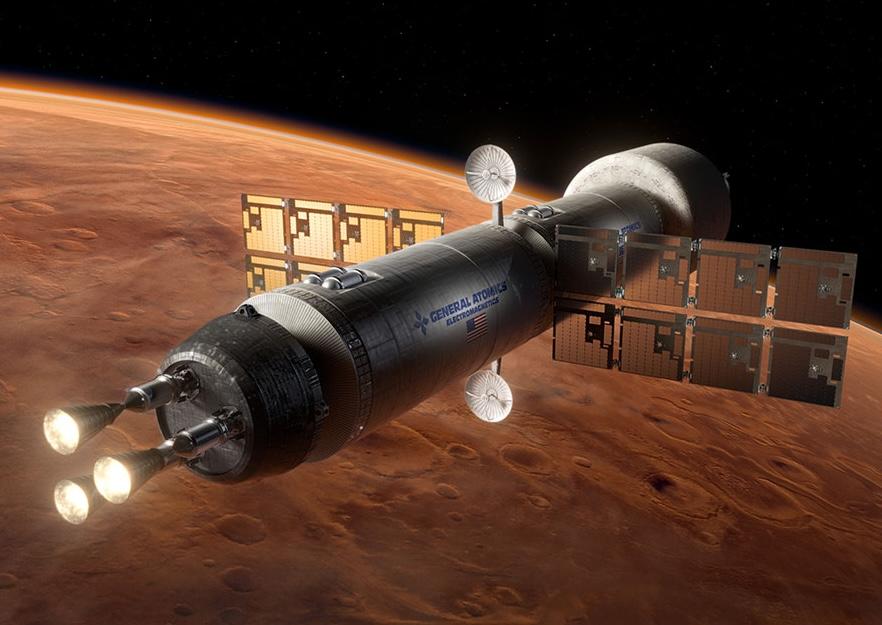
General Atomics’ Electromagnetic Systems Group (GA-EMS) announced that it successfully completed multiple high-impact tests designed to advance nuclear thermal propulsion reactor technology.
Ability to Survive in Space
GA-EMS stated that the tests confirmed that its nuclear fuel design can meet the specifications required to survive operational conditions in space. GA-EMS President Scott Forney explained that the findings also furthered research into nuclear thermal propulsion for deep space and cislunar missions.
The company conducted the tests through a partnership with NASA at the agency’s Marshall Space Flight Center in Huntsville, Alabama. The team exposed the nuclear fuel to hot hydrogen and six thermal cycles that quickly reached a temperature of 2,600 Kelvin (4,220 degrees Fahrenheit).
Boosting Performance
The thermal cycles featured a 20-minute period at maximum performance to show the fuel material’s defense against degradation and erosion caused by hot hydrogen. Additional tests with different protective features offered more insight into how varying enhancements boosted performance in reactor-like conditions.
A More Efficient Route
GA-EMS Nuclear Technologies and Materials Vice President Christina Black said the company’s non-hydrogen tests also demonstrated that the fuel could perform in temperatures of up to 3,000 Kelvin, enabling a more efficient performance than traditional chemical rocket engines.
Black added that the work could eventually meet the requirements for Mars mission architectures.
Image credit: General Atomics