![How VR and AR Are Infiltrating Industries from Aviation to Fashion [Thoughts After Dark]](/upload/20250615/x4sdgpf5dtr.png)
When I was younger, I was obsessed with every My Scene online game. My Scene is an American series of fashion dolls that Barbie’s Mattel released in 2002. I played My Scene: Room Makeover, Barbie My Scene Dazzingly Nails, and My Scene: Shopping Spree almost every night until I could barely keep my eyes open. In these online games, you were able to decorate a bedroom in multiple ways, virtually paint and design your nails, and go shopping before trying the outfits on.
Recently, I came across the fashion designer Gala Marija Vrbanic and was reminded of the hours I spent on the My Scene website where all of my favorite games were hosted. This is because Vrbanic is known for creating digital outfits that consumers can shop for online and then only wear virtually.
Blurring the lines between reality and the virtual sphere, her company, Tribute Brand, is the first direct-to-consumer digital fashion brand. Tribute relies on virtual reality (VR), augmented reality (AR), and, for some projects, NFTs. This tech is entering industries beyond fashion, like real estate and aviation.
For example, a $7 million mansion was recently sold in Miami that came with a rare piece of real estate — an exact metaverse replica packaged into an NFT. The aviation industry is also entering the metaverse and using AR and VR to “bring alive the complex environment of an aircraft” to train its workforce.
With new possibilities of owning a mansion in Alpha City (the metaverse land in which the NFT-linked home will be located), trying on clothes like a My Scene character, and being able to imitate flying without any associated danger, the world of AR and VR is endlessly fascinating.
What does the future of this technology mean for these industries? And where do NFTs come in?
Training the Aviation Industry
A new report from the International Air Transport Association (IATA) identified various technologies that will change the aviation industry for good. The report included automation, blockchain, robotics, and 5G, as well as VR, AR, and the metaverse.
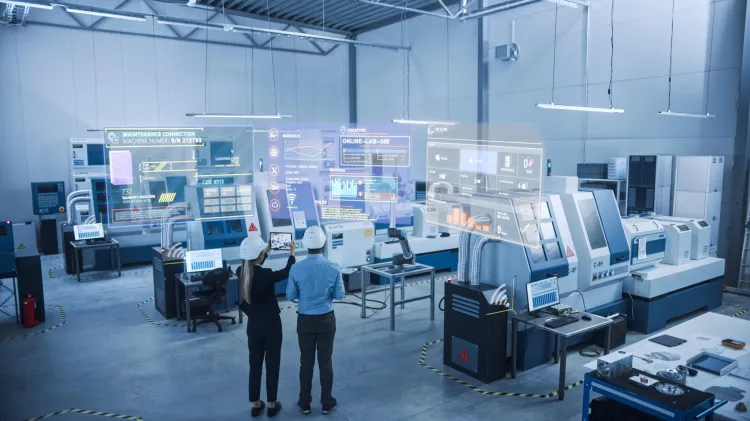
AR, VR, and the metaverse will play a big role in the training and maintenance of the aviation industry, according to IATA. These technologies can be used to create a digital twin of a physical space, which then allows trainees to get a “next-to-real-life feel of the environment.”
For example, Boeing uses VR to recreate its cockpits — down to the very last button detail — to train its employees on operations from takeoff to landing. As of now, Boeing only uses this method for astronauts but sees potential for other aviation professionals in the future.
The Future of the Aviation Industry
Advancements in technology make it so aviation professionals don’t have to step foot on a plane until they are fully trained. But the tech’s possibilities extend beyond training and can be used to identify potential dangers of flying.
Maintenance, repairs, and operations professionals can use AR and VR to catch and learn how to fix possible problems with an aircraft before it takes flight using 3D scanning and sensors. Even minor issues like scratches can be more easily identified.
The endless possibilities of the metaverse are also being explored in aviation. Looking for innovative ideas on how to utilize the metaverse to its full potential, aviation leaders Airbus and HeroX put out a crowdsourcing campaign called “Metaverse and the Future of Flight.”
The campaign received 60 submissions, of which there were five winners. One winning submission came from Silicon Harlem, which proposed people could purchase NFTs that “‘bloom’ into applications to book, experience, and enjoy travel across artificial reality, virtual reality, and the Metaverse.”
Submissions came from individuals, teams, and companies and all represented how new technology will revolutionize the future of the industry and address age-old concerns about proper training and safety. Similarly, during the pandemic, the fashion industry had to make changes for safety, which is why virtual showrooms and catwalks were introduced.
Cyber Fashion
Vrbanic’s company, Tribute Brand, was partially inspired by a fascination with “hypebeast culture,” which describes people who collect luxury clothing items to boost their social status. And after chatting with big names in the industry like Jean Paul Gaultier, Vrbanic realized that not every person or brand cared about owning the item. They just wanted to use it for social media.
To create digital masterpieces, Vrbanic hired people with backgrounds in fashion, CGI 3D modeling, and coding. And while it might seem like designing clothes online is a simpler process than sewing, cutting, and stitching garments together, the company had to follow the same fashion principles as other more traditional brands.
Using pixels rather than textiles, the brand sells zero-waste and inclusive pieces. These are clothing items you would never see on people walking down the street — even in high-fashion cities like New York — or on the runway at fashion week. According to Vogue, clothing by Tribute is, in layman’s terms, “perfect Instagram bait.”
The brand’s fashion defies the laws of physics. But how does it work? Using 3D software that many physical fashion designers use, Vrbanic and Filip Vajda, head of digital fashion for Tribute, digitized patterns they had already created for tangible clothing.
To get a digitized outfit from Tribute, customers submit a photo they want the digital fit to be pasted on. So, once the software-created shirt, dress, or pants is complete, Tribute uses software to perfectly place the item onto the customer’s photo.
While the entire process can take up to five hours, Vrbanic said the technology will continue to develop until customers can “get” their outfit almost instantly.
Mixing the Physical and Digital Using NFTs
In the past, Tribute Brand has partnered with other companies to intertwine the digital and physical using AR. A collaboration with clothing company The Dematerialised in 2021 included six NFTs and multiple phases of the “buying experience.”
The first phase was a standard seller-to-buyer experience, where a customer shopped for a garment online. The physical garment came with an online version shared only as an audio file until it is delivered as a digital version to the buyer. The second phase materialized the audio file into an amplified version — brighter and more textured — of the physical garment. And in the final phase, consumers could “wear” the digital version of the garment, thanks to an AR-powered app from Tribute that “places” the garment on the body.
They called this a “phygital drop,” and many think that it represents the future of fashion. They might be right, as all of the digital garments by Tribute are currently sold out on their website.
What Advancements in Cyber Fashion Represents
According to a UK consumer clothing survey, 1 in 3 women considers a clothing item “old” after just one or two wears. So, if someone wants to continue making fashion statements online, Tribute is a zero-waste option.
But beyond cyber fashion being a more sustainable shopping option, Tribute represents a shift in the way we spend our time. It was revealed in a survey from the Pew Research Center that 31% of U.S. adults reported they are online almost constantly and 85% go online daily.
The pandemic drove a dramatic shift in consumer behavior, especially when it came to shopping. During times of economic crisis, many turn to online shopping to cope. This is referred to as the lipstick effect, in which discretionary purchases help consumers temporarily escape their problems and treat themselves to “good-quality, long-lasting products.”
And what’s more long-lasting than a computerized outfit? The answer might be a digital home.
Metaverse Cities
What is the metaverse? That’s the… nearly year-old question. In October 2021, Mark Zuckerberg announced that Facebook would now be called Meta, explaining that this is because the metaverse represented the future of technology.
In another Thomas Insights article, we explain that “meta,” meaning beyond, and “verse,” coming from the word “universe,” basically describe a future iteration of the internet in which “a universal and fully immersive 3D space brings together all of the virtual worlds in existence today where people can work and socialize.”
While Zuckerberg’s metaverse is still a work in progress, earlier this month, a $7 million mansion was sold in Miami along with its NFT digital twin in a project coined Reflection Manor. The mansion is 6,000 square feet, has six bedrooms and even more bathrooms, and a game room.
The First Mansion Sold as an NFT
The mansion’s NFT version will, eventually, be situated in the metaverse — once Alpha City is up and running. And thanks to AR and VR, Alpha City will, apparently, allow users to open businesses, attend gatherings and events, and even go on dates. All in a digital universe.
Jorge Guinovart, a real estate developer behind Reflection Manor, and Juliet Silver, the property realtor, said they “want Alpha City to feel like an elevated extension of the real world, a digital environment that blends effortlessly into real life.”
Other companies are looking to do the same kind of blending.
Will Businesses Need a Digital Twin?
Virtual property and real estate are nothing new, but a world in which you can literally relax in your physical home and figuratively hang out in your digital home sounds like something out of this world. But what companies could apply this to their offices?
During the pandemic, many businesses went remote. This meant that employees could no longer mingle in person or feel that sense of camaraderie that only comes from being in the same room. To combat employees feeling discouraged or lonely, many companies set up virtual activities like paint nights and Friday happy hours.
Because remote and hybrid work looks like it’s here to stay, businesses are going beyond paint and entering the metaverse. Online world builders such as Teamflow and Virbela are allowing businesses to create replicas of their offices where their employees can congregate from home and grab a cup of burnt office coffee together.
Microsoft is planning for future immersive spaces for its employees within its messaging app. And startups are getting in on the trend too. The companies building these digital offices are avoiding hefty real estate costs while aiding more collaborative social interaction.
These virtual spaces aren’t perfect, at least not yet. They can be awkward as employees learn how to use them properly, and they aren’t exact twins of the office. But it allows for spontaneous conversation away from Slack and Microsoft Teams, where you communicate mostly via text.
As tech continues to advance, this connection will become more seamless. And if Zuckerberg’s right about the metaverse being the future of technology, more NFT-linked homes and digital twins of offices will start popping up.
The future of AR, VR, and the metaverse is vast and bright — but not as bright as the colors I often chose for my My Scene character’s nails.