Video Transcript
According to Nissan, it takes about two gallons of paint to produce one vehicle. While the manufacturing process is undertaken in a sterile environment, this isn’t always enough to prevent tiny defects from occurring during the three-step application of primer, base, and clear coat.
Luckily, it’s artificial intelligence (AI) to the rescue.
Nissa has begun using the AUTIS Surface Verification System – a device that leverages high-resolution cameras. AUTIS captures thousands of images of a vehicle after the paint process, which are then analyzed by AI for defects.
Nissan says a human eye can assess somewhere between 85 to 95% of these flaws, but the AUTIS accuracy rate is 98%. After implementing the systems in its Smyrna, Tennessee plant, the company says its defect detection has improved by close to 7%. This is partly due to the system’s ability to self-learn, adding more and more defects to its library.
But perhaps the most important step in this quality control process is what happens after the defect is identified.
Once it is flagged, Nissan’s technicians can review the situation on a smart device and determine whether the AI assessment is correct. This means less eye stress for the workers and more time for painstakingly fixing the flaw.
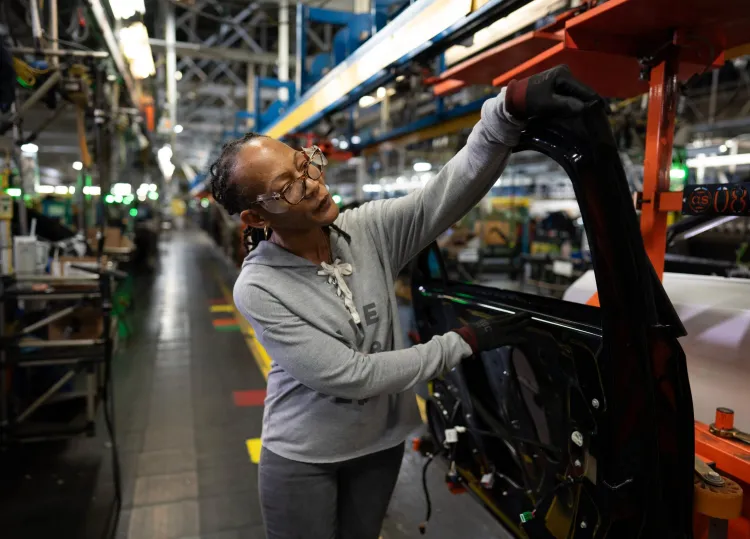
Nissan has been quick to point out that the AI functionality won’t replace human workers; rather, it will enhance the kind of work that’s already being done.
In fact, Travis Fritsche, a paint process engineer at Nissan, said AUTIS reduced investigation time and elevated quality.