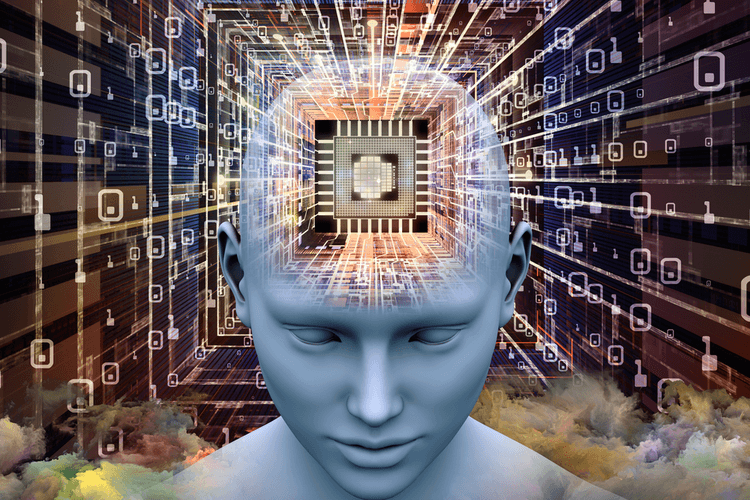
The human brain is a complex, organic machine comprised of electrochemical signals pulsing rapidly through a neural network highway. Its functions and mechanics have enthralled and puzzled scientists and thinkers as far back as the ancient Egyptians in 17th-century B.C. In early November, centuries of neuroscience and decades of AI computer research culminated with the world’s most powerful supercomputer being turned on for the very first time.
Created by the University of Manchester’s School of Computer Science, this neuromorphic machine was designed to mimic the biological processes of the human brain by utilizing:
- Over 1 million cores
- 7 terabytes of RAM
- 57,000 system-in-package nodes (SiP), each containing 18 cores as well as a 128-megabyte synchronous dynamic random-access memory (SDRAM)
- 64 kilobytes of data tightly-coupled memory (DTCM) in each core
- 32 kilobytes of instruction tightly-coupled memory (ITCM) in each core
All of these elements come together to create a process similar to human brain function. Rather than transferring large amounts of data from one point to another, like a traditional computer, the supercomputer transmits billions of small bits of information to thousands of system locations at the same time.
This machine, which has been nicknamed SpiNNaker, standing for “Spiking Neural Network Architecture,” was designed and planned for 20 years, and was built over the course of about 10 years.
“SpiNNaker completely rethinks the way conventional computers work,” said Steve Furber, an ICL professor of computer engineering at the University of Manchester. “We’ve essentially created a machine that works more like a brain than a traditional computer, which is extremely exciting.”
SpiNNaker is expected to provide neuroscientists with valuable insight into brain mechanics, bringing about the dawn of a new era in robotics and artificial intelligence (AI). Using this advanced neuromorphic technology, engineers can create highly precise robots capable of operating advanced and complex functions. Intelligent machines already play a critical role in the manufacturing industry, and in the future, advanced neuromorphic AI like this could expand the entire industry to unprecedented levels.
For now, SpiNNaker’s birth signifies a new chapter in modern technology.
Image Credit: agsandrew / Shutterstock.com