Video Transcript
This article is sponsored by NUCAP Energy, pioneers in the manufacture of engineered metal surfaces for enhanced structural and thermal performance.
In industries ranging from automotive and aerospace to electronics and power generation, there’s a critical need for effective heat transfer solutions. These solutions are vital to prevent overheating and protect components from potential damage.
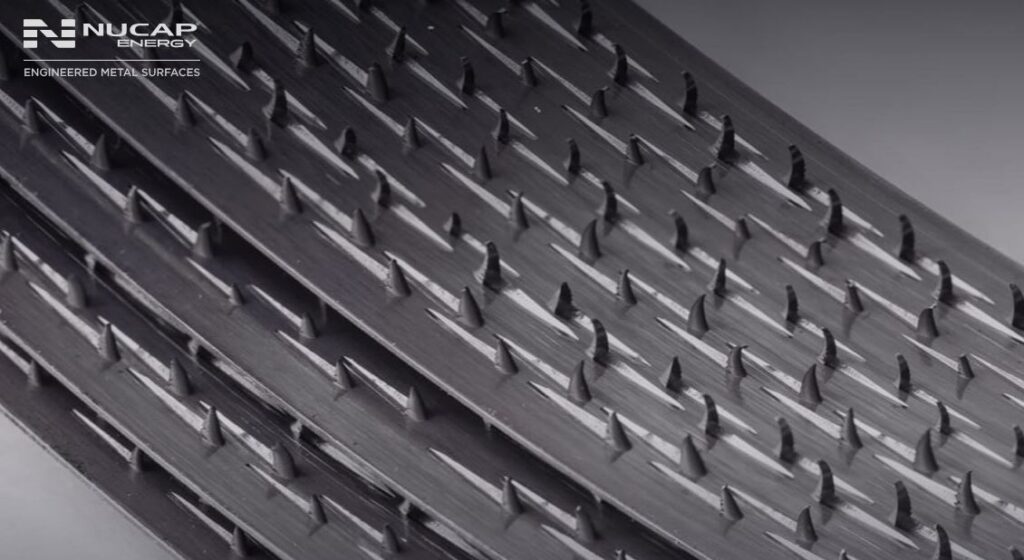
NUCAP Energy, an internal startup within NUCAP Industries Inc., manufactures GRIPMetal™ materials designed to enhance heat transfer across sectors. These engineered metal surface materials with a high strength-to-weight ratio boost the efficiency of thermal transfer. What sets NUCAP’s patented process apart is its ability to significantly increase surface area while simultaneously reducing the weight and size of the part.
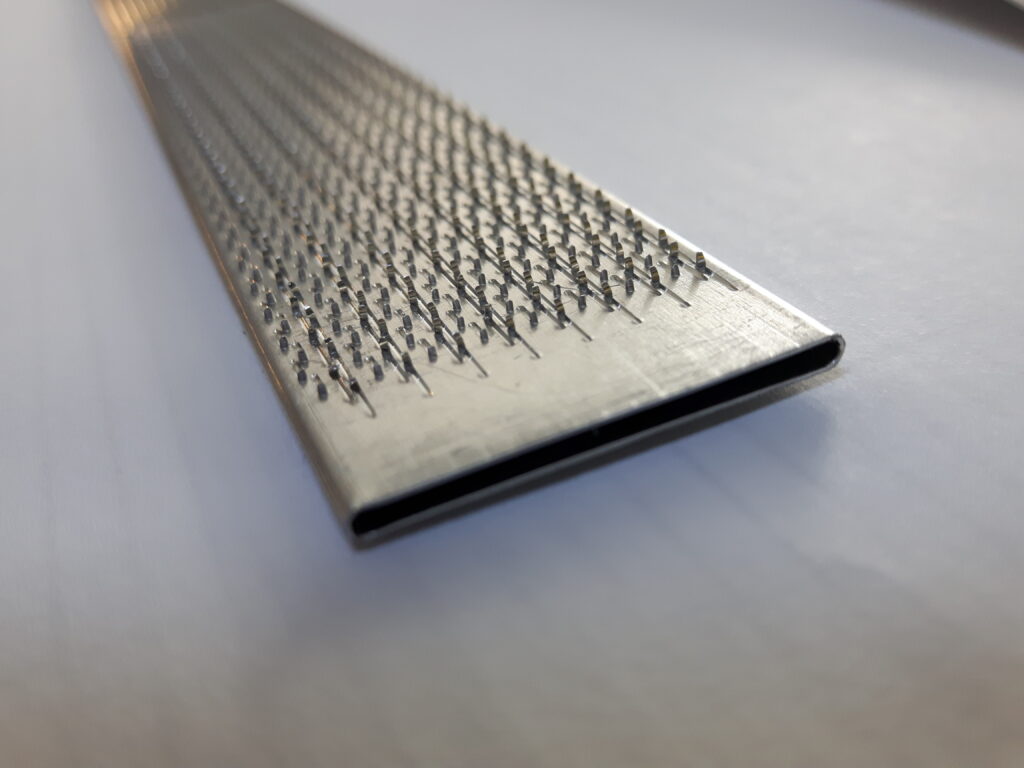
John Swift, vice president of energy solutions at NUCAP, sheds light on the technology underpinning their work. “We’re building on the existing NUCAP retention system (NRS) technology. NUCAP Industries has leveraged this technology for nearly 30 years, implementing it in a billion brake pads for cars and trucks. We’re now repurposing these hooks for thermal applications, creating rows of small hooks on metal substrates. This mature hook technology notably increases the surface area, induces fluid turbulence, and thus enhances heat exchange process efficiency. Moreover, it can endure harsh environments and withstand a wide range of temperatures.”
These hooks also aid in the bonding of materials without requiring glue. They embed themselves into an adjacent material, thereby mechanically bonding them. GRIPMetal offers a broad spectrum of options in terms of material size, shape, gauge depth, hook geometry, and single- or double-sided enhancements. NUCAP works with a variety of metals, including steel, aluminum, brass, copper, and titanium.
The company can tailor GRIPMetal to meet specific needs or customers can procure it in off-the-shelf fabrications. Serving as an interface between solid, liquid, and gas heat transfer media, GRIPMetal improves the processes of conduction, convection, and radiation — the three primary categories of thermal energy transfer.
Thomas Insights (TI): What can you tell us about GRIPMetal, and how does this material improve your customers’ products?
John Swift (JS): Harnessing a patented process developed by NUCAP, we fabricate a metal-based material adorned with meticulously cut small hooks on its surface. These hooks can be tailored in terms of length and density, accommodating practically any substrate size or shape. This adaptability enables us to cater to an extensive range of customer specifications. As a relatively new company, much of our work is still in the testing phase and involves collaborations with universities.
We offer both engineering services and materials. Our GRIPMetal materials offer notable benefits, including an 80% increase in surface area, the creation of turbulence in fluids flowing along the surface, and enhanced bonding. GRIPMetal achieves this bonding either by increasing the contact area for adhesive use or through mechanical bonding, where the hooks of the material penetrate an adjacent material. By customizing our materials and taking an innovative approach, we can meet the diverse application requirements of our customers and redefine heat transfer solutions.
TI: What are some common examples of GRIPMetal applications in your clients’ products and projects?
JS: The material’s versatility lends GRIPMetal to a plethora of applications. For instance, it’s ideally suited for radiant panels used in floors, walls, and ceilings. The current heating systems in North America, primarily reliant on hot air, are rather inefficient. Radiant panels, which deliver heat using lower-temperature liquids instead of air, could revolutionize infrastructure in North America, offering significant energy savings.
GRIPMetal is also used to construct energy recovery ventilators (ERVs), or heat recuperators. These devices can recover over 80% of the energy a building’s ventilation systems typically waste. ERVs work by expelling contaminated indoor air through a heat exchanger and replacing it with fresh, temperature-controlled air from outside, thereby providing substantial energy savings.
In the realm of solar thermal energy systems for heating buildings and providing hot water, North America lags behind Europe. GRIPMetal is a game-changer for solar thermal collectors, capable of converting solar energy into heat with an efficiency rate of up to 86%.
Moreover, our engineered metal surface materials have a myriad of other applications, including electric battery cooling systems, electronic cooling cold plates, various types of heat exchangers, and wall cladding panels. We’re even developing zero-gravity heat exchangers for satellites. By harnessing the potential of GRIPMetal, we’re paving the way for more energy-efficient solutions across multiple sectors.
TI: Are you seeing any trends in your industry today, and what is NUCAP Energy doing to stay ahead of the curve?
JS: There is a significant potential market for our revolutionary material in North America, largely because the current methods of handling heating and cooling differ greatly from those in Europe. North America has not extensively adopted radiant heating and cooling techniques. We’re producing materials that will enable companies to align with these emerging trends, helping them stay ahead of the curve. By developing products with our materials, our clients can achieve enhanced energy efficiency and make a positive impact on the environment.
At NUCAP Energy, we have established strong collaborations with several universities in Canada and the EU for our GRIPMetal projects. These universities rigorously test our materials and assist in developing the mathematical models necessary for designing innovative products incorporating GRIPMetal. Furthermore, these partnerships offer an additional benefit: The universities gain access to our manufacturing expertise, thereby providing invaluable practical exposure for future engineers and fostering a culture of creative problem-solving.
In our quest to remain at the forefront of innovation, we continually seek solutions to the challenges presented by finite resources. We aim to empower our clients to use less material in their product construction and require less energy to operate them, thereby promoting sustainable and efficient practices.
TI: Are there any challenges NUCAP Energy is looking to solve right now?
JS: Our primary challenge lies in persuading people to embrace new technology. The resistance we often encounter stems from perceived risk; companies are understandably hesitant to alter their established manufacturing methods.
This presents us with the task of effectively reaching potential partners who are open to exploring these innovative materials and collaborating with us. We are committed to working closely with our clients, guiding them in the development of new products using our state-of-the-art materials. Our ultimate goal is to jointly bring these products to market, leveraging the cutting-edge materials we have at our disposal.
In my role at NUCAP Energy, I am dedicated to engaging with decision-makers across various industries. My aim is to enlighten them on the balance of risk and reward inherent in the adoption of new materials. It is crucial to highlight that these advancements not only offer industrial benefits but also contribute significantly to environmental protection.
Energy conservation stands at the heart of these discussions. It’s a foundational pillar for the functioning of our society, and without it, we would face insurmountable challenges. By prioritizing energy conservation, we can help alleviate many of today’s pressing issues, making them more manageable and easier to resolve.
The reward for embracing these new materials and conservation strategies is twofold. Firstly, you gain a superior product in terms of functionality. Secondly, you also contribute positively to the environment. Thus, this approach offers a comprehensive benefit, delivering both industrial efficiency and environmental responsibility.
To learn more about GRIPMetal and its potential applications, contact NUCAP today.