With the rising cost of fuel, fuel-efficient aircraft are a top priority for the aerospace industry. It’s no wonder, then, that so many planes utilize titanium, which is lightweight, high-strength, and durable.
Due to its corrosion resistance and strength-to-weight ratio, titanium producers are birthing a new generation of lighter, sturdier aircraft with improved performance and enhanced safety.
What Is Titanium?
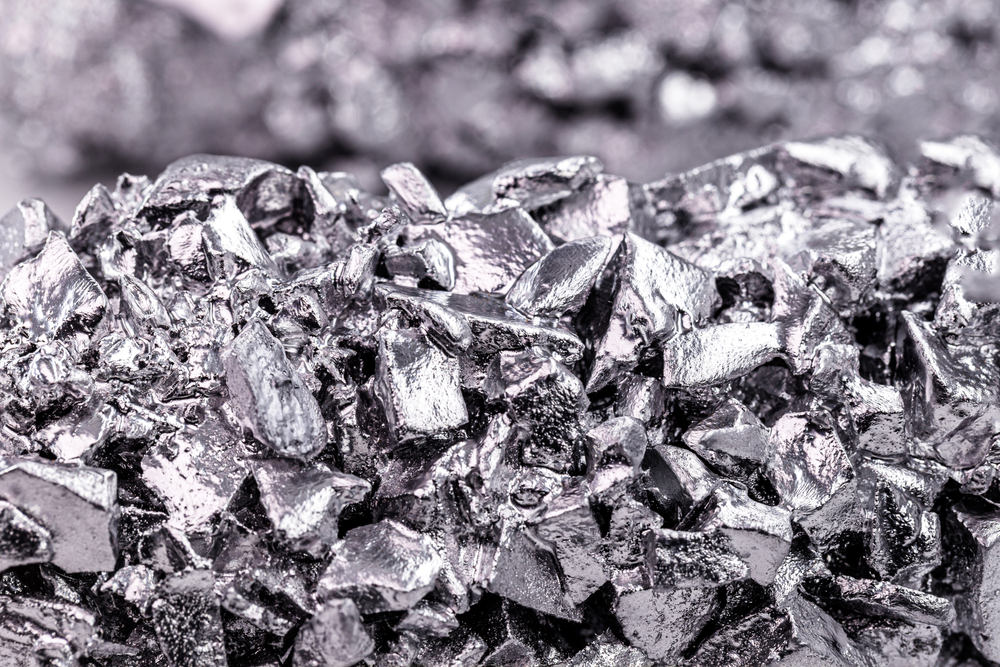
Titanium is the ninth most abundant element in the Earth’s crust and the fourth-most abundant metal on Earth. It amounts to 0.57% of the crust and is present in most rocks and sediments. Despite its ubiquity, it’s often compounded with oxygen and other elements and in low concentrations.
In turn, purifying titanium requires energy and labor, making it less abundant than elements like iron and aluminum. Given its production complexities and commodity, the titanium market was valued at $28 billion in 2022 and is projected to nearly double to $52 billion by 2030.
Advantages of Titanium in Aerospace
In an industry that requires traversing many different altitudes and conditions, endurance matters.
1. Melting Point and Strength
Titanium is functionally favorable in the aerospace industry due to its high melting point and resistance to corrosion and other stressors. It can provide the same strength as steel at just 40% of the weight.
Additionally, titanium has a tensile strength of 30,000 to 200,000 psi, depending on the type, and its melting point is around 400 degrees above that of steel and 1,800 degrees above aluminum. It’s also generally not affected by air, water, or acids.
2. Managing the Elements
Titanium’s resistance to stress-induced deformation, also known as creep resistance, extends to temperature and repeated stress cycles; aerospace-aimed alloys can tolerate temperatures exceeding 1000 °F across thousands of hours of use.
Interestingly, the spectra of titanium oxide (its light-absorption profile) help astronomers identify the universe’s most common stars.
3. Lightweight
In aerospace, weight reduction is essential, as a lighter aircraft increases payload capacity, betters fuel efficiency, reduces operational costs, and decreases environmental impact. On top of these benefits, a lower-weight aircraft also boosts structural integrity, heat resistance, and overall durability.
Different Grades
The material’s capabilities also depend on titanium grade. Titanium forms such as alloys — a combination of other metals — can significantly alter a material’s mechanical properties. For example, commercially pure titanium is prized for its corrosion resistance but is not as strong as titanium alloys.
Applications of Titanium in Aerospace
Titanium is used in various aerospace applications due to its many beneficial qualities.
Its strong yet lightweight properties make it a critical material in building fuselages, frames, landing gear, and other structural aircraft parts. For example, in the Boeing 787, titanium alloys comprise around 15% of the airframe’s weight. In the Airbus A350XWB, they make up about 14% and are used in landing gear, attachments, frames, and other parts.
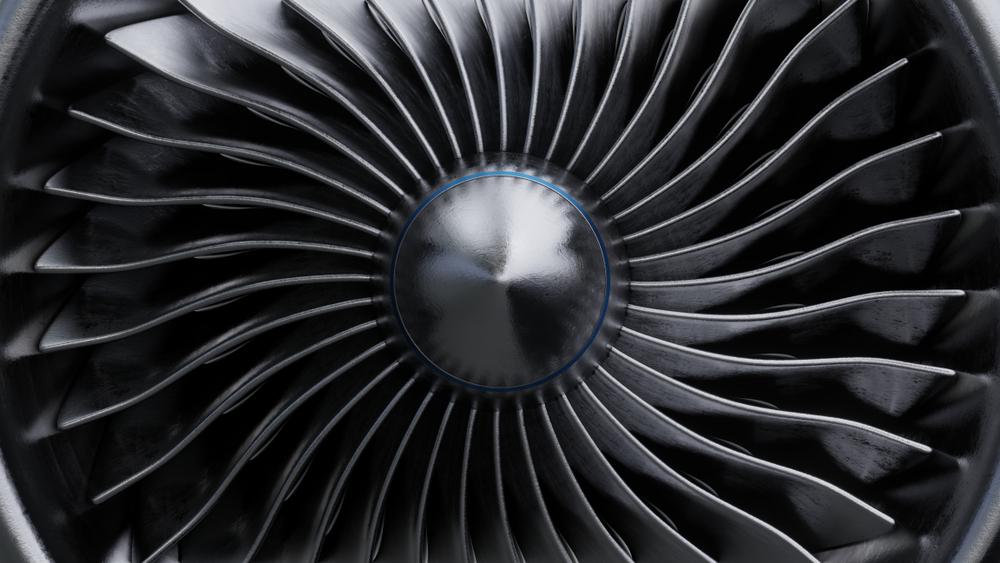
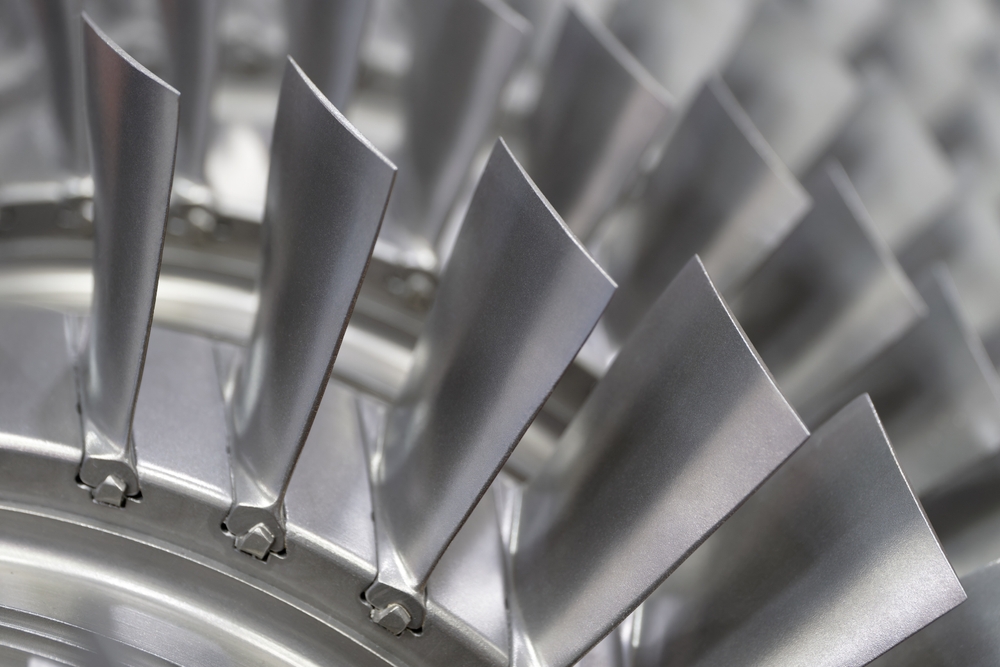
Additionally, titanium’s ability to withstand high temperatures and thousands of hours of work make it an invaluable element for aircraft engine manufacturers, who incorporate it into numerous components, including turbine disks and compressor blades.
Where Else Can Titanium Alloy Products Be Found in Aerospace?
In aerospace manufacturing, titanium can also be found in these parts:
- Missiles
- Aircraft engines
- Structural inserts on satellites and military aircraft
- Frames
- Exhaust systems
Manufacturing and Processing of Titanium
Titanium’s History
Titanium has a long history. While it was first discovered in 1791 and named after the Titans in Greek mythology four years later, it wasn’t until 1910 that pure titanium was formed through high pressure and temperatures of 1500 °F.
Where Does Most of the World’s Titanium Come from?
Titanium is primarily refined from two minerals, ilmenite and rutile, which are only mined in a few countries. In 2022, China, the world’s largest titanium producer, accounted for 30% of the world’s reserves.
Other major titanium producers included South Africa, Australia, Canada, Norway, Ukraine, and India. As of now, the United States gets 91% of its titanium imported.
The Kroll Process
The modern extraction method, known as the Kroll Process, was invented in 1940. The technique reacts titanium compounds with other elements, like chlorine and magnesium, to isolate titanium. The process requires argon gas and multiple heating rounds that can exceed 1800 °F.
The Kroll Process yields titanium sponge, which is an air-pocket-filled titanium agglomeration. The sponge is turned into ingots and other shapes and forged under industrial presses to increase its strength by aligning its metal grain structure with the shape of the part.
Welding Titanium Requires Delicacy
At scorching temperatures, titanium can absorb nitrogen or oxygen from the air, which results in brittleness. The maximum tolerance for these elemental contaminants is very low, especially for aerospace, so machining processes must be delicately controlled.
Additive Manufacturing Can Streamline Titanium Production
Titanium producers for aerospace are turning to more efficient fabrication methods, including additive manufacturing (AM).
With air travel increasing by 300% between 1990 and 2019, aerospace items are always in demand, and 3D-printed titanium parts can shave hundreds or thousands of pounds off an aircraft, further increasing efficiency.
It makes sense then that the global aerospace additive manufacturing market is slated to reach $1.9 billion by 2026.
Future Trends in Titanium Aerospace Applications
Titanium’s future in the aerospace industry depends on lowering costs and enhancing availability through more efficient, cleaner production strategies. Research and development in composite materials and advanced alloys is another promising avenue.
1. Better Processes, Technology
NASA is already one step ahead of shaping the future of aviation with its shape memory alloy (SMA). The engineered nickel-titanium alloy can be trained to return to a desired shape after deformation by applying heat. NASA’s engineers believe folding wings in-flight using advanced materials is a potential game-changer for the aerospace industry.
“We believe SMA could be something that will change the industry,” said Jim Mabe, a technical fellow at Boeing Research and Technology. “And it’s not just limited to wings and flaps; there are other potential aircraft applications we can apply this material to as well.”
Improvements to production techniques like this are boosting the future titanium alloys market, as the 80-year-old Kroll Process is costly, complicated, time-consuming, and carbon-intensive, which isn’t ideal for mass applications.
2. Designing Better Titanium Alloys
Researchers are experimenting with adding metals such as vanadium and molybdenum to titanium alloys. It has the ability to boost strength, decrease ductility, and change shape without fracturing.
Using computer models and electron microscopy to create nanostructures, scientists are improving the stability of titanium compounds, yielding stronger, more ductile materials.
However, a widespread alternative production method will take a while to come to fruition. In the meantime, broadening the use of titanium is essential, as 80% of titanium scrap comes from the aerospace industry.
3. Onshoring Production
Over the past decade, the United States’ titanium sponge production capacity has decreased by 98%. As the nation invests more in onshoring manufacturing, titanium may need to be a greater priority.
The aerospace industry is also currently facing a titanium supply shortage after international sanctions were placed on Russia following its invasion of Ukraine. In turn, the titanium supply chain has become increasingly vulnerable.
Many aerospace companies, like Boeing, are moving away from Russian supply.
The Aerospace Industry in the Years Ahead
The future of technology depends on aerospace, whether in terms of travel, defense, or exploration. Many modern marvels and conveniences result from space-age advancements, and titanium remains essential to earthly efficiency and a game-changer in the air and beyond.
More Metal Insights
- Steel vs. Titanium — Strength, Properties, and Uses
- The Reasons Why Demand for Copper Is Growing
- Why Is Steel So Important to U.S. Manufacturing?
- What Are Rare Earth Elements in Manufacturing?
Image Credit: vanitjan / Shutterstock.com