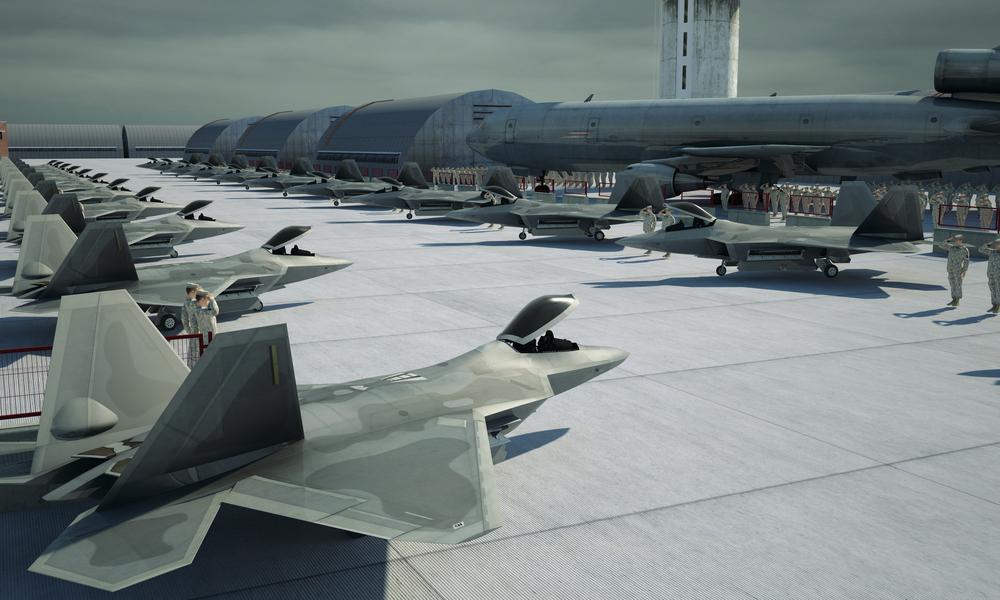
The strong global presence of the United States military is sustained via its vast network of service installations, some of which act as training grounds, while others function as strategic operations centers.
The U.S. has roughly 750 military installations established in other nations and approximately 450-500 domestic bases. These bases are home to some of the most elite units in the world, including the Army Special Operations Command, Marine Corps, Air Force, and Navy SEALS. The U.S. Army Forces Command (FORSCOM), which includes active and Army Reserve troops, also has a presence in many of these bases.
While these bases play a critical role in America’s defense strategy, some are also exceptionally advanced in their own right.
Most Advanced Military Bases
Below are eight of the most advanced military bases — such as Fort Bragg, Fort Campbell, and Fort Hood — and what makes them superior.
1. Nellis Air Force Base
- Location: Nevada
- Year Built: 1941
- Size: 21 square miles
- Cost: Unknown
- Troop total: 46,500
- Branch: Air Force
- What Makes It the Most Advanced: The use of 72,000 solar panels to produce 30 million kilowatt-hours of energy annually
2. Fort Cavazos (Formerly Fort Hood)
- Location: Texas
- Year Built: 1942
- Size: 334 square miles
- Cost: Over $1.1 billion in recent improvements and renovations
- Troop total: 40,000
- Branch: Army
- What Makes It the Most Advanced: Its status as a premier installation for training and deploying heavy forces, including armored divisions
3. Cheyenne Mountain Air Force Station
- Location: Colorado
- Year Built: 1966
- Size: 5 acres (less than one square miles)
- Cost: $66 million
- Troop total: Unknown
- Branch: Air Force/Space Force
- What Makes It the Most Advanced: Its construction within the mountain and the use of granite-reinforced blast doors
4. Fort Detrick
- Location: Maryland
- Year Built: 1931
- Size: 1.87 square miles
- Cost: $130 million
- Troop total: 9,500
- Branch: Army
- What Makes It the Most Advanced: It is the home of the U.S. Army Medical Research Institute of Infectious Diseases
5. Naval Base Coronado
- Location: California
- Year Built: 1943
- Size: 1.5 square miles
- Cost: $71 million
- Troop total: 5,000
- Branch: Navy/Navy SEALS
- What Makes It the Most Advanced: It is the site of Navy SEAL demolition training or BUDs
6. Joint Base Lewis-McChord
- Location: Washington State
- Year Built: 1917
- Size: 646 square miles
- Cost: Unknown
- Troop total: +209,000
- Branch: Air Force and Army
- What Makes It the Most Advanced: Maintains a cutting-edge fleet of C-17A Globemaster III aircraft
7. Fort Campbell
- Location: Kentucky
- Year Built: 1942
- Size: 164 square miles
- Cost: $2 billion in renovations
- Troop total: +234,000
- Branch: Army
- What Makes It the Most Advanced: It is home to the only air assault division in the world
8. Fort Bragg
- Location: North Carolina
- Year Built: 1918
- Size: 254 square miles
- Cost: $6 billion in renovations since 1985
- Troop total: +238,000
- Branch: Army
- What Makes It the Most Advanced: The use of elite training equipment and processes
The History of Military Bases
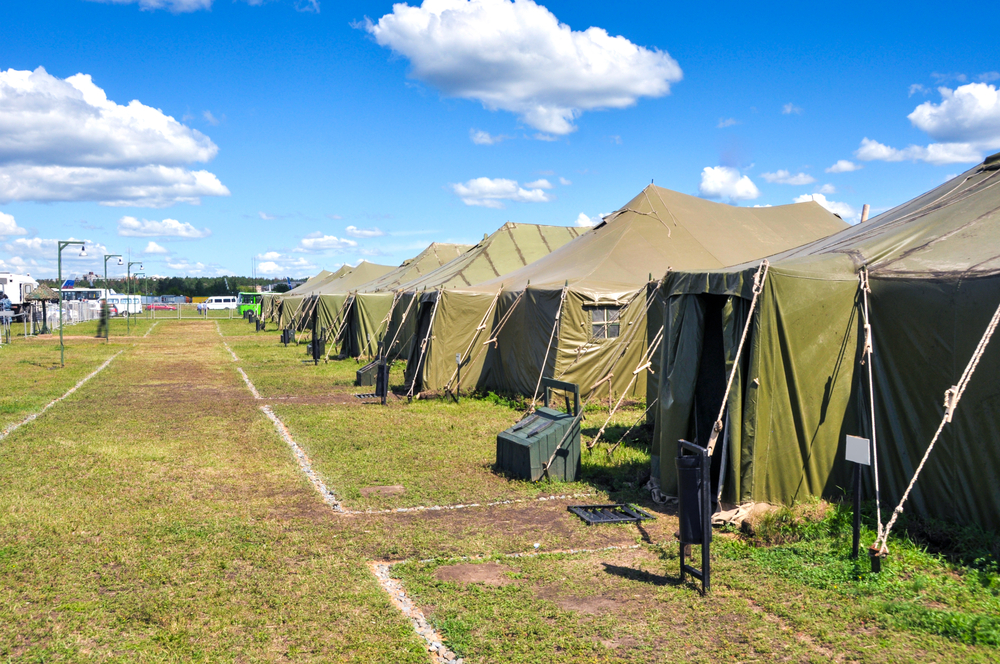
For millennia, military bases have played critical roles in defense infrastructure, always positioned at strategic locations so that they can support a variety of functions, including training, troop housing, and protection.
Changes in Military Bases
Below, we examine how these military installations — for the Air Force, Navy, and Army alike — have changed in style and function.
Ancient Military Fortifications
Modern military bases trace back thousands of years to when ancient civilizations built fortresses and other defensive structures to protect their territories. Roman forts were used to garrison and train troops, allowing the expansive empire to maintain a robust military presence throughout its conquered territories.
Medieval Castles and Strongholds
During the feudal era (the 5th through 12th centuries), strategic strongholds primarily consisted of medieval castles, massive structures featuring robust defensive architecture through thick, tall walls, restrictive geographic positioning, and the occasional moat.
Castles also played a crucial role in securing territories and functioned as a critical fallback point in an uprising or counteroffensive.

Colonial Outposts and Naval Bases
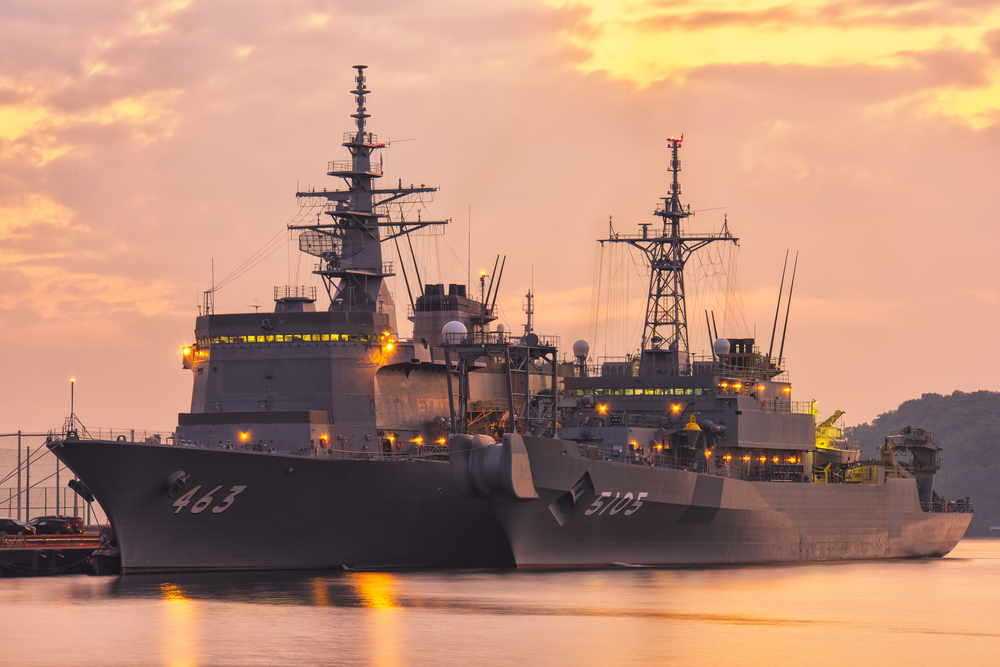
During the colonial era, nations engaged in extensive oceanic exploration, and as they ventured out to overseas territories, many established naval bases to support their exploration and trade endeavors.
A strong military presence was maintained at these naval bases to protect assets and prevent other nations from encroaching on their territories.
World War I, World War II, and Modern Military Bases
World War I and World War II accelerated the evolution of military bases. During World War I, forward bases — now referred to as forward operating bases (FOBs) — played an essential role in supporting offensive initiatives. By World War II, airfields in each training ground became ubiquitous across the globe and were critical to the Allies’ victory.
Strategic Bases During the Cold War
The superpower rivalry between the United States and the Soviet Union created global geopolitical tensions. As such, the expansion of military infrastructure, including airfields and FOBs, continued throughout the Cold War, with both nations and many of their allies constructing dozens of missile bases as part of their nuclear deterrence initiatives.
Modern Military Bases Network, Military Installations
Since the end of the Cold War, the U.S. military universe has formed multinational alliances around the globe. As part of these coalitions, the U.S. maintains joint bases in numerous foreign nations, providing the U.S. military with global reach and enabling the rapid deployment of forces in the event of an imminent threat.
Military Suppliers
- Military Equipment & Supplies
- Military Contract Manufacturing
Technological Advancements in Military Bases
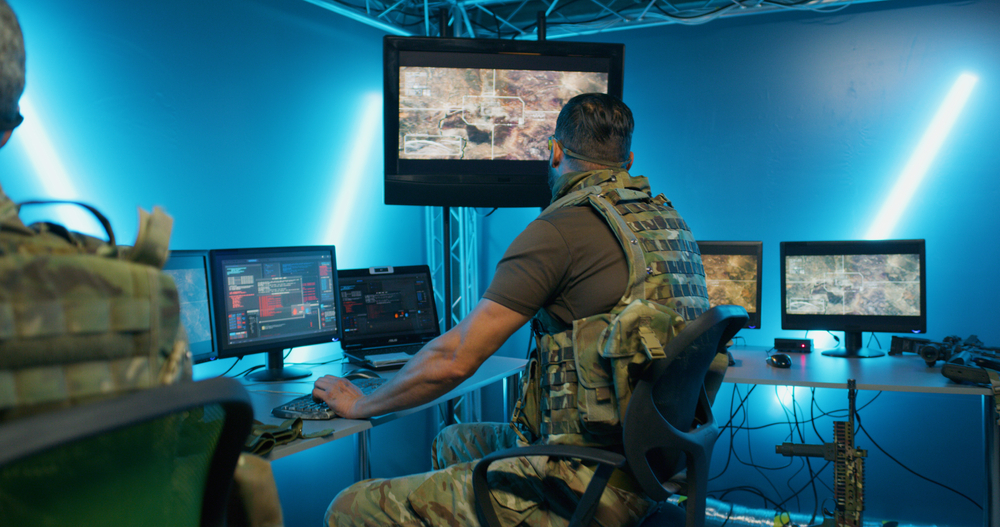
Modern military bases leverage various dynamic solutions to support America’s defense needs, including advanced communication systems, sophisticated surveillance technology, automation tools, and cyber defense measures. Cumulatively, these technologies allow the American military to respond to various threats.

More Military Advancement Insights
- 7 Industries That Will Be Completely Transformed By AR Technology
- U.S. Army Seeks Network-Aided PNT Technology
Environmental and Sustainability Considerations
Like many other sectors, the U.S. military has realized the importance of adopting sustainable practices to reduce environmental impact. Several branches of the U.S. military have since launched eco-friendly initiatives, including the Army, United States Air Force, and Marine Corps.
For example, Nellis Air Force Base relies on a network of solar panels to generate its power. Additionally, the Marine Corps Logistics Base Albany is the first military installation to achieve a net-zero goal.
Future Trends in Military Base Evolution
The U.S. military and its many bases, including Fort Bragg, Fort Campbell, and Fort Hood, are constantly evolving; moving forward, they will undoubtedly embrace digitalization and leverage autonomous systems to enhance operational efficiency and combat readiness.
Military Technology
Space-based assets, such as surveillance satellites and space weapons systems, will also play a pivotal role in the next phase of military base transformation. In the future, U.S. military installations will be adaptive, more agile, and thus more responsive to dynamic challenges, such as multifaceted attacks and rapidly emerging threats.
More Military Insights
- 6 Ways the Military Is Using Robotics
- The Supply Chain Behind Military MREs
- U.S. Military Turns to 3D Printing for Mission-Critical Supplies
- Dive into the Rich History of 5 Groundbreaking Submarines
Image Credit: Pavel Chagochkin / Shutterstock.com