The Ford F-Series is Ford Motor Company’s best-selling product line and the light-duty trucks have been the best-selling vehicle of any kind in the U.S. for the past 50 years.
New to the line-up is a fully electric truck, the F-150 Lightning , which hit the market in 2022 and quickly sparked consumer excitement.
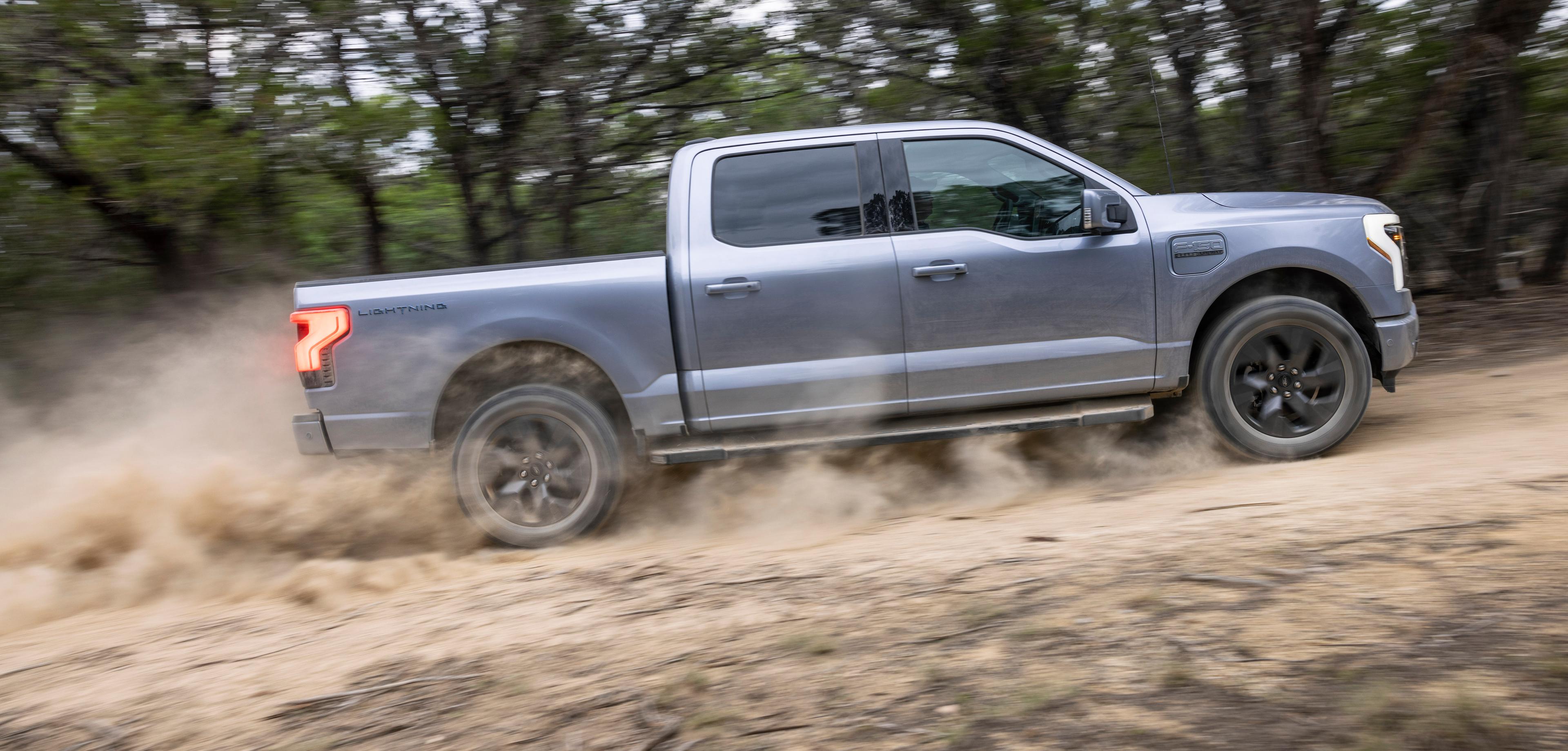
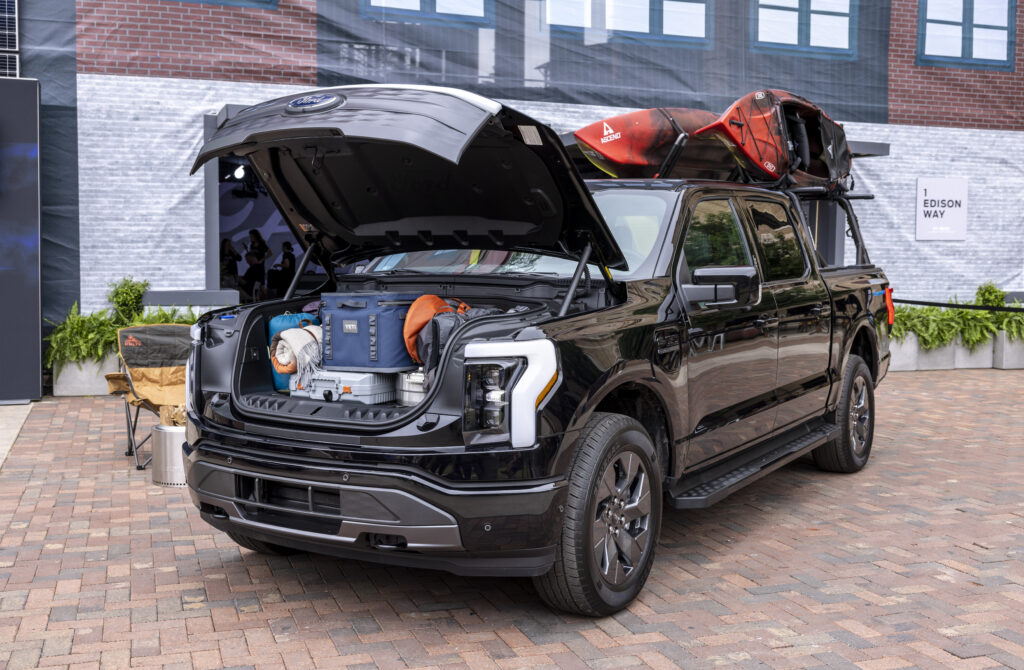
The F-150 Lightning seats five passengers and has one of the largest capacity “frunks” – aka front trunks – on the market. The waterproof storage compartment has a capacity of 14.1 cubic feet and is equipped with four electrical outlets. The truck boasts a maximum estimated driving range of 320 miles, goes from 0 to 60 mph in less than four seconds, and has a maximum towing capacity of 10,000 pounds.
There are four models of the vehicle currently available, including the Lightning Pro, Lightning Platinum, Lightning XLT, and the Lightning Lariat, with prices starting at $49,995. The F-150 Lightning is one of the few vehicles that qualifies for the 2024 electric vehicle (EV) tax credit , which offers customers a rebate of up to $7,500.
How is the F-150 Lightning manufactured, what components does it require, and what are Ford’s plans for the future?
Where is the Ford F-150 Lightning Manufactured?
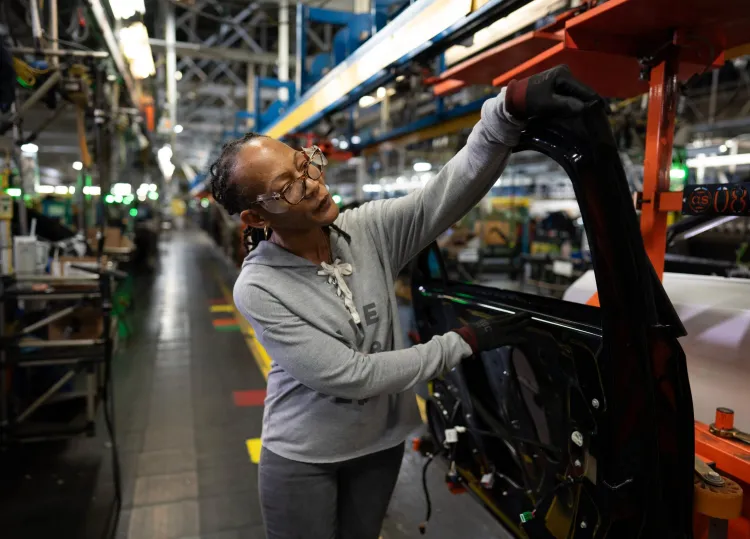
Full production of F-150 Lightning trucks began on April 26, 2022 , at the Rouge Electric Vehicle Center, a facility housed within Ford’s historic Rouge Complex in Dearborn, Mich. It was the first Ford facility to leverage robotic Autonomous Guided Vehicles – rather than in-floor conveyor lines – to move vehicles from station to station. This enabled faster production, additional quality checks, and enhanced customization.
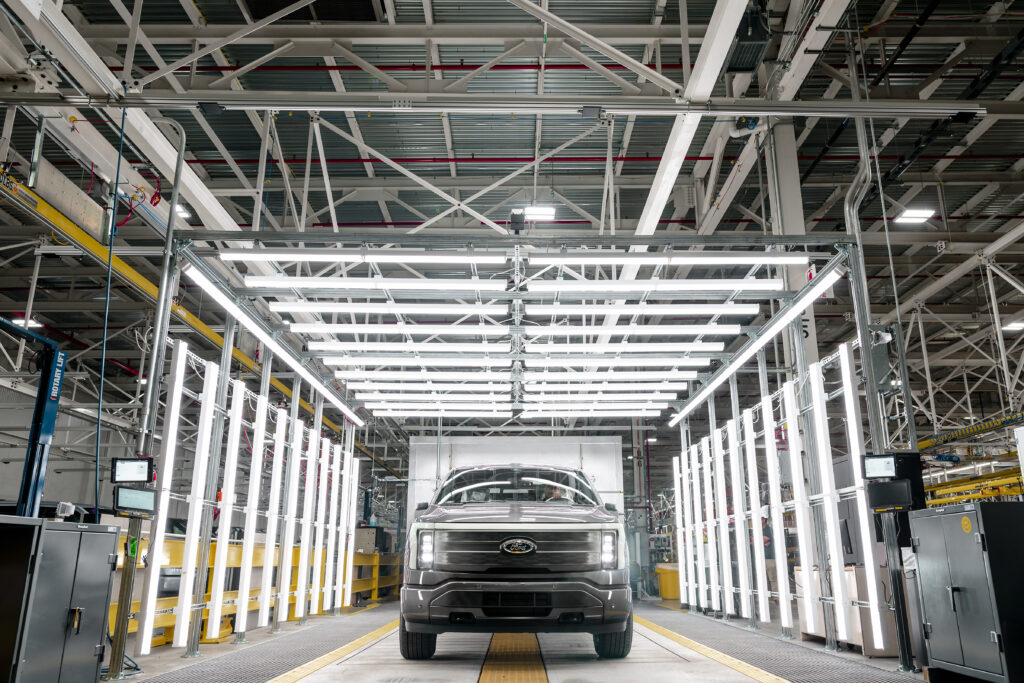
At the time, the F-150 Lightning was the only commercially available – and fully-sized – electric pickup vehicle, and it brought an influx of new customers to Ford. Indeed, three out of every four people who reserved an F-150 Lightning did not own or lease a Ford vehicle at the time.
Ford’s initial investment in the F-150 Lightning created 1,700 jobs across Michigan; 750 jobs at the Rouge Electric Vehicle Center, and others at various Ford plants including the Rawsonville Components Plant, where Lightning batteries are assembled.
In the summer of 2023, an expansion and retooling effort resulted in a six-week shutdown of the Rouge Electric Vehicle Center. The renovated facility, which reopened on August 1, is now capable of producing the F-150 Lightning at an annualized rate of 150,000 units.
What Materials Go Into the Ford F-150 Lightning?
The following materials are required to manufacture the Ford-150 Lightning.
A torture-tested fully boxed steel frame is strong, durable, malleable, and resistant to rust. Ford used to make its steel at the River Rouge Steel Plant. Today, it sources all of its steel from a mixture of domestic and foreign suppliers.
A military-grade aluminum alloy body makes the Ford F-150 Lightning strong and tough. Ford sources its aluminum structural components from French manufacturer Constellium , which operates a plant in Van Buren, Mich.
Lithium is lightweight, low-density, and highly reactive, making it a critical component of EV batteries. Most lithium is sourced in Australia, Chile, and China. However, Ford recently announced a partnership with Energy Source Minerals to begin producing lithium battery materials in California in 2025.
Cobalt, nickel, manganese, and iron are typically used in lithium-ion batteries, but the growing demand for these materials has contributed to supply chain shortages and ethical concerns.
Cobalt, for example, which is primarily mined in the Democratic Republic of Congo, has been dubbed “ the blood diamond of batteries .”
As a result, automakers are researching and developing alternative EV batteries.
Ford has invested in lithium iron-phosphate (LFP) batteries , putting $3.5 billion towards constructing an LFP battery plant in Marshall, Mich.
Ford is committed to green manufacturing. In 2022, artificial intelligence company Altair recognized Ford during its 10th Annual Enlighten Awards for using sustainable materials in its F-150 Lightning electric pickup. The automaker won the top prize in the Sustainable Material category for its use of 100% post-consumer recycled ocean plastic in its wiring harness clips.
What Type of Electric Vehicle Battery is Used in the Ford F-150 Lightning?
Ford’s first electric trucks exclusively used lithium-ion batteries, but the automaker was concerned that EV battery supply chain shortages and ethical sourcing concerns could hamper its ability to scale up EV production.
Within a few months of the vehicle’s launch, Ford hinted at its intentions to switch a portion of EV batteries from lithium-ion to LFP.
Unlike lithium-ion batteries, LFP batteries do not contain hard-to-acquire materials, such as nickel, manganese, and cobalt. In addition, they are cheaper, lighter, safer, and have a low degradation rate. The biggest benefit associated with traditional lithium-ion batteries is their higher density , which makes them well-suited for driving long distances, hauling, and towing.
By July 2022, Ford had already secured 70% of the battery cell capacity it required to reach its goal of producing 2 million EVs annually by 2026 .
What Type of EV Charging Port Does the Ford F-150 Lightning Use?
The F-150 Lightning has a Type 2 Combo 2 (Combined Charging System or CCS) charging port type, which means it can charge using Level 1, Level 2, or Level 3 (DC Fast Charging) charging equipment.
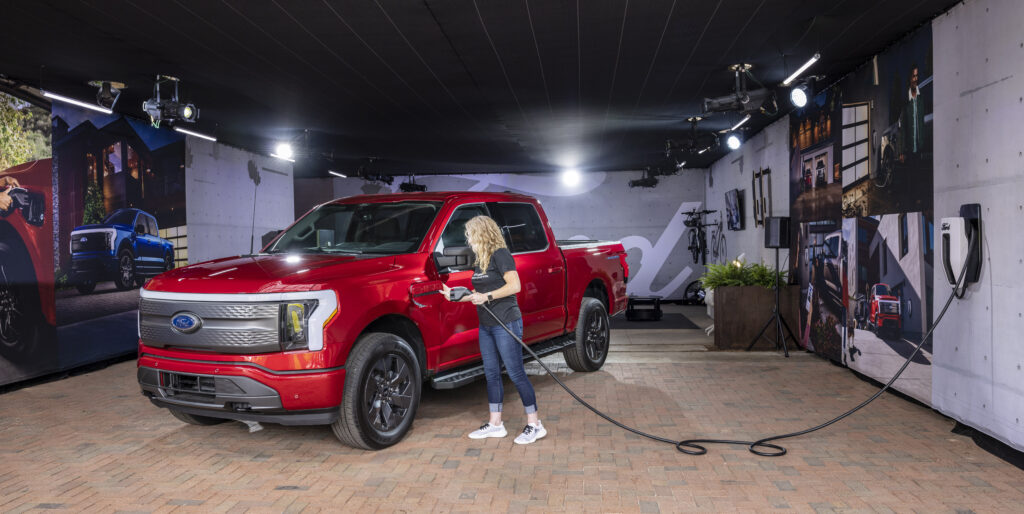
Ford currently offers a range of options for home charging. Each Lightning purchase includes Blue Oval Charge Network (BOCN) access and 250 kilowatt/hours (kWh) of Electrify America fast charging. Via a DC fast charger, the Lightning’s standard-range 98kWh battery can charge from 15-80% in approximately 36 minutes, while its extended-range 131kWh battery can charge from 15-80% in approximately 41 minutes.
What Type of EV Motor Does the Ford F-150 Lightning Use?
The F-150 Lightning has dual permanent magnet motors, which are mounted at the front and rear of the vehicle to power its all-wheel drive (AWD).
The motors combine to make 452 horsepower with the standard-range battery and 580 horsepower with the extended-range battery. The vehicle also offers 775 lb-ft of torque with both battery types. Since the torque is instantaneous, the vehicle is perfectly suited to off-road driving, even when towing a heavy load.
Recent News About the Ford F-150 Lightning
The release of the F-150 Lightning was eagerly anticipated, but momentum has slowed in recent months.
In November 2023, Ford announced it would be scaling back its plans for its $3.5 billion battery plant in Michigan. Production capacity would be cut by roughly 43% and expected employment would be reduced from 2,500 jobs to 1,700 jobs.
A few months later, the company revealed plans to shut down one of two production shifts at its factory in Dearborn, Mich. Although the automaker projects an increase in F-150 Lightning sales this year, it commented that its goal was to match “F-150 Lightning production to customer demand.”
Despite some criticism from customers about the vehicle’s range, Ford remains confident in the F-150 Lightning. For one thing, sales in 2023 were 54% higher than the previous year. Plus, in states where EV ownership is high – like California, Oregon, and Washington – the vehicle accounts for approximately 30% of sales of Ford’s F-series trucks. Things are moving in the right direction.
Image Credit: Ford