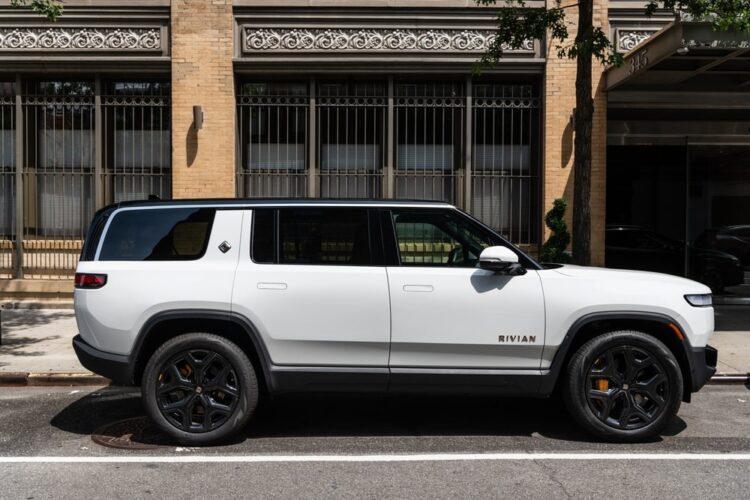
Electric vehicle (EV) automaker Rivian has been hard at work improving its EVs, and one of the most impressive changes it has made is reducing the amount of electrical wiring in its latest models using zonal architecture.
Rivian Reduces Electrical Wiring
Rivian’s recent vehicle updates include a brand new electrical system that offers a host of benefits, including advanced features, better sensors, and improved computing capability. The company has cleverly managed to trim off a whole 1.6 miles of wiring from its cars—equivalent to the length of 28 football fields!
This change doesn’t just reduce wiring; it also lightens the vehicle by 44 pounds. In EVs, shedding weight is important as it directly boosts battery performance. Less wiring and weight mean the vehicles are more efficient and eco-friendly.
Zonal Architecture
Rivian pulled off this reduction in wiring using zonal architecture. Instead of having separate pieces of hardware (ECUs) controlling every individual function, they’ve grouped them together, cutting down on the total number of ECUs needed.
This simplifies the vehicle’s electronics and also reduces the chances of something going wrong. For example, while the company’s first-generation vehicles used 17 ECUs, the new system only needs a few, each covering multiple tasks.
Fewer Parts
In addition to reducing the likelihood of parts breaking down, fewer ECUs also means less wiring snaking through the vehicle. By consolidating the controls, Rivian has created a more straightforward, reliable system that’s easier and cheaper to build.
This makes the manufacturing of the vehicles more scalable, meaning that the company can produce more vehicles faster and at a lower cost. This results in better vehicles for consumers and more room for Rivian to grow and improve.
Rivian’s Reduced Electrical Wiring—Conclusion
Rivian has already proven it can ramp up production, and is gearing up to introduce smaller models like the R2 and R3. It’s also teaming up with Volkswagen to take things to the next level. We recently reported VW’s plans to invest in Rivian, with an initial $1 billion and up to $5 billion in total.
VW’s interest in Rivian revolves around software development—VW wants to license Rivian’s intellectual property related to software and electric architecture. This collaborative venture aims to reduce production costs for both companies.
Image Credit: Shutterstock/Just dance