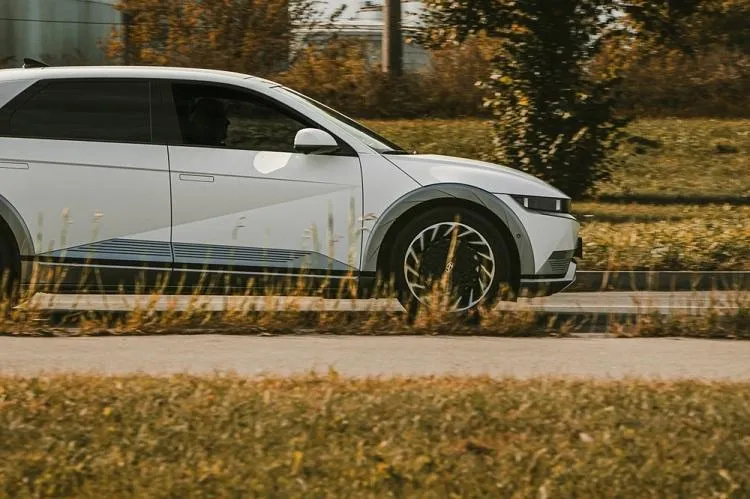
According to the International Energy Agency (IEA), internal combustion engine-powered vehicles account for 16% of global emissions. Concurrently, passenger electric vehicles (EVs) have spiked in popularity over the last several years amid new sustainability initiatives, accounting for 13% of new car sales in 2022. In light of these trends, manufacturing and supply chain professionals must familiarize themselves with critical electric car components, such as a power inverter, electric motor, and batteries.
Let’s dive deeper into electric car components.
Battery System
The battery system in electric cars is quite complex, as, in addition to a primary battery, most electric vehicles are also equipped with an auxiliary battery. There are several different types of batteries and systems found in electric vehicles, such as:
Lithium-Ion Batteries
Lithium-ion batteries are rechargeable batteries that include one or more cells and a circuit board and are responsible for powering everything from mobile devices to EVs. In these batteries, lithium ions transition between an anode and a cathode, a migration that generates power that — in the case of an EV — the battery transfers to the car’s electric motor.
Battery Management System (BMS)
The BMS is responsible for managing battery electric vehicles’ series of rechargeable batteries. It protects the batteries from operating outside their designated thresholds, optimizes their recharging processes, and maximizes their lifespans.
Battery Cooling System
Batteries generate a tremendous amount of heat while recharging and distributing power, which EV manufacturers mitigate by equipping the cars with a battery cooling system. The system uses liquid coolants, like ethylene glycol, to keep batteries within safe operating ranges in a battery electric vehicle.
Battery Pack
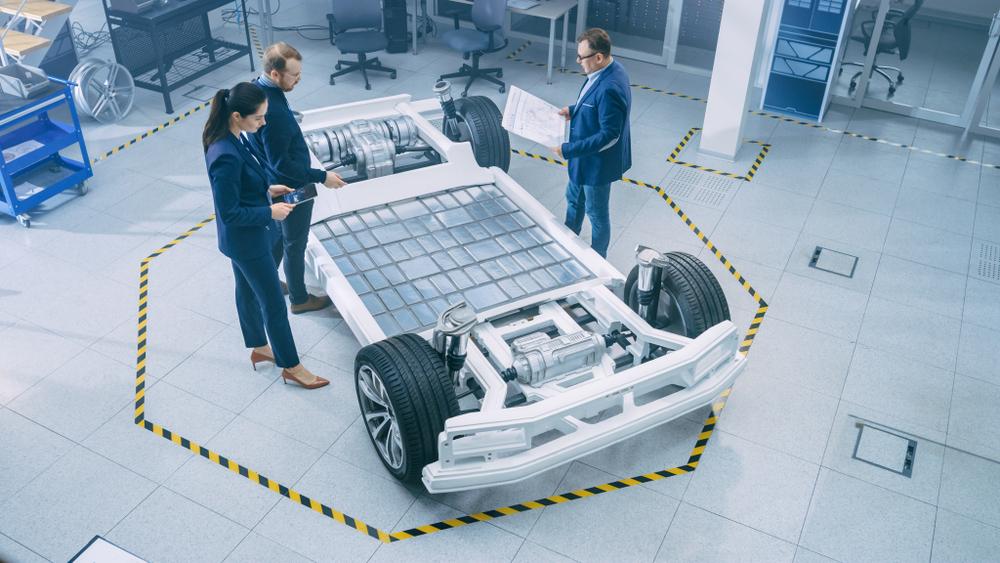
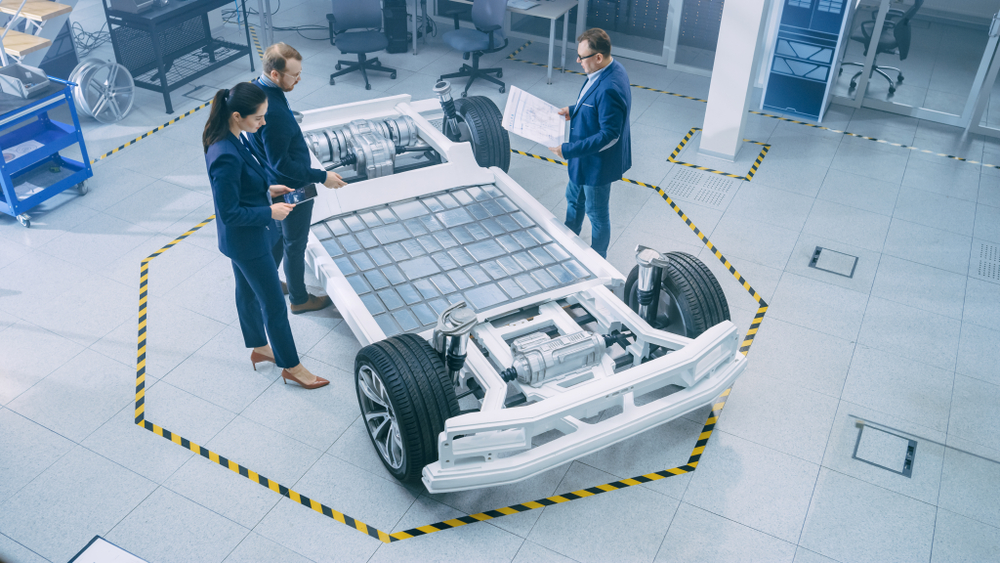
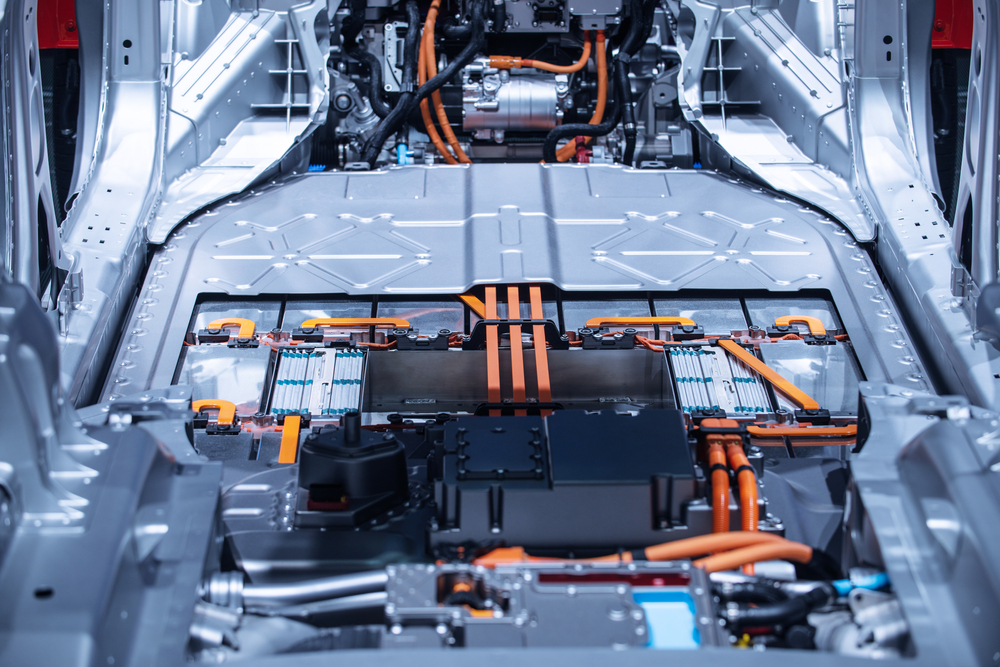
The battery pack, sometimes called a “traction battery pack,” powers the electric vehicle. Each traction battery pack contains multiple battery modules, which are simply clusters of battery cells.
Battery Cells
Battery cells are composed of individual lithium-ion batteries. These cells are then clustered together to form modules, which are then combined to make battery packs.
Electric Motors
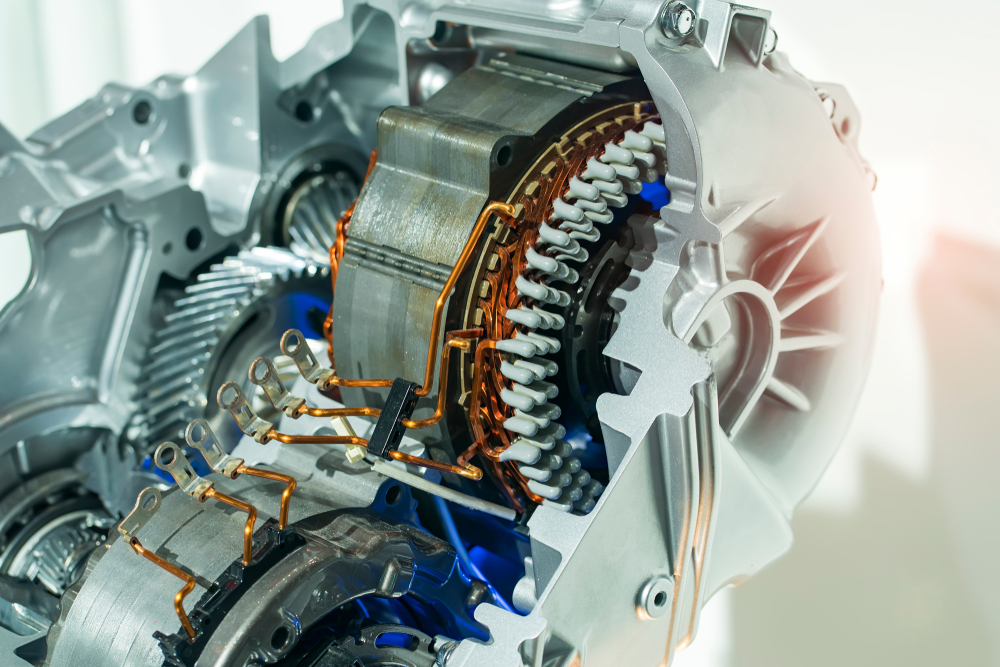
Electric motors convert electrical energy from battery packs into mechanical energy. Below we explore the three most common types of electric motors and the auxiliary battery components that work in conjunction with them to propel EVs.
Permanent Magnet Motor
Permanent magnet motors are similar to servo and induction motors in terms of their overall design, featuring a rotor and a stator. The rotor is a moving component connected to the motor’s output shaft, and the stator is the outer housing. These motors use permanent magnets to generate torque.
Induction Motor
An induction motor, also called an asynchronous motor, leverages electromagnetic induction to generate torque. The motor’s stator winds, creating the magnetic field and facilitating induction.
Brushless DC Motor
A brushless DC motor (BLDC) uses an electronic controller and DC current to relay signals to electromagnetic coils, which cause the coils to rotate and the shaft to spin, transferring mechanical power to the EVs wheels.
Motor Controller
The motor controller is responsible for regulating the torque, speed, and power output of each motor. Typically, an EV will be equipped with at least two motors, though high-performance EVs may have three or even four electric motors.
Regenerative Braking System
A regenerative braking system captures some of the mechanical energy that is lost during braking and reroutes it to the EVs battery system. Regenerative braking extends the range of EVs by effectively recharging their battery packs.
Charging System
The charging system is one of electric cars’ most complex and integral components of electric cars. Components of these systems may include any of the following:
On-Board Chargers
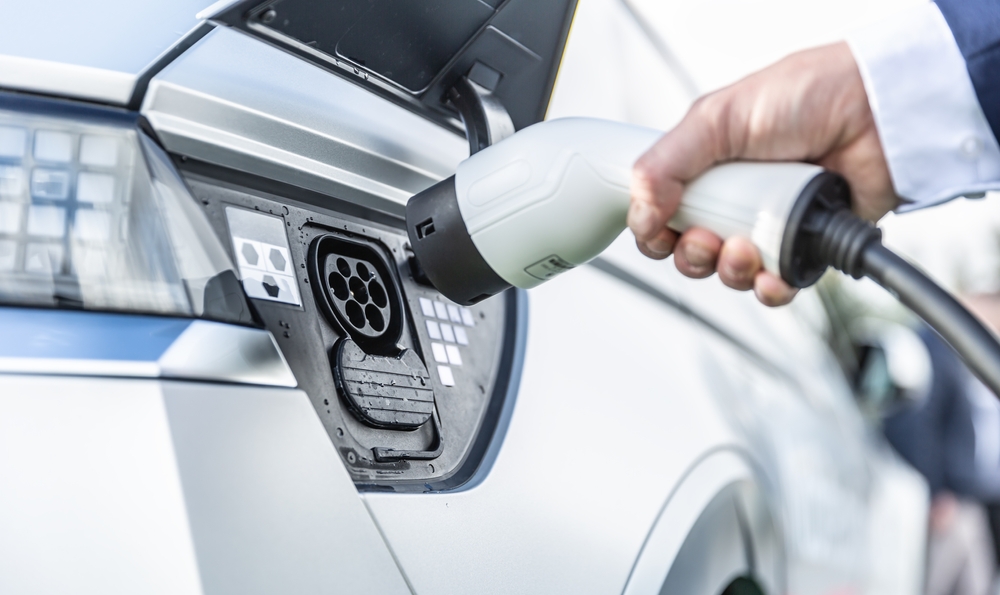
Electric vehicle batteries must be charged with direct current (DC) power. However, many energy sources, including common outlets, emit electrical energy via an alternating current (AC). The onboard charger installed on every EV converts AC to DC and then routes that electrical energy to the vehicle’s batteries.
Off-Board Chargers
Off-board chargers, such as Tesla’s Superchargers, emit DC charging power, which can be routed directly to the vehicle’s batteries. As a result, these chargers are capable of recharging EV batteries at a much faster rate.
Charging Infrastructure
Charging infrastructure is an umbrella term that refers to the network of publicly accessible charging stations located at gas stations, rest areas, and businesses. Expanding it is critical to encouraging electric car adoption on a global scale. Over the last few years, the U.S. has been working to expand its charging infrastructure through a variety of federal programs.
Charging Cables
Residential EV charging cables can be grouped into one of two categories, Type 1 and Type 2 cables. Type 1 cables only restore a few miles of EV range per hour, whereas Type 2 cables can add 20 miles of range or more per hour of charging.
Charging Connectors
Charging connectors are another name for the plugs used to connect EVs to a power source. Tesla has its own proprietary charging plug, but it has also released an adapter so that other EVs can use its Supercharger network. Almost all electric vehicles in production use a standard charging connector.
Power Electronics
The power electronic components of electric vehicles include the following:
DC-AC Converter
Although an EV needs a DC current to charge its batteries, the electric motors require an AC current. A DC-AC converter switches the DC battery power to AC before transferring it to the motors.
Inverter
Some electric vehicles use a power inverter to transform a current from DC to AC. It effectively performs the same function as a DC-AC converter.
Power Distribution Unit (PDU)
A PDU disperses power to an EV’s various systems, such as its charging unit and electric motor.
Electronic Control Unit (ECU)
The ECU is an EV’s central control hub, managing the car’s electric motor, transmission, inverter, and other electronics.
Thermal Management System
The thermal management system regulates the temperature of various electric car components. A thermal management system is made up of a few components.
Cooling System
EVs are equipped with both cabin and component cooling systems. The cabin system keeps the passenger compartment at a comfortable temperature for occupants, whereas the component cooling system prevents the electric motor, batteries, and other parts from overheating.
Heating System
Battery performance is greatly diminished at frigid temperatures, and since a battery produces far less heat than an internal combustion engine, EVs need robust heating systems to function properly in cold weather.
Heat Pump
The heat pump transfers heat energy from the outside air to the car’s battery packs.
Thermoelectric Materials
Thermoelectric materials can convert electrical energy into heat energy and vice-versa. They have the potential to improve the energy efficiency of an electric car and reduce their dependence on auxiliary heating systems.
The Future of Electric Cars
The EV industry is still relatively new, and its supply chain and manufacturing processes are constantly evolving. EV manufacturers are continuously evaluating their material and component sourcing processes to expedite the production of electric cars so that they can keep pace with ever-growing consumer demand.
In the coming years, several innovations will further accelerate the transition away from internal combustion engines and motivate consumers to purchase vehicles powered by electrical energy. Ultra-fast, wireless charging technologies can eliminate barriers to EV adoption and make using EVs even more convenient. Additionally, the advancement of fuel cell technology has the potential to make refueling EVs as efficient as filling a traditional car’s tank with gasoline.
Over the next decade, electric car sales will continue to rise. They may even outpace traditional vehicle sales, but to adapt to the changing landscape of the automotive market, suppliers, parts manufacturers, and automakers alike must all be responsive to changes in demand while embracing emerging technologies.
More EV Insights
- Types of Electric Vehicles: A Guide for Manufacturing Insights
- Electric Car Advantages and Disadvantages: A Comprehensive Guide
- List of Electric Car Models