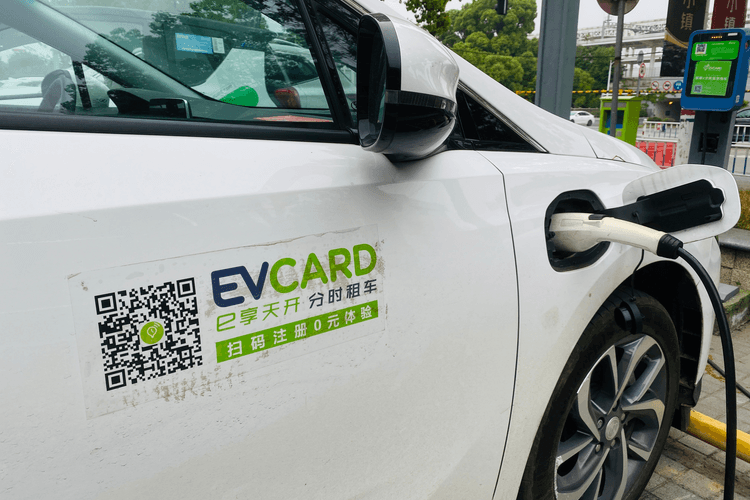
Chinese-made electric car incentives will be extended by Beijing to 2023 to help the electric vehicle (EV) market weather the economic impact of COVID-19.
The EV market in China has massive potential, with Beijing expecting EVs to make up 20% of all auto sales by 2025, which equates to 7 million EVs sold annually by that year. EVs currently have a market share of around 5%.
More than a million EVs were sold domestically in 2018, rising to 1,177,421 in 2019 (approximately triple the number of EVs sold in the U.S.). Alongside individual customers, transit systems are shifting to electric buses, while taxi fleets are also going electric.
The wider auto sector accounts for 10% of Chinese retail sales and over 16% of Chinese jobs. There are over 400 EV manufacturers registered nationwide, including foreign companies like Tesla who are producing made-in-China EVs for the local market.
Government Investment, Subsidies, and Tax Cuts
Between 2009 and 2017 Beijing invested just under $60 billion into the EV industry, intending to become the world leader in EVs. The Chinese government is also keen to reduce dependence on oil imports, and reduce the number of ICE vehicles to improve the nation’s poor air quality.
Support for the sector has been delivered in the form of:
- Subsidies and tax cuts for EV manufacturers and buyers
- Research and development funding
- Government purchasing of EVs
- Investment and expansion of charging infrastructure
- Increasingly stringent emissions rules for ICE vehicles, with customers having to enter auctions or lotteries to purchase petrol-powered cars. There is no waiting required to purchase an EV
However, the Chinese government slashed subsidies for EV purchasing in mid-2019 to promote a “survival of the fittest” situation for manufacturers. This caused a slow-down for the sector that was massively exacerbated by the emergence of COVID-19 at the end of the year.
COVID-19’s Impact on EVs
In the first three months of 2020, COVID-19 caused manufacturers to halt production and dealerships to close. Concerned about their incomes, consumers stopped making discretionary purchases. Overall auto sales plummeted by 42.4% to 3.672 million vehicles, while production of EVs fell 60.2% and sales fell by 56.4% compared with last year. By March, EV sales in China had fallen for nine consecutive months.
Recovery Measures
With its eye on the sector’s long-term prospects, Beijing will not let the fledging EV industry flounder. According to Chinese state media, EV subsidies and tax break policies have been extended into 2023, while battery charging infrastructure will increase ten-fold due to a 2.7 billion yuan (nearly $400 million) injection. Although consumer purchases have flatlined, institutional buying (commercial and government purchases of EV fleets) is expected to be strong.
WIRED notes that interest in autonomous vehicles has recently accelerated in China, as driverless delivery systems are seen as very useful during a pandemic. Typically, investment in autonomous vehicles also benefits the closely-linked EV market.







![Applying Startup Lessons to Corporate Business Models with Sean Ammirati [New Podcast]](https://machinerys.net/upload/cache/202507/applying-startup-lessons-to-corporate-business-models-with-sean-ammirati-new-podcast.webp)