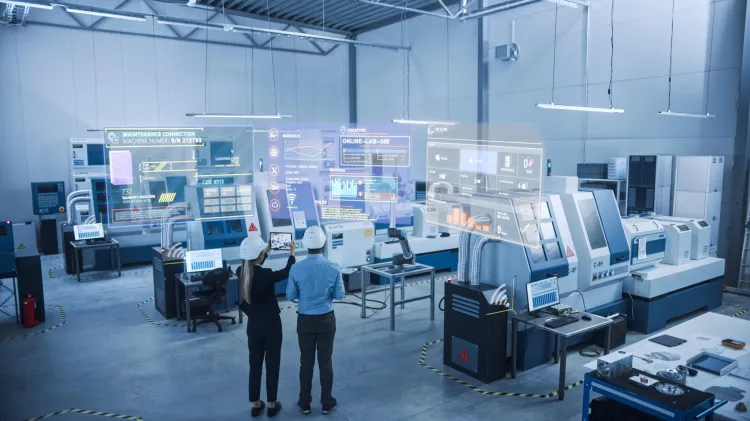
Although manufacturing resides in the physical realm, the industry can find ways to innovate and grow by looking at what technology industries are doing. The Internet of Goods can help the manufacturing industry increase its productivity and personalization.
What Is the Internet of Goods?
The Internet of Goods is another way to more descriptively reference Industry 4.0. It involves the digitalization of manufacturing as well as the data exchange and automation involved. The Internet of Goods is widely based upon a network of producers — be they factories or otherwise — which utilize modern technology to efficiently and cost-effectively manufacture products locally, even at small scales. This form of localized manufacturing stems from the convergence of three categories of technological innovation and enhances opportunities for the manufacturing industry as a whole.
Which Technologies Merge to Create the Internet of Goods?
While many digital industries such as finance and entertainment have been taken over by software, the manufacturing industry is only recently beginning to adopt high-tech trends in the face of difficult adoption due to the nature of physical items which cannot be reduced to bits and bytes. The following technologies have combined to create the foundation for the Internet of Goods.
Distribution Digitalization & Fulfillment Centers
Amazon has changed the way the world looks at shopping. It allows for companies to expand their reach, for users to quickly find even very specific products that may not be available locally, and for consumers to receive these items at an increasingly quick pace and for highly competitive prices. This digitalization of distribution that Amazon as a platform is known for is the driver of this level of speed and variety of access to goods. Similarly, Amazon continues to enhance their fulfillment centers, offering unprecedented convenience to buyers. Users are often able to receive products in two days and, occasionally, even within hours of purchase.
This business model and technology enables manufacturers to quickly ship products directly without the need to go through traditional retailers and other similar distribution channels — previously a major cost. Because of local distribution facilities, the idea of scale for the sake of cost efficiency is quickly losing steam, since manufacturers can now easily ship small batches locally at reasonable prices.
3D Printing & Robotics
Robotics have contributed to automation within the manufacturing industry, and 3D printing has altered how we look at the creation of products. Because 3D printing allows for quick and cost-effective customization of products, it opens many opportunities for business models that once would have been cost prohibitive.
Manufacturing Platforms
Manufacturing platforms enable new methods of manufacturing that are much faster and more efficient than traditional methods utilizing distributed and factory-less production methods. Much the way that social media changed the face of socializing and communication, manufacturing platforms are supremely altering the face of manufacturing.
These networked software allow for small entrepreneurs to quickly bring products to the global market, offer machine learning-enhanced feasibility and cost quotes within minutes, and allow consumers to easily order customized products directly from producers.
How Will the Internet of Goods Change Manufacturing?
The Internet of Goods could be the boost manufacturing needs to initiate growth. In a recent survey, 11 of 19 U.S. manufacturers produce less today than in 2000, and a full 18 of 19 have fewer employees in the same timeframe. While many industries have embraced new technology, manufacturing has been slow due to very real physical constraints which can limit implementation. However, the Internet of Goods will alter manufacturing in a multitude of ways including speed and customization.
Not only will consumers have the opportunity to directly customize the products they order, but small entrepreneurs will have the option to quickly and inexpensively create small batches of goods without the overhead of their predecessors. Through the use of manufacturing platforms, it is possible that creators can put their products into production within minutes — and without ever needing to create a physical prototype.
This ability to quickly design, redesign, produce, and directly deliver goods will also change the way manufacturers interact with overseas producers. While it was once efficient to order a large batch of product from another country, such as China, wait two months to receive it, then store the product until it was sold or sent to distributors, it is much less the case with the Internet of Goods. Because goods can be produced locally at low prices and at the time of need and then distributed directly to consumers who expect shorter delivery times and higher levels of customization, the standardized and homogeneous bulk products shipped from overseas may become a need of the past.