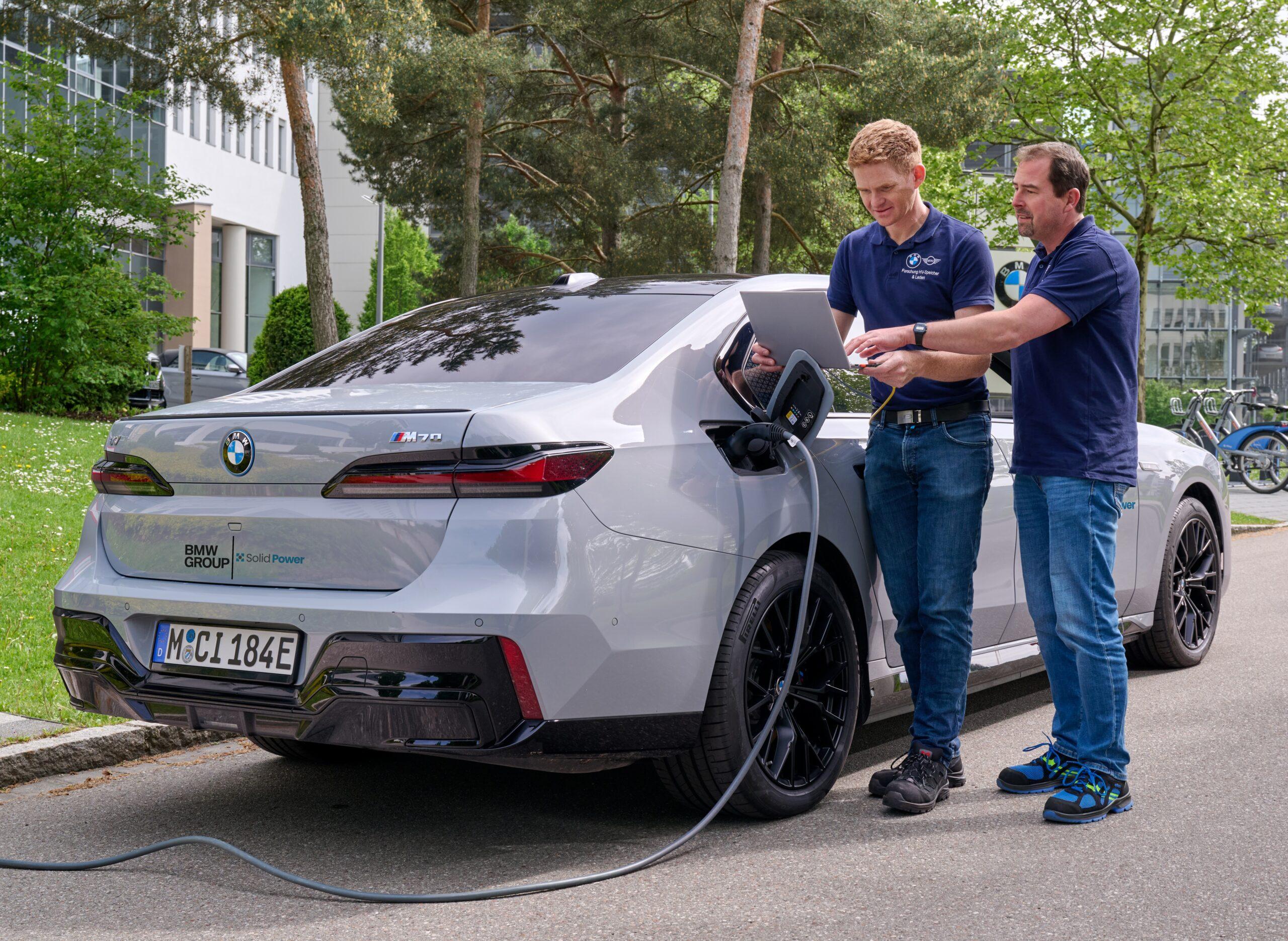
After years of research and development, all-solid-state battery (ASSB) technology is finally making its debut in a vehicle—the BMW i7.
ASSB Benefits
ASSBs come with several advantages over conventional electric vehicle (EV) batteries. They offer higher energy density, meaning they can store more energy in a smaller space. This could potentially make the vehicle lighter and increase its driving range.
Unlike traditional batteries, which use liquid electrolytes, ASSBs use a solid electrolyte. This significantly reduces the risk of fire and makes the batteries more resistant to temperature fluctuations, making them more durable and performing more reliably in various climates.
ASSB in the BMW i7
The test vehicle, a BMW i7, has been equipped with large-format ASSB cells from Solid Power, a partner the BMW Group has been working with since 2022. These cells feature a sulfide-based solid electrolyte and are integrated into the battery pack using BMW’s Gen5 battery architecture.
The testing focuses on understanding how these cells perform under real-world conditions—looking specifically at things like cell expansion, operating pressure, and temperature control.
Not Quite Ready for Mass Production
BMW notes that while performance is encouraging, ASSB technology is currently too expensive for commercial use and not ready for mass production. BMW said it might take around eight years to reach that stage.
In the meantime, BMW is continuing to develop its Gen6 lithium-ion batteries, which already offer major improvements in energy density and charging speed over current EV batteries.
Image credit: BMW Group