
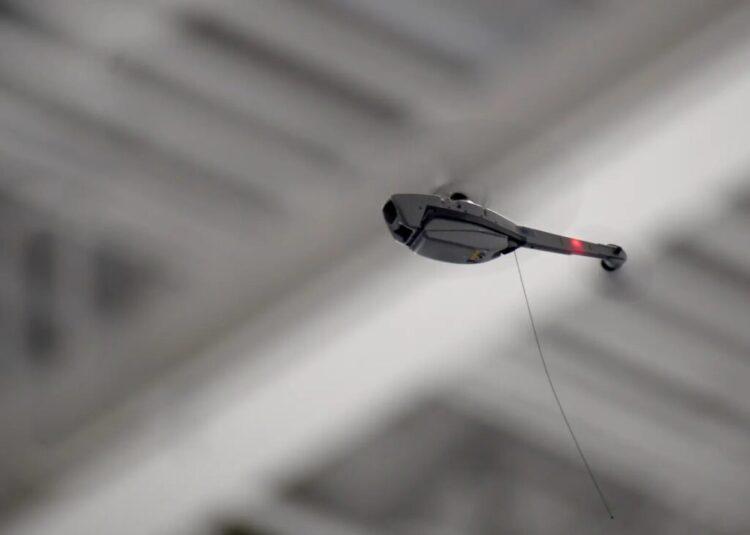
The U.S. military has deployed a tiny drone with massive capabilities, calling it the “new frontier of advanced weapons technology.”
Black Hornet 3
Don’t be fooled by its size. This tiny drone, weighing just 33 grams, can travel up to 1.2 miles and stay in the air for around 25 minutes per flight. Despite its micro size, it packs some impressive features that make it an indispensable tool for military operations.
The Black Hornet 3, officially called the Black Hornet Personal Reconnaissance System (PRS), is designed to help soldiers with surveillance in tough and potentially dangerous situations. For instance, the drone can help soldiers see around corners or into areas that would be difficult to access, all while keeping them out of harm’s way—and it does so quietly and discreetly.
Capabilities
The Black Hornet 3 can operate both inside buildings and outside in the field without the need for GPS—especially useful in environments where satellite signals might be weak or unavailable. It’s equipped with thermal imaging capabilities, allowing it to see in complete darkness.
It comes equipped with a dual-sensor suite, including electro-optical and infrared sensors, that allows it to provide real-time video footage to the controller for immediate information about their surroundings. In addition, its thermal imaging can identify heat signatures, like human bodies, even in pitch-black darkness.
Training and Testing
One of the Black Hornet 3’s most impressive perks is that, despite its advanced technology, it’s simple to operate and able to be up and running in just two minutes. In a recent training exercise, soldiers from the 1st Infantry Division demonstrated what this nano drone can do.
They proved its ease of operation, even in challenging conditions, its ability to fly autonomously along pre-programmed waypoints, or be manually controlled. They also showed its safety features that ensure the drone will return to its base if it loses communication with the operator, reducing the risk of losing the drone in the field.
Image Credit: U.S. Army/Master Sgt. Warren W. Wright Jr.