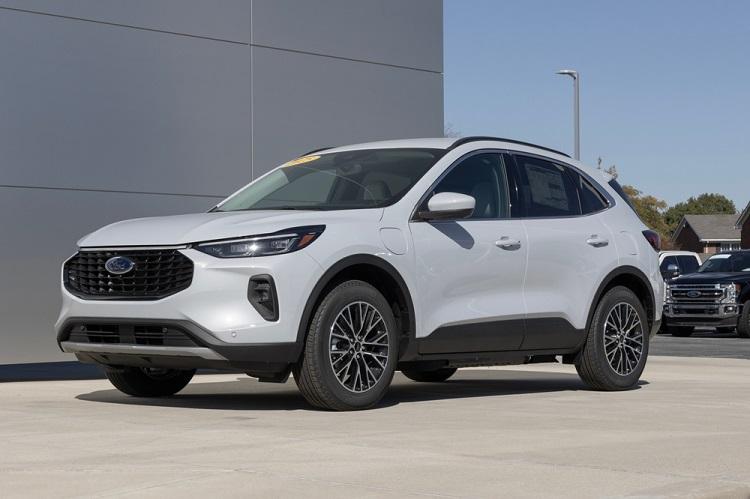
Almost 20,500 of Ford Motor Group’s electric and hybrid vehicles have been recalled due to a defect in the high-voltage battery cells.
Ford EV Recalls
The announcement, made by the National Highway Traffic Safety Administration (NHTSA) on December 31, 2024, stated that certain Escape and Lincoln Corsair (Ford’s compact luxury crossover) models from 2020 to 2024 would be recalled.
The problem, according to the NHTSA, is a “manufacturing defect” in the high voltage battery cells that could cause an internal short circuit, and, in turn, battery failure.
Earlier Recall
This new recall comes following another just two weeks earlier regarding the F-150 Lightning BEV, models 2023–2024.
The issue was found to be concerning an improperly tightened ball joint nut on the front upper control arm, which could cause drivers to lose control of steering.
What’s Being Done?
To rectify the situation with the Escape and Lincoln Corsair vehicles, dealers have been tasked with providing drivers with a free software update for the battery energy control module, as well as a battery pack replacement if needed.
In relation to the F-150, dealers will check the offending joint nut and either replace it or tighten it as necessary—again, at no cost to the driver.
What’s Next?
While owners can expect the official recall notification letters to arrive sometime after February 3, 2025, for any questions or clarifications, here are the contacts to reach out to:
You can also access the NHTSA database and check if your car is on the recall list by entering the Vehicle Identification Number (VIN).
Image Credit: Shutterstock/Jonathan Weiss