In April 2022, I wrote an article for Thomas Insights about how to manage during an inflationary time. Now we know that we are living with high but declining inflation.
We do not know how long this inflationary period will last and if we will go into recession before we come out of the inflation. But, we do know that businesses are conserving cash, cutting their workforce, and still trying to grow.
What’s an Industrial OEM’s C-suite to Do in This Inflationary Period?
There is no silver bullet to show you what to do. The referenced article has many valid suggestions to point you in the right direction, but there are a few specific suggestions that can help you come out stronger when the economy turns around.
Review Your Prices
One of the easiest things you can do is review your prices. Make sure that people aren’t leaving money on the table by offering an extra discount to accelerate and order.
When pricing commercial parts, you can use Markt-Pilot, a software package that shows you the price and delivery your dealers or end users can enjoy compared to your current price and quoted delivery. There is no reason that you should charge less than an industrial distributor for the exact same part. And there is also no reason why you should match prices with distributors if you can deliver a part quicker than they can.
Review Your Stockholdings
Another thing you can do is review your stockholdings and offer discounted overstocked parts to key accounts that are still using the equipment that uses these parts.
The Case for Remanufacturing
There is another thing you can do to generate significant cash while helping your customers continue to stay in business. But, to understand this opportunity you must walk in your customers’ shoes.
In my June 2022 Thomas Insights article about remanufacturing, I gave a number of examples of how remanufacturing greatly extends product life and how to start the remanufacturing business. The thing I did not include is a specific reason why remanufacturing will be important.
To get into a strong defensive position, many CFOs are hoarding cash. They are putting the brakes on as many purchases as possible. And, if a purchase is required, they invest time and effort to make sure the money is being spent wisely. Their favorite question to the requisitioner is “How else can you achieve the same outcome?”
When asked “how else” about purchasing capital equipment, the first answers that frequently pop up are 1) use over time, and 2) outsource. The common reasons for turning down these options are lack of control, inferior quality, employee burnout, or no one wanting to work overtime. If the equipment is relatively small, then renting it becomes viable, but if it is large, that alternative becomes less attractive.
However, there is an alternative. These days, many industrial OEMs have a strong remanufacturing business. Before inflation, remanufacturing was growing because businesses were considering sustainability when making many business decisions. With inflation, they are considering capital expenditures (CapEx) with a jaundiced eye.
There are two primary remanufacturing paths:
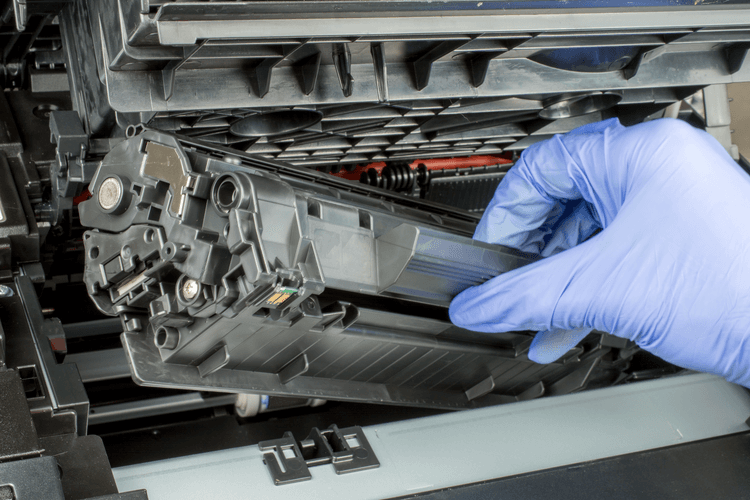
- The equipment owner sends the item to the OEM’s remanufacturing facility, and some weeks or months later, an almost unused item is on its way back to the owner.
- A dealer accepts an older item for a trade-in and remanufactures it to increase its resale value.
For a manufacturing business with a large capacity limitation, the ideal solution comes in two parts:
- Acquire a remanufactured unit from your dealer’s stock or network and
- Send your existing unit back to the dealer for remanufacturing.
In this scenario, the company winds up with two essentially new machines for the cost of one or 1.25 new machines. That is a hard deal to pass up.
“The Year of Equipment Life Extension”
With cash being tight, remanufacturing is a way to help your customers satisfy their demand while saving them money. And, of course, you also make a nice profit.
This is why 2023 will be known as “The Year of Equipment Life Extension.”
Sam Klaidmanis the founder and principal adviser atMiddlesex Consulting. He helps his B2B product manufacturing clients grow their services revenue and profitability by applying the methodologies and techniques associated with the Customer Value Creation and Customer Experience professions to assist his clients in designing and commercializing new services and the associated business transformations.Contact Sam here.









![6 Robots Roaming New York City [A Byte Out of the Big Apple]](https://machinerys.net/upload/cache/202506/6-robots-roaming-new-york-city-a-byte-out-of-the-big-apple.webp)