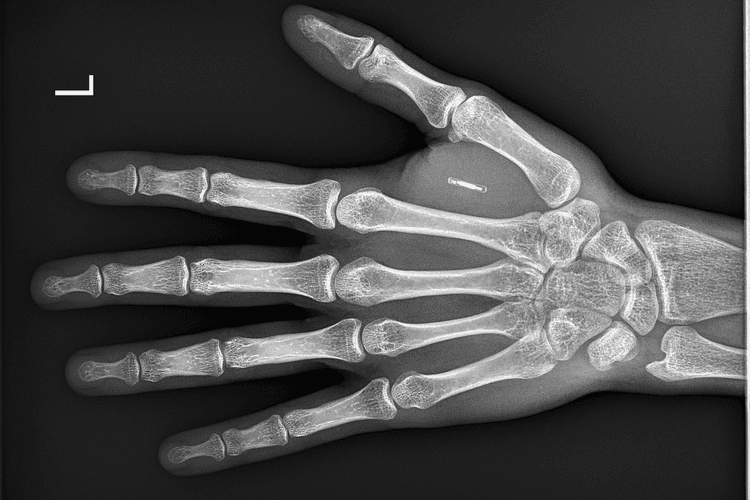
As technology evolves, devices continue to grow smaller and more compact. Electronic devices once limited to the household, such as phones and computers, can now be carried around in our pockets. Now – for some people – the concept of portable and convenient technology has been taken a step further with microchip implants.
In Sweden, a country known for its technological innovations, thousands have already implanted microchips into their bodies. The Swedish firm, Biohax International, was founded six years ago by former professional body piercer, Jowan Osterlund, and currently dominates this market.
“Having different cards and tokens verifying your identity to a bunch of different systems just doesn’t make sense,” says Osterlund. He further adds that chip implants can help streamline everyday tasks through enhanced connectivity.
The trend has even caught on the United States with Three Square Market, a Wisconsin based vending-solutions company, surgically implanted chips into more than 50 volunteers employed at the company in 2017.
Beneficial Technology or Passing Fad?
Microchip implants represent the latest evolution in convenient technology. The chips offered by Biohax International are designed primarily to reduce the time it takes users to perform specific daily routines. Individuals with implants can access their homes, offices, and gyms by simply swiping their hands against a digital reader.
Biohax chip implants can also be used to store emergency contacts, social media profiles, house keys/FOBs, and even e-tickets for events and public transportation. In 2017, government-owned passenger train company SJ became the first travel company in the world to allow people to use microchip implants in lieu of paper train tickets.
Biohax has also implied that users will soon be able to use the chips for store and restaurant payments. While using microchip implants for convenience is certainly cutting-edge, perhaps the biggest proponent for this type of technology is its potential to revolutionize health monitoring and medical diagnosis.
Dr. Michael J. Mirro, medical director at the Clinical Research Center of Parkview Hospital, has been working closely with the Three Square team to develop prototypes with the ability to continually monitor an individual’s vitals. This has the potential to allow both doctors and patients to access accurate medical data in real-time.
In June 2018, the U.S. Food and Drug Administration (FDA) also approved a fully implantable Continuous Glucose Monitoring (CGM) system for adults with diabetes. This is one of many technological innovations in the medical industry. “These technologies allow patients to gain better control over their health,” says Dr. Scott Gottlieb, former FDA Commissioner.
A Moral Dilemma
Brian Green, director of technology ethics at Santa Clara University’s Markkula Center for Applied Ethics, has expressed concerns over the ethics of microchip implants. While microchips aren’t new technology with pets, Green states that in a world where retailers, credit card companies, and employers require mandatory implants, the country can become a "surveillance state.”
Green also predicts that should the surveillance state nightmare come to fruition, individuals who decline microchip implants risk being marginalized and walled off from modern conveniences. He adds that individuals should always have the right to opt-out of implants without fear of persecution.
Like other types of electronic devices, there are also growing concerns that microchip implants may be vulnerable to hacking. By using a WiFi connection, the possibility exists that hackers infect chips with viruses and even gain access to stored confidential information.
Is the Mass Adoption of Microchip Implants on its Way?
While using microchip implants for convenient technology is certainly cutting edge, one lingering question remains: is this technology really necessary?
Kayla Heffernan, a researcher at the Melbourne’s School of Engineering, sees the adoption of chip implants as a “chicken and egg problem.” She explains that microchips aren’t widely used because they aren’t yet useful enough. And since there is no market, the devices remain relatively unchanged. However, continuous research and development by Biohax International and Three Square Market are aiming to increase the adoption rates of this new technology while attempting to sway the view of skeptics.