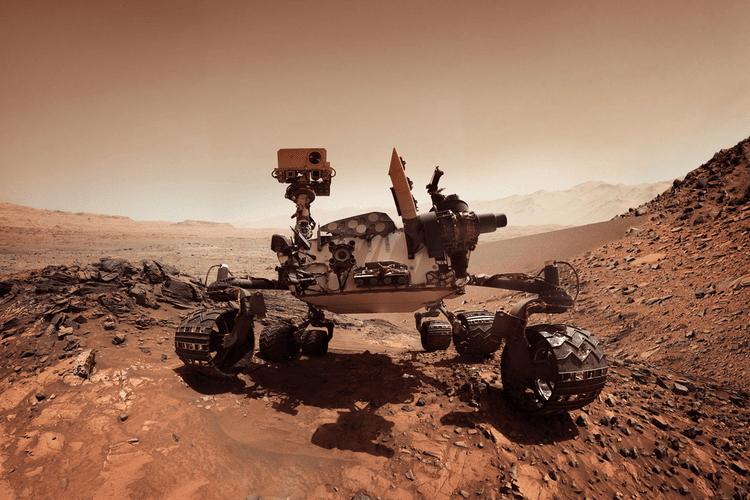
NASA’s 2020 mission to Mars will include a new rover with 23 cameras capable of providing panoramic images of the landscape, capturing data on the atmosphere, and assisting with other scientific experiments. These cameras are the largest number of ‘eyes’ ever used on a rover and offer an exciting look at how this technology has shaped such missions.
In addition to improvements in size and image quality, these new cameras demand less power and cost less. The added reliability is an additional benefit and keeping costs down on a $2.1 billion project is always appreciated.
However, the most significant gains might be the added color and 3-D imaging features. These stereoscopic cameras’ ability to support more 3-D images in high-resolution, 20-megapixel color allows for a greater understanding of geologic features, as well as studying elements such as erosion and soil texture. Essentially, these cameras allow for obtaining observational field notes from 34 million miles away.
The cameras also allow for taking wider-image shots that save time over moving and shooting to get the full picture. However, this increased detail reinforces a significant challenge – cameras are better at obtaining data than communications equipment is at compressing it and sending it back to earth.
Thislimitation has been improved by placing additional electronics within the camera instead of an on-rover computer. Thischange, combined with the use of orbiting spacecraft as data relays, has dramatically expanded the ability to send and receive more data from these advanced ‘eyes’ in the sky.
Also worth noting is that the camera technology being refined at NASA's Jet Propulsion Laboratory in Pasadena could find its way to a plant floor near you. Thismove was a trend started in the late 1980s when some of the active-pixel sensors used by the space shuttle and government satellites were commercialized for development of the first digital cameras.