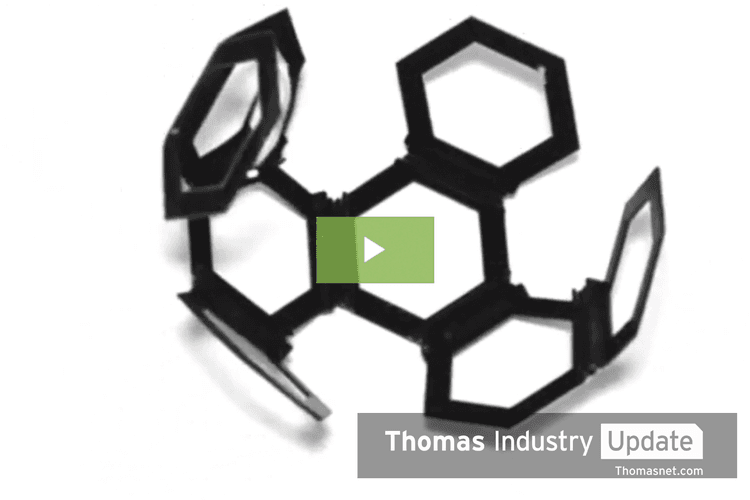
A recent report in the American Chemical Society’s Applied Materials and Interfaces journal discussed how researchers at Rice University’s Brown School of Engineering have developed what is being dubbed Reactive 4D Printing.
The approach uses materials that can be printed, and then when exposed to changes in temperature, electric current, or pressure, take on alternate forms. The initial challenge was finding a way to incorporate the shape-shifting material with the standard types of 3D printing materials.
This was realized through the development of a liquid crystal polymer ink, or building material, that carries unique chemical links at the molecular level. These characteristics allow for bonding to the non-transforming substances in helping to simultaneously support the composition of the initial object, as well as embedding the ability to change the object’s shape based on need or environmental factors. For designers, this means only one printing process is needed to incorporate materials needed for both the original shape or product, as well as the materials that will be needed in order for it to transform.
The finished product is then cured under UV light to ensure both materials are properly fused.
Next steps will focus on creating shapes that can independently support themselves. Once this has been figured out, Reactive 4D Printing could be used to create building materials that can flex to better handle different levels of load or stress, or even soft robotics for transportation or medical applications.