This article was sponsored by Bishop-Wisecarver, a certified woman-owned manufacturer and engineering services company that specializes in linear and rotary motion solutions for harsh and extreme environments.
“When I go home, my son often asks me what we did at work today. I can say to him, ‘We implemented a solution that helped somebody at the hospital get a scan and obtain the care they need. It’s nice to be able to contribute to society in that way,” says Kelly Walden, vice president of manufacturing at Bishop-Wisecarver, a privately held company providing motion solutions with its Signature Experience that includes prompt customer service, technical collaboration, and reduced lead times.
“We support many different markets from food processing, packaging, aerospace, medical, and defense. You can find our technology in almost any field. I think that’s really exciting and definitely fulfilling at the end of the day,” he says.
“Our sweet spot is working in extreme and harsh environments,” explains Pamela Kan, president of Bishop-Wisecarver. “The applications are really inspiring. From landmine detection devices, where we’re keeping people from being harmed and killed, to being in space on a satellite, to safely processing food with water jet cutting poultry or meat, or a medical device application, these are all critical use cases. When we can solve the customer’s pain point because of the design of our product being able to work reliably in these types of environments, and know we are making a difference in lives, it’s a great feeling.”
“We’re a second-generation family-owned business. My dad started the company,” says Kan. Bishop-Wisecarver is in its 71st year, and she has been with it for more than 30 years. “I am now the sole owner, and we are certified WBENC woman-owned and WOSB-certified, and there are very few companies in our space that have either one of those certifications.”
“When I was a recent graduate going through the interview process a year ago,” says Denise Butler, a mechanical engineer for the company, “I consistently received feedback from mentors that said, ‘We know Bishop-Wisecarver because their products are so good.’ The company has a solid reputation because their products have been proven for such a long amount of time. That is different from many other companies and one of the reasons I wanted to work here.”
“Most companies don’t last for 71 years, so I think it shows the grit of the company,” says Kan, explaining that grit is part of Bishop-Wisecarver’s pioneering spirit core value. “We’ve made it through multiple economic downturns and now a world pandemic. We’re still here, and we’re still growing, and we get stronger.”
5 Facts to Know About Bishop-Wisecarver
- “We use our products in our own in-house production and manufacturing,” says Walden. “When you buy something from Bishop-Wisecarver, you get the assurance that it’s been tested in our own harsh production environment on a daily basis for decades.”
- “We focus on working with speed. We try to come up with ideas every single day, which I find really refreshing,” says Butler. “A lot of other companies might be stuck on one project for five or 10 years, but we’re constantly innovating, constantly working to try to make ourselves better and our products more useful for our customers.”
- “We are a certified Evergreen company through Tugboat Institute,” says Kan, “which means we really strive to be a purpose-driven company in how we look at our growth, profits, and culture.”
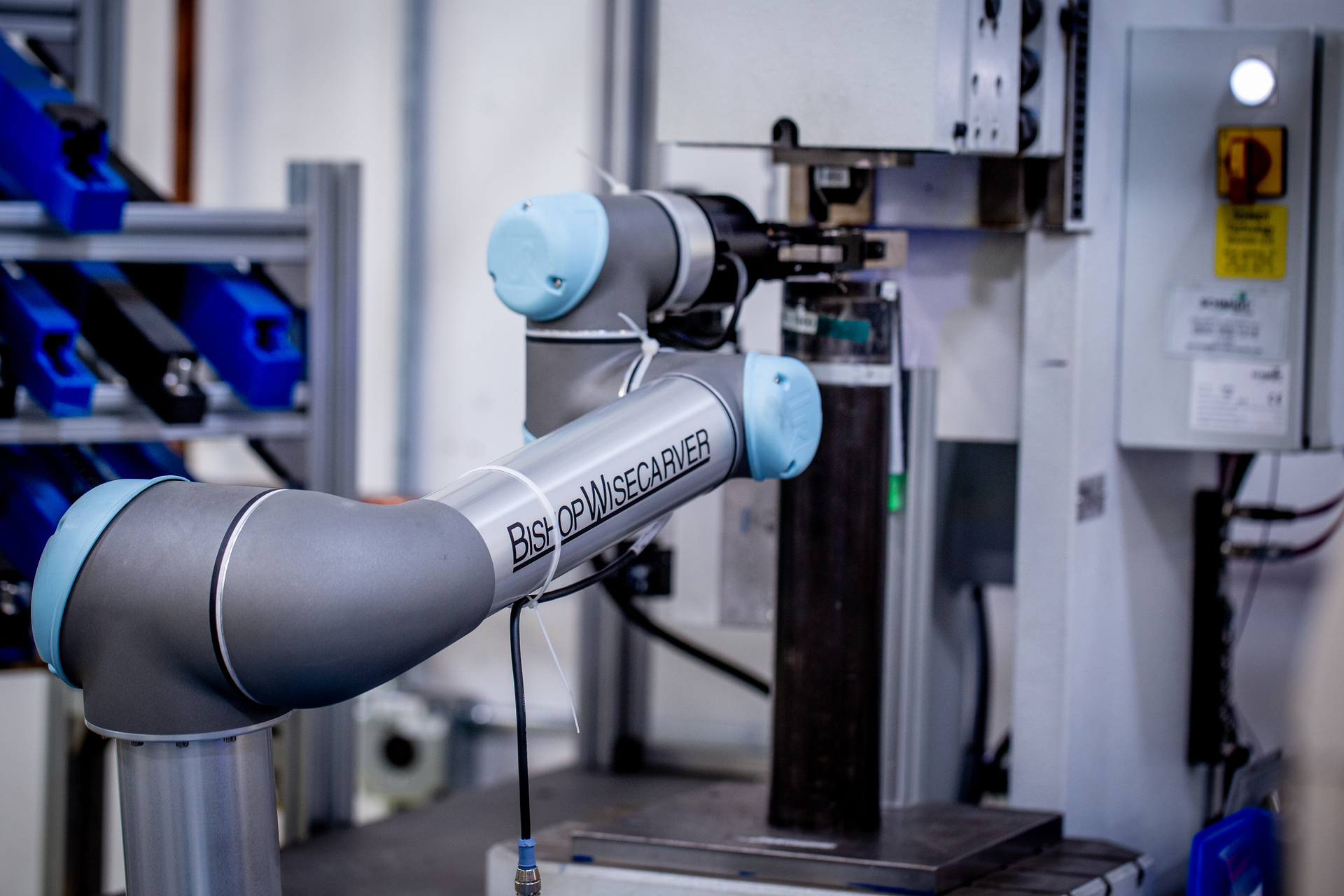
- “Our biggest assets are our people. Being able to utilize people in the best possible way to provide value to our customers means that we need to embrace automation as a collaborative approach and empower our employees to engage in higher-value work,” says Walden.
- “We do outreach with kids in STEM. We’re involved in First Robotics, Girls Garage, and MakerGirl, and we do a girls-only mentoring program during the school year with a local high school,” says Butler. “We also host Manufacturing Day with the community coming on-site to learn about manufacturing. We’re investing in the next generation of STEM, and it’s so much fun to show them the possibilities in engineering and manufacturing!”
Thomas Insights (TI): Can you tell me the story behind the product that Bishop-Wisecarver is most known for?
Pamela Kan (PK): Standard Oil had asked my dad to make a machine to package fertilizer, which is a byproduct of processing oil, to be sold in a retail environment.
Prior to the machine, the line was manual. It was just the fertilizer coming down on a flat roller, and they were shoveling it off into the bags. He set up the machine, but it didn’t take long for the machine to bind and stop working.
My dad used to wake up early every morning and just cogitate — as he called it — on solving customers’ problems. My family was big Oakland Raider fans, and one day he was sitting at the table watching the game. Since he was always thinking about how to solve problems, he started sketching out a way he thought he could design a bearing and rail system that would be able to survive that harsh, contaminated environment of bagging fertilizer. That’s where he sketched out the original concept for the DualVee wheel and the mating track.
We launched the DualVee product in the early ’70s, starting off with four sizes. We now have six sizes. We sell DualVee track in a variety of different materials from carbon to stainless. We have wheels in carbon, stainless, and polymer now. We also have linear guides, which is our UtiliTrak product that’s offered in an aluminum and polymer version as well as carbon and composite with a stainless steel version. And that’s an inline guide so it’s usually a three- or five-wheel carriage design that gets used a lot in transfer or door-type applications where you’re sliding a load back and forth.
TI: What’s something that isn’t widely known about Bishop-Wisecarver that you’d like to share with our readers?
PK: Our Signature Experience is really about making sure we specify the right solution for each customer’s needs. First and foremost, it’s about solving that customer’s problem — we will design just what you need, even if you’re going to order just one. That goes back to the spirit of my dad being, at his core, a custom machine maker. And we’ve always embraced that. It’s a big part of our culture. Kelly does a great job with the production team in having an agile production floor that allows us to produce custom items very fast and efficiently.
We also have actuators, rotary products, and linear guides — we go curvilinear and rotary as well as linear, which is unique to our type of technology. We’ve even built full testing apparatus and machines. I don’t think people understand how many different products we have to offer for their solutions.
Kelly Walden (KW): We can provide the whole solution. In addition to getting the actuator like LoPro, we can provide the gearbox and motors for a plug-and-play, drop-in solution. We have the ability to accessorize our offering such that in LoPro, for example, a customer can attach a payload to it, like a UR Robot.
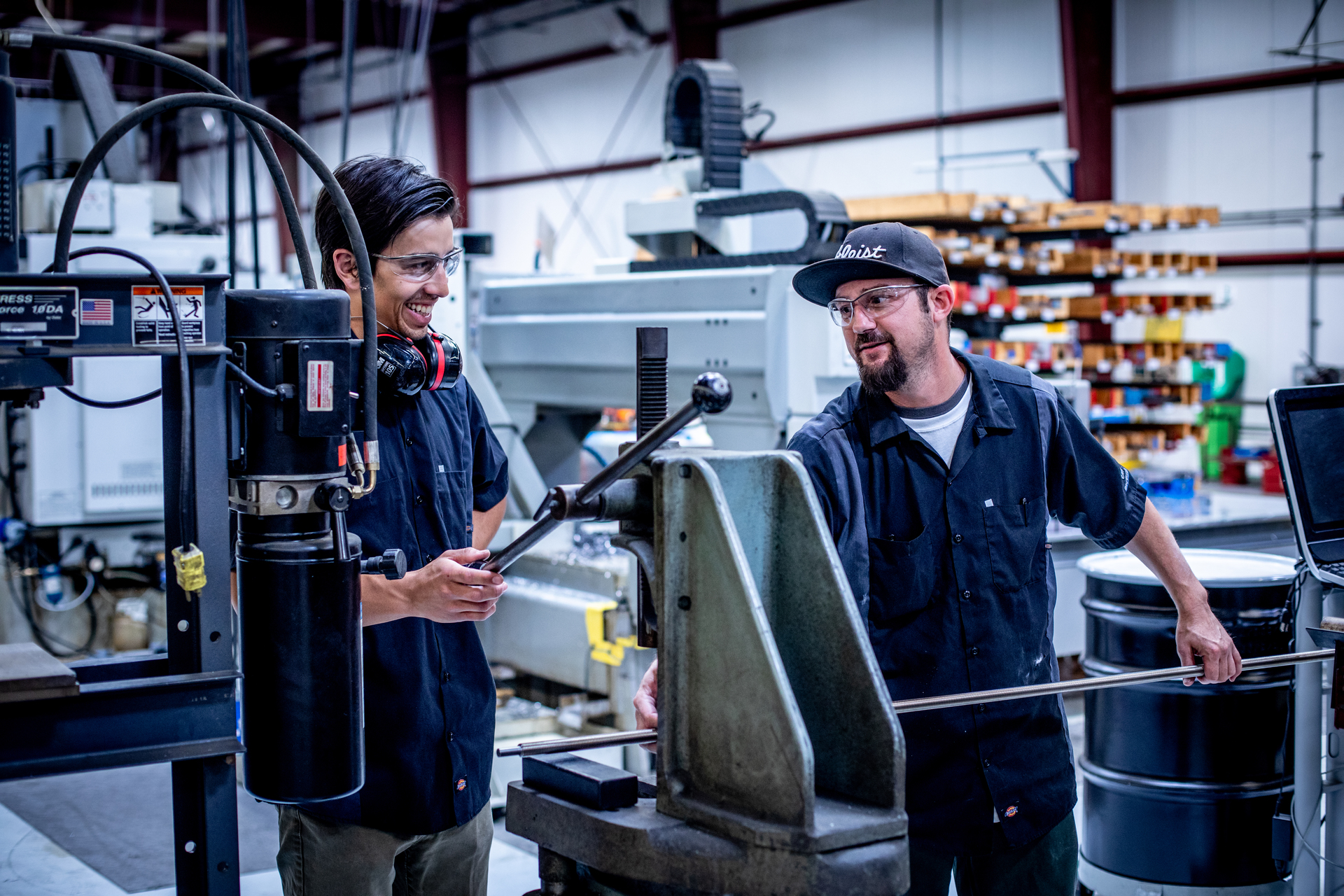
Part of what helps us to do that is just the sheer number of processes that we contain and do in-house. A lot of other companies outsource portions of their operation, but our operation is set up where we maintain production and quality control of the critical components of the systems in-house. These supportive processes include a full in-house machine shop, heat-treating, dedicated production systems, assembly and test operations, and an internal quality assurance team supplied with advanced inspection and metrology equipment.
TI: What are some of the challenges of providing custom solutions — and how do you overcome them?
Denise Butler (DB): There are hidden challenges when you’re trying to come up with solutions, but you’re not given the whole story. I was recently working on a project with a customer who was trying to make his own parts. He didn’t necessarily want to give all the details of his application, which sometimes happens because people can’t talk about it as fully as they might want to.
But with a little bit of digging, asking, "Is it dirty there? Is it wet? Is there wind? What’s going on?” to figure things out, we went from selling him just track to track and a carriage to where now he doesn’t have to make all his products from scratch.
He didn’t even really know what he was looking for in the beginning. He said, "I just want this one thing.”
We said, "Did you know that we can do all these other things for you so that you don’t have to?”
He said, "Okay, yeah, let’s do that. If I don’t have to do all that work, then I don’t want to!”
It’s fulfilling for us because then not only are we succeeding in our job, but we are connecting with people and helping them be successful. No question is the same, but it’s always a version of "Can you solve XYZ?” And it’s like, "Yes, I can. I just might need a few minutes to think about it with my team or look through some things.”
Every single problem that comes to us, we try to give the best type of support that we can to each of our customers, even if it means a bit of work for the application engineering team, brainstorming together because we need various perspectives. It’s different every day, and I think that’s one of the best parts about it.
KW: When you’re dealing with Bishop-Wisecarver or anybody, the exchange of information is critical in terms of arriving at a solution that works best for both parties. Don’t be afraid to share. It’s going to help you at the end of the day. The more you share, the faster we can move together.
PK: We really are problem solvers. In many cases, customers tried alternate forms of actuation that have all failed in their application. Because we have a niche of excelling in these harsh and critical environments, every customer is a success story.
TI: Can you share one of your success stories?
KW: We were manufacturing and selling additional parts to a medical device customer that was then incorporating them into a final assembly at another site. At the time, there were some challenges within their organization, and they wanted to consolidate and close down some of their facilities. This was a problem for them because they had an entire supply chain built around supporting this model.
We were able to approach that customer, saying: "We can offer much more value to you than what we’re providing today.” At the end of the day, we were able to take over management of that supply chain for this customer, take over the manufacturing of other components that at the time we weren’t producing, and then build those complete sub-assemblies, warehouse the solutions, and ship on a schedule.
It addressed a lot of pain points for them in terms of managing multiple suppliers. They could go to a single PO process with us. In fact, we ended up streamlining their deliveries overall and improving their delivery time. We’re ideally suited to add that value and structure for specific customers.
TI: How are trends like additive manufacturing impacting your business?
PK: A lot of what you’re seeing right now is coming from the composites. It’s still a little bit out there with what you can do with the metals, but it’s coming — and it’s coming quickly. We’re committed to staying on top of that and leveraging that technology as soon as it makes sense to do so. We’re starting to explore material sciences and the changes that are happening in coatings, lubrications, and compounds of different materials to use in solving pain points for customers.
We’re already investigating aspects of where we could leverage the benefits and freedoms of design with additive manufacturing in our products or out on the floor. That’s really what’s going to be disruptive in our industry.
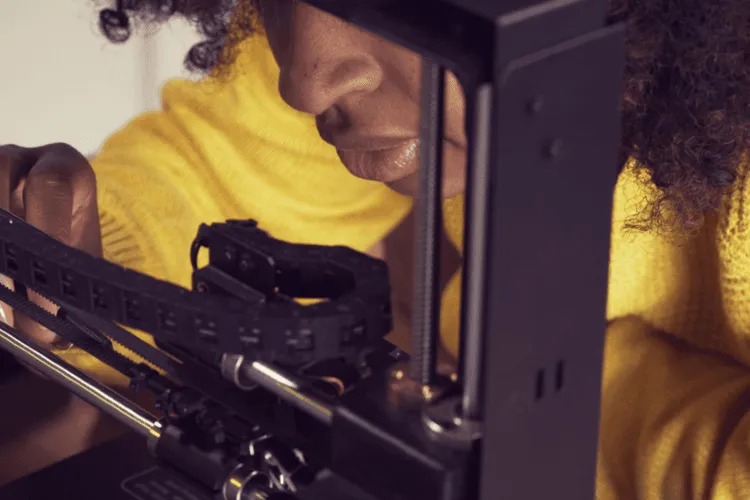
KW: We had a keen interest in additive manufacturing early on. We made early investments in printer units that we brought in-house. We’ve experimented with how we might deploy that, first within our own manufacturing support systems, so we do things like print fixturing, print in-house support tooling, and custom tooling that we can quickly print, test, change, and alter to suit our needs. It’s been a game-changer in terms of our agility.
As additive technology develops further, the ability to generate new part designs that are outside the realm of conventional production methods is going to become more commonplace. We’ll have a future there looking at how we marry that new technology with some of our core value processes to bring new and unique solutions to our customers.