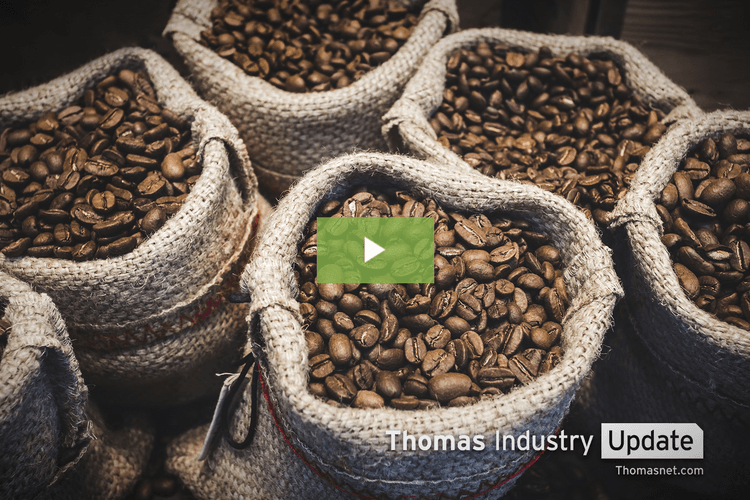
According to the British Coffee Association, more than two billion cups of coffee are consumed across the globe every single day.
But, much like other mass-produced goods, the world’s most popular drink comes with some environmental baggage, including hefty carbon emissions generated in the growing, roasting, and distributing of the beans.
And while there are ways to make that morning cup more sustainable — including using more environmentally friendly fertilizers and green energy in the growing process — some researchers are examining what it would take to move coffee production from the soil to the lab.
According to a recent report in New Atlas, Finland’s VTT Research Institute is looking into ways they can use biotechnology instead of agriculture in order to grow coffee, in an effort to produce the beans in a way that’s "less dependent on unsustainable practices.”
The scientists have been conducting experiments using the cells of real coffee plants, which are cultured, then multiply, and are transferred to a bioreactor, harvested, dried, and roasted. The researchers recently brewed their first cup using the process and said it tasted and smelled very similar to the real deal.
And it sounds like there are already some interested startups that are well on their way to making a go of this, using their own methods. New Atlas says a company called Atomo has raised more than $11 million in seed funding for its cup of joe, which it says it can produce with 94% less water, 93% fewer carbon emissions, and no deforestation.
Dr. Heiko Rischer, head of plant biotechnology at VTT, says their next step is to find some partners on the industrial side, enabling them to create a real, go-to-market coffee — a scenario he sees as at least four years out. But Atomo, who uses a brew made of the chemical compounds of coffee instead of beans, has already launched a limited edition cold brew pack which it calls "the future of coffee.”