
Power generation supplier Cummins announced April 6 that it and materials, ingredients, and solutions provider DuPont have partnered to address the U.S.’ shortage of N95 respirator masks.
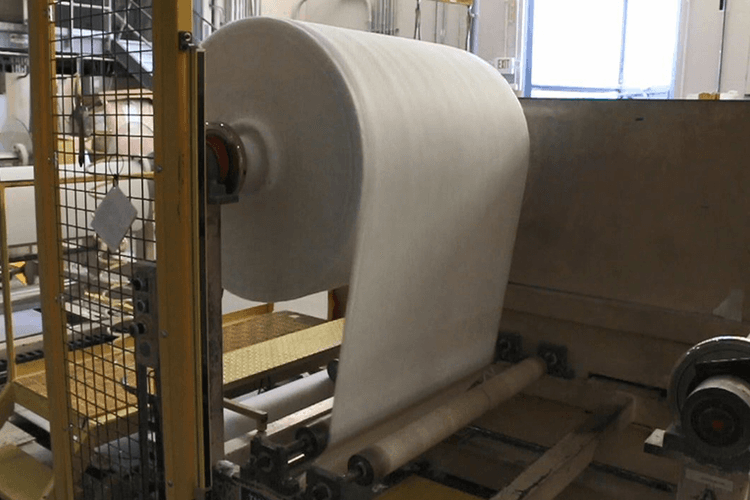
A press release states that Cummins’ NanoNet and NanoForce Media technology, which uses DuPont’s Hybrid Membrane Technology (HMT), can typically be found in air, fuel, and lube filtration products used in heavy-duty diesel engines to prevent long-term engine wear, but also can be used in the N95 respirator masks worn by healthcare professionals to filter harmful airborne particles that can spread COVID-19.
“Cummins is re-evaluating our supply base and manufacturing capabilities to identify how we can support our healthcare professionals who rely on critical personal protective equipment to do their jobs,” said Amy Davis, vice president of Cummins Filtration. “Our NanoNet Media can fill a key supply void and help address the mask shortage facing the United States and other countries around the world.”
Repurposing Lube Filtration Products
The first mask prototypes using Cummins’ donated media were assembled by the University of Minnesota teams in March as part of an initiative to provide masks to M Health Fairview and other Minneapolis-based healthcare systems. Cummins noted that as the COVID-19 outbreak escalated, the University of Minnesota realized their supply of N95 masks to protect healthcare workers would potentially run out in a matter of weeks.
To address that challenge, a team of designers, engineers, chemists, surgeons, anesthesiologist, and apparel and clothing experts from the University of Minnesota’s Institute for Engineering in Medicine; Medical School; College of Design; College of Science and Engineering; and Center for Filtration Research Consortium collaborated to address this projected shortage of critical personal protective equipment.
“We are tremendously grateful for the generous donation from Cummins of their filtration materials toward our mask effort,” said Jakub Tolar, campus health officer and Medical School Dean at the University of Minnesota. “Since the arrival of the filtration media, we have been able to make rapid progress, and we now believe we have several viable mask options, including both a disposable and reusable option. These designs show real promise in keeping our healthcare workers safe should standard medical supplies of N95 masks no longer be available.”
Making the Technology Accessible to the Public
Cummins said that the project also aims to provide open-source instructions that other healthcare systems and groups can use to create their own respirator masks. The manufacturer added that while DuPont’s Hybrid Membrane Technology (HMT) is typically integrated with Cummins’ synthetic fibers to protect sensitive engine components, it has multiple other applications that can include filtration media used in N95 respirator masks.
Cummins describes DuPont’s HMT as going beyond the limits of traditional semi-porous or nonwoven membranes for air and liquid filtration. Made using a proprietary spinning process, the technology materials are comprised of continuous sub-micron fibers. The end result is a “membrane-like” sheet structure that balances breathability and high filtration efficiency of particulates.










![Applying Startup Lessons to Corporate Business Models with Sean Ammirati [New Podcast]](https://machinerys.net/upload/cache/202507/applying-startup-lessons-to-corporate-business-models-with-sean-ammirati-new-podcast.webp)