If you’ve ever ridden a subway in New York City, you’ve relied on products from Boyce Technologies Incorporated (BTI). The Help Point emergency kiosks, radio and PA systems, communication networks, and rail signals components — basically any electronics system that makes customers like the Metropolitan Transport Authority, Verizon, or Outfront Media operational — are built at BTI’s facility in Long Island City, Queens.
When COVID-19 hit, CEO Charles Boyce saw the lack of medical ventilators as a responsibility to step up to develop the much-needed life-prolonging machine. Though they hadn’t made medical equipment before, the BTI facility did house every element of the production process: design, engineering, manufacturing, coding, assembly, and maintenance. “I almost think every electromechanical machine is the same,” says Boyce. “When somebody comes to us with a task, we just put the pieces together differently, but all the capabilities live under one roof. We can build anything.”
Working with Alexander Slocum of MIT and New Lab, Boyce’s team tried out a variety of different designs, leveraging BTI’s array of design tools, machining centers, robotic work centers, automated circuit board manufacturing lines, testing chambers, and other automation systems to create a working ventilator prototype in less than 30 days. Soon after FDA-approval, Boyce received a contract to produce thousands of the machines for hospital use. At a time when their usual customers were canceling future orders, BTI kept revenue flowing and workers safely on the job through new products that adapted with the times.
How was BTI able to pivot from making communications systems to something as different as medical ventilators? And how do they know they’ll be resilient going forward? Boyce cites three main factors:
Vertical Integration
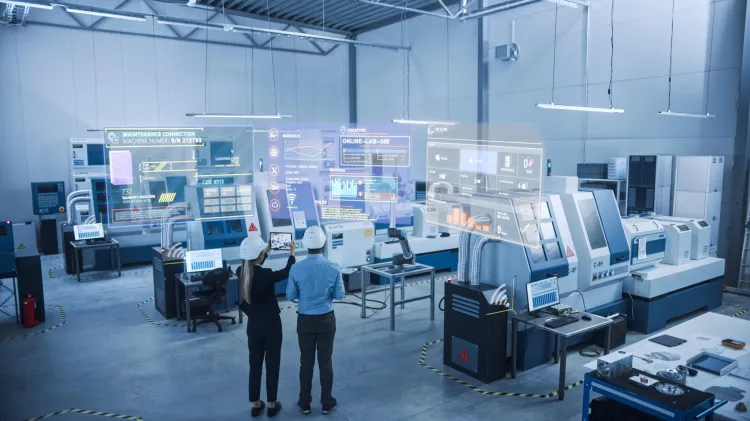
Within the BTI facility you’ll find every type of manufacturing process: cutting machines, computer numerically controlled (CNC) and tooling devices, soldering, coil-making machines, chassis construction, motor controls, robotic welding, injection molding, making circuit boards, software coding, and more. They also stock millions of component parts.
“It’s like an alphabet: we make words and sentences by resequencing the same 26 basic letters. That’s what the capabilities of our factories are: niches of every single bit of technology, vertically integrated under one roof. Whatever’s needed — a radio system, signals, cup-form mask making machine, ventilator — we put the pieces together differently,” says Boyce.
That way, BTI can flexibly apply different techniques and even redesign electrical systems on the spot, iterating in-house without having to wait for outside sourcing to slow them down. And in case of supply chain disruptions, they can mix and match processes or parts to make what they need; they’re not dependent on external suppliers or subcontractors.
An Openness to New Technology
The BTI shop floor looks like an image from the future: lasers, robots, and automation, all overseen, programmed, and operated by a highly adept staff that’s entrusted with multiple processes.
“The advice I have is to get rid of your old equipment,” says Boyce. "If it’s more than 30 years old, get it out of the building. You don’t need it. You can’t compete without technology.”
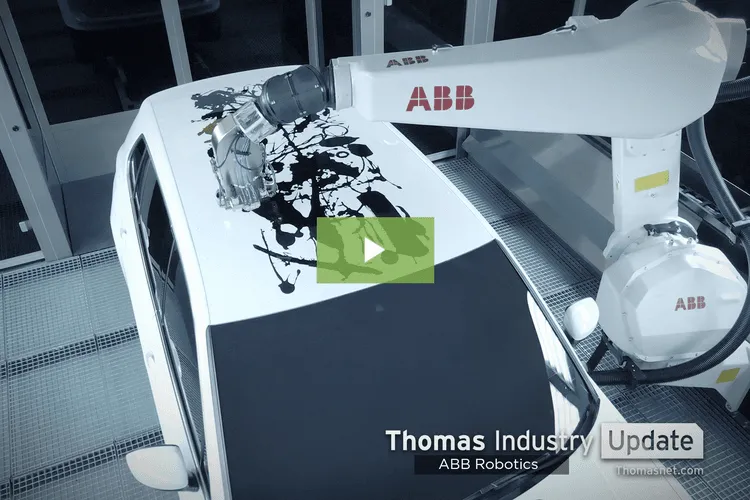
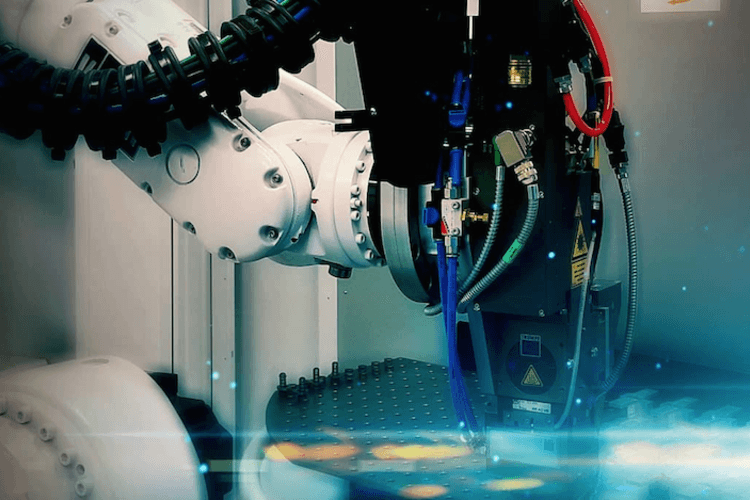
A few years ago, BTI procured one of the only Trumpf robotic laser machines in America outside of the automotive industry (pictured above). They weren’t sure what they’d need it for at the time, but now they use it to cut three-dimensional extrusions and bent-up metals, and the machine has become an indispensable part of their shop. The same goes for their 3D printers: initially purchased on a whim, they were soon used for prototyping and finally became crucial for producing parts that had to conduct radio frequency.
Some investments may not immediately help profitability, but even the reputation that advanced technology builds for the company will bring more business and attract more talented employees than it costs to implement the technology.
Of course, not all companies can afford to make investments in robotics or throw out the old. Boyce recommends that manufacturers at least invest in solid Enterprise Resource Planning (ERP) systems that ensure quality control that goes beyond Excel spreadsheets. It’s low hanging fruit that costs thousands, not millions of dollars.
A Willingness to Try Something New
Though BTI’s history and main efforts focused on a variety of communications systems, they have now expanded into ventilators, and the future may bring cup-form mask making, mobile medical vans, and even life sciences.
Given the building’s technical capacities, there’s always a way to iterate to create something. Though it might not be the ultimate way that makes sense for production, BTI fails fast, creates by using some in-house method, and then translates the product design for manufacturing. BTI will make the first version of a product, knowing that people will “see it, love it, and then order more of them.”
“I’ve learned that the money you spend is never connected to the money you get,” Boyce says. “In the middle is a confidence, a reputation, a capability; a self-reliance that allows you to turn that into something that is so visionary, special, quick, and so good that it’s not about spending a million dollars on a machine — it’s about getting $100 million worth of business.”
This article is one of three profiles offered by the NYC Manufacturing and Industrial Innovation Council (MaiiC), a public-private partnership housed in the NYC Department of Small Business Services. Click here for more information on the technology referenced in this article, NYC procurement opportunities, tax credits from the city’s Industrial Development Agency and Small Business Services, or if you’d like to join a community of like-minded manufacturers and industrial companies to share resources and ideas.