
The majority of cell phone users don’t yet have access to 5G, so why are so many people already talking about 6G?
One reason is a tweet from President Trump back in February 2020, when he wrote: “I want 5G, and even 6G, technology in the United States as soon as possible. It is far more powerful, faster, and smarter than the current standard. American companies must step up their efforts, or get left behind. There is no reason that we should be lagging behind…”
The trouble is, no one knows what 6G will actually be. The next generation of mobile networks is currently undefined and isn’t expected to arrive until after 2030. The unknown nature of 6G was illustrated by Dr. Ari Pouttu, who is running an eight-year, $285 million 6G Flagship Program in Finland: “I don’t know what 6G is. Nobody does.”
For now, 4G continues to rule supreme and will reach its full potential in terms of speed and capability in 2025. Pouttu predicts 5G rollout will be slower than expected due to the density of equipment required for short-range transmission, and the associated high costs.
What Could 6G Involve?
Keeping in mind that much of the talk about 6G is speculation, Pouttu suggested in an interview with VentureBeat that 6G would offer the following:
- Incredible speeds: 6G advocates hope to reach speeds of 1 terabyte per second, which will require signals to be transmitted above 1 terahertz. This will necessitate breakthroughs in computing architectures, new materials and chip designs, and new ways of connecting with sources of energy.
- Sustainability: Increased power consumption, and associated generation, will come at an increased cost in terms of money and the environment. With billions of IoT devices constantly collecting and transmitting data, ways have to be found to power devices with cost-efficient, reliable, and renewable power sources.
- A post-smartphone era: There’s no question that the smartphone is the centerpiece of both 4G and 5G technology, but with 6G, everything will be connected and data-driven. That means any object — such as say, a mailbox — will have artificial intelligence capabilities and an augmented reality interface that anyone can use. Having your smartphone as an intermediary device to communicate with or control other objects will no longer be necessary. We can also expect smartphones to become increasingly obsolete in an era of human-machine interfaces, as detailed in this article about Elon Musk’s Neuralink.
Understanding Network Generations
How did we get here? The journey to 5G and beyond began way back in 1979, with the gap between generations giving a possible hint as to how long we may be waiting for 6G.
1G: The First Generation commercial cellular network appeared in the late 1970s, with standards implemented throughout the 1980s. An analog technology built on AMPS, NMT, and TACS, 1G had a maximum speed of 2.4 Kbps. For anyone who remembers the brick-like phones of the 80s, they generally had low voice-quality, poor battery life, no security, and the signal would often drop out.
2G: The Second Generation marked the shift from analog to digital technology, improving both security and reliability of communications. Built on the GSM telecommunications standard that was launched in 1991, 2G added data to voice capabilities, enabling the introduction of SMS, roaming, conference calls, and real-time billing. 2G achieved speeds between 50 Kbps and 1 Mbps.
3G: Introduced commercially in 2001, the Third Generation brought us smartphone capabilities including web browsing, phone-based email, and picture and video sharing. Importantly, increased — and faster — data transmission became possible at a lower cost with the utilization of the UMTS (Universal Mobile Telecommunications System) network architecture. Generally, speed had to be at least 200 Kbps to qualify as a 3G service. Today, 4G network phones are designed to be backward compatible, meaning they can use the 3G network when required.
4G: With the rollout of 5G still in its infancy, 4G is the technology currently used by most cell phones. First launched in 2009 in Sweden and Norway, it enables high-definition mobile TV, video conferencing, cloud computing, gaming services, and more via improvements in speed, capacity, and quality. The two 4G standards are WiMAX (now increasingly obsolete) and LTE (Long Term Evolution). Speeds depend on where you are: average 4G download speeds in the U.S. are 18.1 Mbps, well behind South Korea’s 55.7 Mbps.
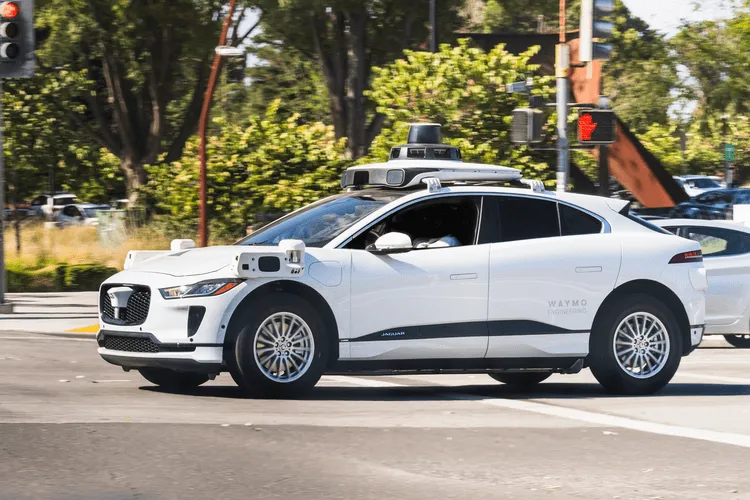
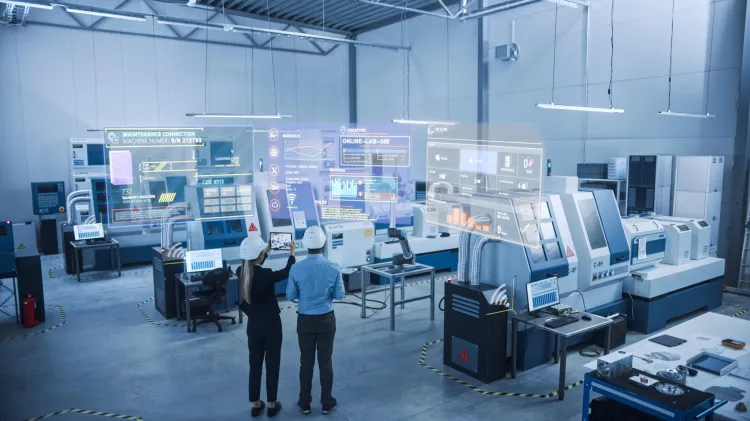
5G: Rolling out as we speak, the Fifth Generation is expected to provide speeds of up to 10 Gbps, feature latencies less than 10 milliseconds, and enable a massive increase in device connectivity (IoT). This will enable advances in artificial intelligence, smart cities, smart factories, self-driving cars, medical technology, and make other new innovations possible. Multiple short-range transmitters use high-frequency millimeter wave signals to allow high data speed. 4G cell phones will not work in the 5G network.
A Decade Per Generation
Two useful pieces of information to draw from the history above are, firstly, that there is generally a 10-year period between generations, which suggests 6G will be a technology of the 2030s. Secondly, each generation has included iterations or bridging technologies: for example, 2G evolved into 2.5G, then 2.75G as capabilities were added before 3G was introduced. We can expect to see a similar situation play out with 5G in the mid to late 2020s, with 6G standards developed by 2029 to 2030.
Apple’s recent iPhone 12 announcement may propel the 5G revolution.
Alongside Finland, China and South Korea have recently launched 6G research programs.