Patented inventions promise quality, propriety, and proper remuneration for their inventors. Whether saving numerous lives or potentiating industrial revolutions, the following proprietary inventions have surpassed technical and legal challenges to change the world.
1. Edison’s Light Bulb Patent
In early 1880, Thomas Edison of Menlo Park, New Jersey, received the patent for the incandescent lamp, a practical, long-burning light-giver and one of nearly 1,100 patents from Edison’s lab and technical team.
Given the heavy competition in electric lightning advances, Edison quickly jumped from experimentation in October to patent filing in November to patent approval on January 27th, 1880.
One significant innovation included in the patent is the bulb’s spiral filaments, which required much experimentation, including testing materials like wood splints, papers coiled in various ways, also lamp black, plumbago, and carbon in various forms, mixed with tar and rolled out into wires of multiple lengths and diameters.
2. Wright Brothers’ Airplane Patent
The Wright brothers filed a patent in March of 1903, highlighting "new and useful improvements in flying machines.” Then, on December 17th, 1903, Orville and Wilbur made the first powered, heavier-than-air flight.
Technologically, the brothers’ excellent flight advancement owed to warpeding the wing tips to their machine, giving it unprecedented aeronautical control and safety in the air.
3. Fleming’s Penicillin Patent
Of medical breakthroughs, none may match the discovery of antibiotics. Scottish microbiologist Alexander Fleming accidentally discovered Penicillin in 1928 when returning from a break and noticing an odd lack of bacterial build-up in a left-out Petri dish. Fleming isolated the bacteria-inhibiting fungus, penicillium, and did not attempt to patent it.
Fleming sought to unite medicine and those who needed it. Fleming also stated that he did not invent it; he only discovered it. And with nature as its inventor, penicillin cannot be patented. However, the technique of its mass production can be, and was, by American scientist Andrew J. Moyer in 1945.
4. Steve Jobs’ iPhone Design Patent
In 2012, the U.S. Patent and Trademark Office awarded Apple Inc. a patent for the 2007 first-generation iPhone. More than an entertainment device, it sparked a technological revolution whose lineage is everywhere one glimpses a smooth, touch-screen format.
The patent protects ” the ornamental design of an electronic device .” These aesthetic and technical iPhone specs helped elevate smartphone designs to birth an all-encompassing, handheld device with video, music, shopping, gaming, social media, breaking global news, and the many other perks of mobile internet access. Of course, it can also make the occasional phone call or snap a selfie.
5. Marconi’s Wireless Telegraphy Patent
Italian inventor and electrical engineer Guglielmo Marconi is the father of radio communication. He filed the patent for his first wireless invention in June 1896 — the first-ever patent for wireless telegraphy.
By 1899, Marconi transmitted signals across the English Channel, wirelessly bridging Britain and France. One year later, Marconi received a patent for "tuned or syntonic telegraphy,” opening the airwaves by allowing stations to simultaneously send transmissions on different frequencies without interfering.
In December 1901, Marconi transmitted wireless waves 2,100 miles across the Atlantic, proving that Earth’s curvature was no barrier. Approximately 800 patents are associated with Marconi or his companies.
6. Ford’s Assembly Line Patent
The iconic assembly line sprang to life in 1913 at Ford’s Highland Park assembly plant in Michigan. In its inception, Henry Ford drew inspiration from Midwestern meat and grain processing plants, where products were conveyed to workers who each performed a single task.
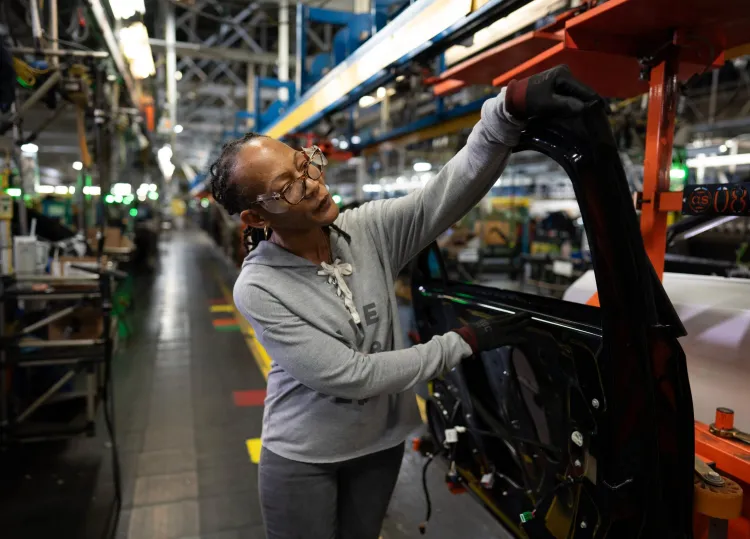
Ford’s assembly line innovation pulled automobiles along an assembly line where auto-builders constructed it step by step, truncating chassis production time from over 12 hours to just over 90 minutes.
By 1925, the price of a Model T had fallen to $260 from a pre-assembly-line price of $825 in 1908. However, the single-task monotony and fast pace of the assembly line drove workers away, so Ford countered by introducing the $5 workday, effectively doubling workers’ wages.
Ford’s line was pre-dated by Ransom Eli Olds (of Oldsmobile eponymy), who introduced and had several patents related to his stationary assembly line, enacted in 1901. As an early assembly line innovator, Olds multiplied mass production from 425 units in 1901 to 5,000 units in 1904.
This assembly line technology remains invaluable in every industry for the foreseeable future.
7. Notable Pharmaceutical Patents
The pharmaceutical industry isn’t driven solely by medical advancements but by medication patents that dictate market availability.
German biotech Bayer developed Aspirin, or acetylsalicylic acid, in the late 1800s and received a patent in 1900. Bayer trademarked the name, but the patent expired in 1917, and the trademark was partially repealed in 1921.
The name "aspirin” had become public property, and any manufacturer could sell under the "aspirin” name. Aspirin has become the best-known and possibly best selling drug in history.
Sildenafil, the chemical behind Viagra, was intended to treat disorders like hypertension and angina pectoris. It has become globally renowned and appreciated as an uncomplicated treatment for a different vascular issue.
Sildenafil was patented in 1996 and received FDA approval two years later. In its first year, it breached a billion in sales. Over 30 million prescriptions have been prescribed across more than 120 countries, and access is increasing as Pfizer allows generics to enter the marketplace.
Eli Lilly & Company, the makers of Prozac, had their patent extension denied by the Supreme Court in early 2000 because its purveyors "improperly double-patented Prozac to extend its exclusive control over the drug.”
In turn, the Prozac hegemony was cut short by a few years and $4 billion in sales. Generic versions of this best-selling antidepressant began appearing around 2000 as a federal appeals court invalidated the Prozac patent.
The first patent for fluoxetine was issued in 1977. However, it would only be marketed in 1988, highlighting a factor that accounts for creative medical patenting: pharmaceuticals seek the possible profit, but patents may be received long before a drug is approved.
When the Lipitor patent expired in 2011, the cholesterol-lowering drug had brought Pfizer more than $100 billion since its 1997 debut. The drug had become the gold standard statin and generated $2 billion yearly as of 2019.
The booming Chinese demand boosted Lipitor’s global sales in the wake of significant competition as exponentially cheaper, pennies-per-pill generics became available and preferred in the U.S.
Discovered at the University of Toronto in 1921, insulin has saved countless lives. It treated its first patient in January 1922, earned its name in May, and received patent protection in January 1923.
Its three discoverers (Frederick Banting, Charles Best, JJR Macleod) sold the patents to the University of Toronto for $1 because, according to Banting, "Insulin does not belong to me; it belongs to the world.”
8. Tesla’s Electric Power Transmission Patent
Unlike Edison’s favored direct current (DC), flowing in one direction, Nikola Tesla preferred alternating current (AC) , which changes direction 50 to 60 times per second. Using a transformer, AC voltage and current can be modified as needed to improve efficiency.
In May 1888, Tesla received his patent for electric wireless power transmission. Seven years later, he realized a lifelong dream by designing the first hydroelectric power plant in Niagara Falls. In addition to wirelessly transmitting power and proving that the Earth can act as a conductor, Tesla created the Tesla coil ubiquitously found in radios, TVs, and other electronics.
At the close of his career, Tesla had received 200 patents worldwide and birthed the polyphase alternating current systems of generators, motors, and transformers bought by George Westinghouse and made the standard power in the 20th century.
Today, Tesla’s accomplishments are often identified as Marconi’s or Edison’s. Shortly after he died in 1943, the U.S. Supreme Patent Court decided that Tesla should be considered the father of radio and wireless transmission.
9. Google’s PageRank Algorithm Patent
Google, the internet-revolutionizing creation of Larry Page and Sergey Brin, owes its power to PageRank, once the most popular measure of SEO success. Its first patent was filed in September 1998. When its patent expired in 2018, it wasn’t renewed because PageRank had been disused since 2006. It was replaced by similar, more intuitive algorithms.
PageRank evaluated page importance based on the quality and quantity of the links that led to it. Therefore, a page could increase clout by being linked to a better-ranked page. Since PageRank results were once visible via the Google toolbar, SEOs abused it to improve their score "unnaturally” through practices like paid linking, linking in bulk, and non-organic linking. Google retired its toolbar in 2016.

Challenges and Controversies in Patent History
In addition to innovation, patent history is a landscape littered with legal battles born of patent disputes and intellectual property controversies.
Among the most famous patent wars is that waged by the Wright brothers against many other fliers. The brothers waged "largely unsuccessful” court battles against fellow aviators from 1909 to 1917, scoring some exhibition fees.
Understandably, other pilots and engineers argued that the principles behind flying machines are the inalienable intellectual property of all sky-goers and that Wright’s patent should apply only to their specific flying machine.
More recently, the Apple vs. Samsung suit targeted trade dress, the commercial look of a famed electronic device. Apple filed a 2011 lawsuit against Samsung, accusing the latter of copying the iPhone and starting a seven-year, mostly symbolic battle that ended in 2018 with an unspecified agreement and minor monetary considerations.
Finally, patent wars may be more literal. Bayer lost their Aspirin patent and trademark, along with other U.S. assets, due to World War I.
Disputes sometimes lag, as per Gordon Gould, inventor of the LASER, who waited 30 years for his patents. He then received 48 of them and made a few million dollars after the three-decade-long court battle ate 80% of the profits.
America’s favorite cereals are another result of patent wars, this time between the Kellogg Company and the National Biscuit Company, the successor of the original makers of shredded wheat. In 1938, the Supreme Court ruled that the functional pillow shape could be copied and that "shredded wheat” was not trademarkable.
Similarly, Christian Louboutin sued Yves Saint Laurent for the latter’s attempt to market red-soled shoes. The court ruled that red-soled shoes were indeed ensconced as a Louboutin element in consumers’ minds, with a few caveats.
In the late 1970s, Polaroid sued Kodak for patent infringement relating to instant photography. In 1991, a settlement mandated that Kodak pay $925 million to Polaroid.
Cases may also deal with the nature of patentability, as per a 1980 decision that a genetically altered microbe and other living organisms could not be patented. This ruling was overturned, as it involved manufacturing, and a distinction was made that the state of being alive is without "legal significance” to patent law.
The dark side of patenting, patent trolling, threatens and delays advances, forcing companies to burn money defending themselves against often "meritless accusations.”
Trolling is often performed by affluent investors who buy up patent portfolios replete with unused, broad, or questionable patents. As a result, trolled companies could lose $160 million in RD money in just the two years following a settlement or loss. Altogether, patent trolling costs the afflicted companies $29 billion in out-of-pocket costs.
Impact of Famous Patents on Industries
Technological advancements spur industrial evolution beyond economic influence, shaping mindsets and behaviors as much as markets.
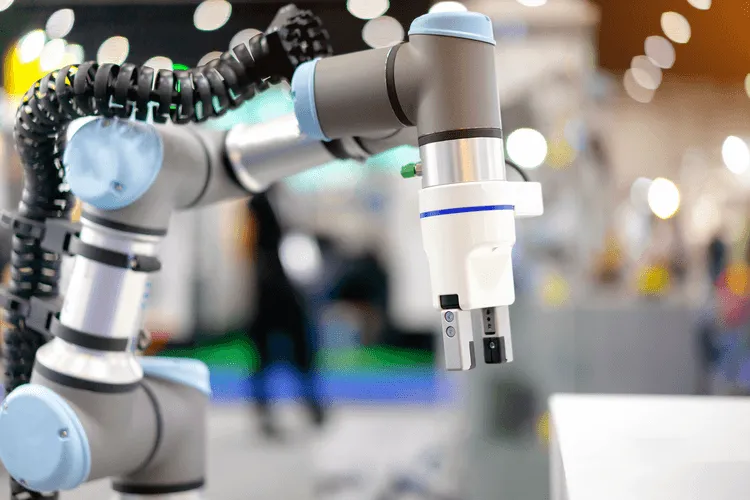
Patents mold future industries: floating Maglev trains transformed transport, boosted to hundreds of miles per hour by invisible magnetic fields. Robotic exoskeletons are reducing human effort in various manufacturing sectors. Additive manufacturing of 3D printed parts for many industries, including electronics and aerospace. Above, drones offer aerial views at a moment’s whim.
And many other possibilities exist, whether finetuning other electronic systems closer to home or delving into the bustling universe of gene editing.
Legacy of Famous Patents
Innovation legacy, famous inventors, and patent legacy are immortalized for their impact on industry, daily convenience, and life-saving prowess.
Technological evolution is impossible without invention, but also the means of protecting and ensuring those famous inventions.