
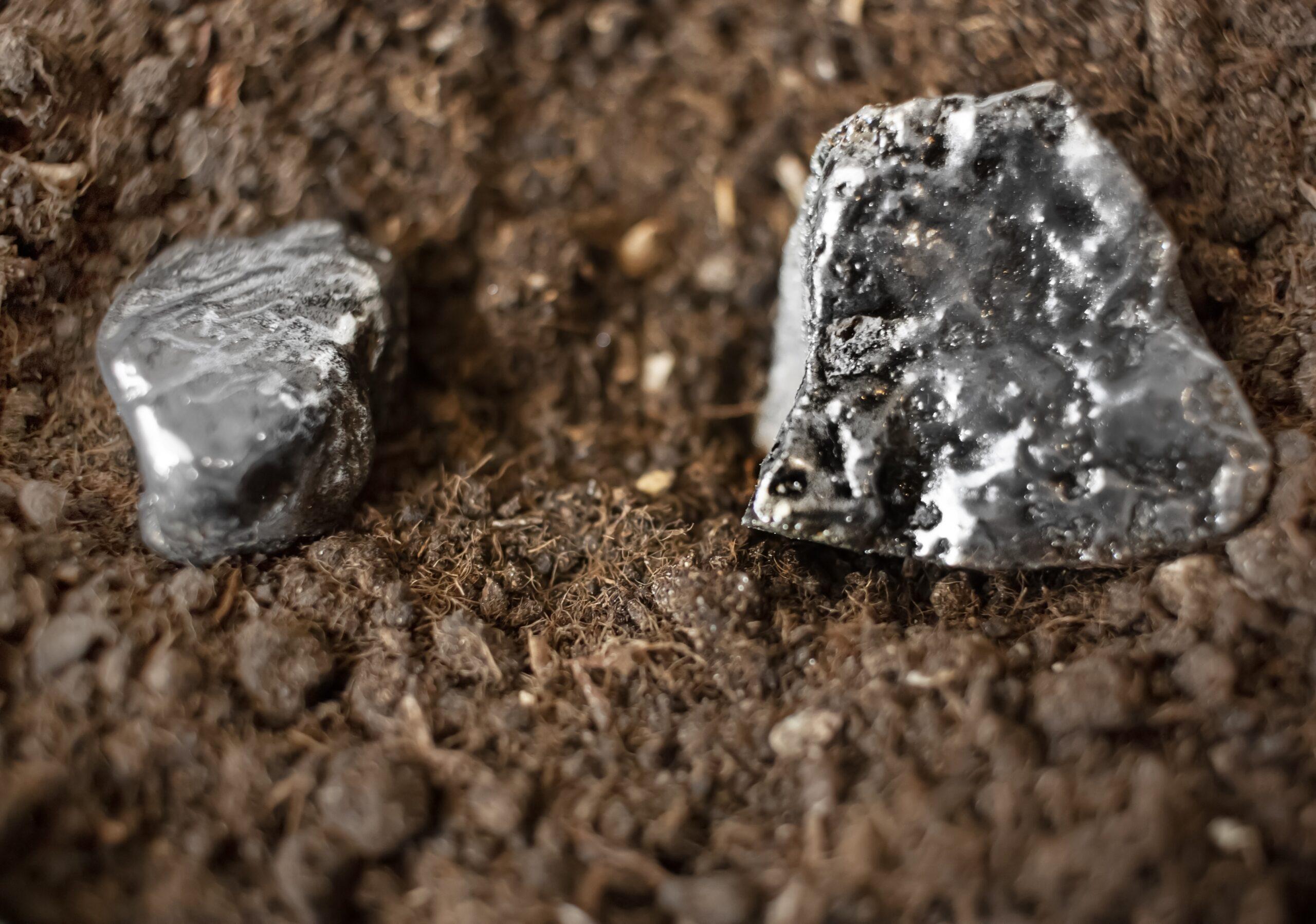
All 118 elements in the periodic table are not created equal ー in fact, only 92 are naturally occurring on Earth, while the remainder has only existed in particle accelerators or in nuclear reactions. Even within this set of 92 natural elements, there are discrepancies between their relative abundances, ore forms, and concurrence with other elements.
The term “rare earth element” is therefore vague and somewhat misleading, as it suggests that these elements exist in fewer quantities than others and are more “rare” as a result, which as we will see is not the case in reality.
Below, we explore what rare earth elements are, where they exist in nature, and how their unique properties and applications make them instrumental to modern industry.
What Are Rare Earth Elements?
Rare earth elements (REEs) are defined as 17 elements: yttrium, scandium, and the lanthanide series (europium, cerium, lanthanum, praseodymium, promethium, neodymium, samarium, gadolinium, thulium, dysprosium, lutetium, holmium, ytterbium, erbium, and terbium).
These elements are described as silvery soft metals, which is why they are sometimes called rare earth “metals,” but note that few, if any, are found in their metallic forms and are instead in the form of metal oxides. These elements are typically found in proximity to each other and exhibit similar magnetic, chemical, electrical, and reactive properties useful for a variety of unique applications.
Despite their rarity and importance, elements like cobalt, lithium, and other relevant metals to modern technology technically do not fall under the “rare earth element” umbrella.
How Rare Are Rare Earth Elements Really?
Despite their name, REEs are actually quite abundant. For example, cerium is the 25th most abundant element, making it more common than both gold and silver.
Where these elements get their “rare” moniker from is not their relative abundance in the Earth’s crust, but from their distinct lack of concentration in geologic deposits. While overall more abundant than other rare elements, REEs are more difficult to extract due to their wide dispersion throughout the Earth, making economically viable mines few and far between.
Where Do Rare Earth Elements in Manufacturing Come From?
REE mines are found all over the globe, but the largest concentrations of mines are generally localized to a few key countries. China leads the world by a large margin, with an estimated 44 million metric tons of rare earth oxide reserves, followed by Vietnam, Brazil, and Russia with around 22 million metric tons each.
As a result of this high concentration, China also has the largest portion of rare earth element production and distribution, taking a 60% share in global rare earth production in 2021 alone, followed far behind by the United States at only 15%.
Deng Xiaoping, former Chinese head of state, in the 1990s stated that “The Middle East has oil; China has rare earths.” China had made REEs an economic priority to their nation, as now most, if not all, modern conveniences rely on these materials.
To illustrate, the screen of the device that you are using to read this article and its various internals are either directly composed of REEs or required REEs in their fabrication and manufacturing and would be impossible to achieve without them.
Gasoline prices are dictated by REEs as they allow for efficient and high-yield refinement of hydrocarbons. This means that your car indirectly relies on them to function as well ー not to mention your car’s catalytic converter, its speakers, and its various electric motors, all of which directly require REEs.
Even the colorful ceramic mug that you drink your morning coffee out of is tied to REEs: its colorants are often made from rare earth elements.
How Are Rare Earth Elements Used in Manufacturing?
These elements find a variety of unique and interesting uses across industry. In fact, many applications rely exclusively on REEs to function.
The uses of these materials range from scientific to metallurgical to even decorative. However, the majority of demand for REEs focuses on magnets, glass, and catalyst applications, which by themselves span various industries. We will explore specific applications in the next sections to show just how vital these materials are to modern life.
4 Rare Earth Element Applications
Below are some of the most impactful applications of REEs in the industry, separated by general application.
1. Magnets
Permanent magnets, or magnets that retain their magnetism absent of an inducive field or source of current, are instrumental to a huge number of applications. REEs constitute the strongest permanent magnets per unit weight known to man and are so useful that they have been dubbed “rare earth magnets” for their popularity.
The four most important REEs for magnetic applications are praseodymium, neodymium, samarium, and dysprosium, where these metals are alloyed with other metals like cobalt or iron to make up for their lack of structural integrity. Examples of permanent rare earth magnets commonly found in the field are neodymium-iron-boron (Nd-Fe-B) and samarium cobalt (SmCo) magnets.
Rare earth magnets find applications such as hard-drive disks, electric motors, automotive power steering, speakers, and a variety of other uses where strong magnetism is required. Wind turbines rely on rare earth magnets to effectively and efficiently generate electricity without the need for additional power input to generate a large magnetic field up in the turbine head.
2. Chemical Catalysis
REEs have interesting chemical properties that give them use in the chemical processing field as catalysts, or substances that increase the speed of reactions. Rare earth chemical catalysts are typically made from the most abundant REEs such as cerium and lanthanum as larger quantities are needed for industrial chemical use, however, others can be used. These catalysts are vital to the manufacturing of a wide range of chemical products, but they are especially useful when working with hydrocarbon refinement and capture for fuel, plastic, and exhaust applications.
REE catalysts are used in the catalytic combustion of fossil fuels, automotive emissions control, the purification of industrial waste air, olefin polymerization, and solid oxide fuel cells, just to name a few major applications. REE catalysts make up important fluid catalytic cracking (FCC) substances that increase the octane rating and yield of gasoline in petroleum refining, which have revolutionized our ability to meet the exponential need of hydrocarbon fuels.
3. High-index Glass and Phosphors
REEs find a variety of uses in optical applications. In glass they impart enhanced optical transmission due to the presence of their tetrahedral geometries, making them useful for low-scattering applications such as gain amplifiers for fiber optic lasers. Digital camera lenses, including those used in smartphones, are composed of up to 50% lanthanum.
They are also used to create phosphors or materials that fluoresce when in the presence of UV or deep-blue light. This may sound scientific, but these phosphors are the foundation of all LED technology we possess, and without REEs, your screen (or any other LED light in your vicinity) would cease to function.
4. Metal Alloys
Metal alloys require a slew of different metals (and even non-metals) to achieve the right blend of material characteristics necessary for a given application. REEs are an important part of the alloying process as they impart unique qualities not provided by other metals. For example, nickel-metal-hydride batteries require lanthanum-based anodes to increase effectiveness. When used in large applications like electric vehicles, they add 10-15 kilograms per vehicle battery.
Another use for REEs in metal alloys is in the formation of magnesium alloys to improve castability, high-temperature strength, flame resistance, corrosion resistance, and creep resistance. Magnesium alloyed with neodymium, gadolinium, dysprosium, erbium, and ytterbium are all used as superalloys in helicopters and high-performance automobiles.
There is still research being conducted on the addition of REEs into alloy blends, and it seems a promising endeavor as they are already improving superalloy characteristics and imparting other beneficial properties in their select metallurgical uses.
Image credit: OMikheeva/Shutterstock