This article was sponsored by Ryson Vertical Conveying Solutions, a U.S. manufacturer of bucket elevators and spiral conveyors.
When a tornado came through the Midwest and dropped a customer’s roof onto a Ryson spiral conveyor, the Ryson service team was able to reconstruct the spiral in place in a few days without having to take it to a warehouse.
“Most competitors would remove the spiral and put a new one in its place,” Ryson President Dave Wineman explained. “Because our equipment easily bolts together and all of our components are standardized modules, we can rework equipment in a day onsite, which prevents customers from the costly expense of having to buy an entirely new machine.”
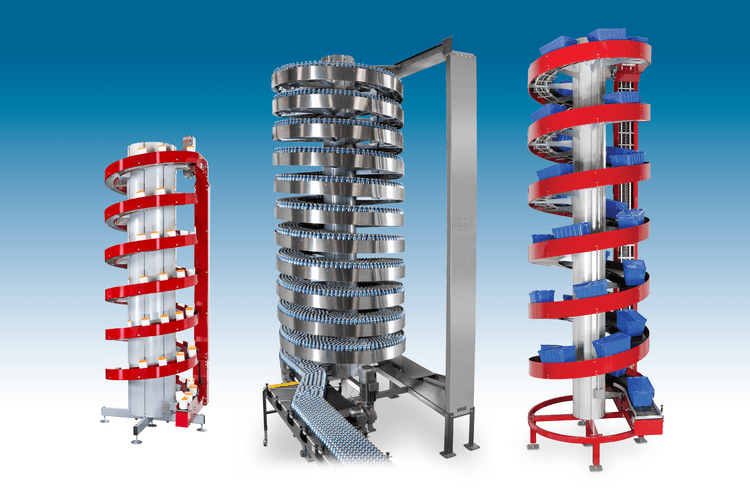
Ryson began operations 26 years ago and is the number one manufacturer of spiral conveyors in the U.S. Specializing in vertical conveyor equipment like bucket elevators and spiral conveyors, Ryson’s products are sustainable, reusable, and 99% sourced in the U.S.
“There was a small niche market for what we now call vertical transportation, and there weren’t many people in the industry to solve problems,” said Wineman. “We thought, ‘Hey, there are some products here that we could probably do well with.’ And now, Ryson supplies over 40 models of spiral conveyors and bucket elevators.”
Thomas Insights (TI): Do you have any other success stories that further demonstrate your company’s quick thinking and innovation?
Dave Wineman (DW): We helped a Pacific Island customer fix a major spiral issue. An integrator company had made a last-minute design change during the design process, and this made it so when the spiral was in place the conveyors didn’t line up properly.
We were able to fly over parts and recondition the spiral so that they didn’t have to change all of their conveyor elevations. Rather than change the installation to match the initial design, our quick response allowed us to adjust the spiral to get it installed the right way.
TI: How do your products differ from the competition?
DW: Spiral conveyors need less floor space than conventional conveyors and are also faster and more reliable. Both bucket elevators and spiral conveyors operate with rolling friction and without any sliding movements or wear strips. This results in less friction and wear, saving both power and maintenance down-time.
One of the biggest advantages of our products is the lower total cost of ownership. The total cost of ownership not only involves the initial equipment cost, but also all costs associated with operation and maintenance. Our equipment comes with visual indicators that help the maintenance department know when they need to perform maintenance, and they can do that predictively rather than reactively. That, combined with the reliability of our products, ensures less unexpected downtime.
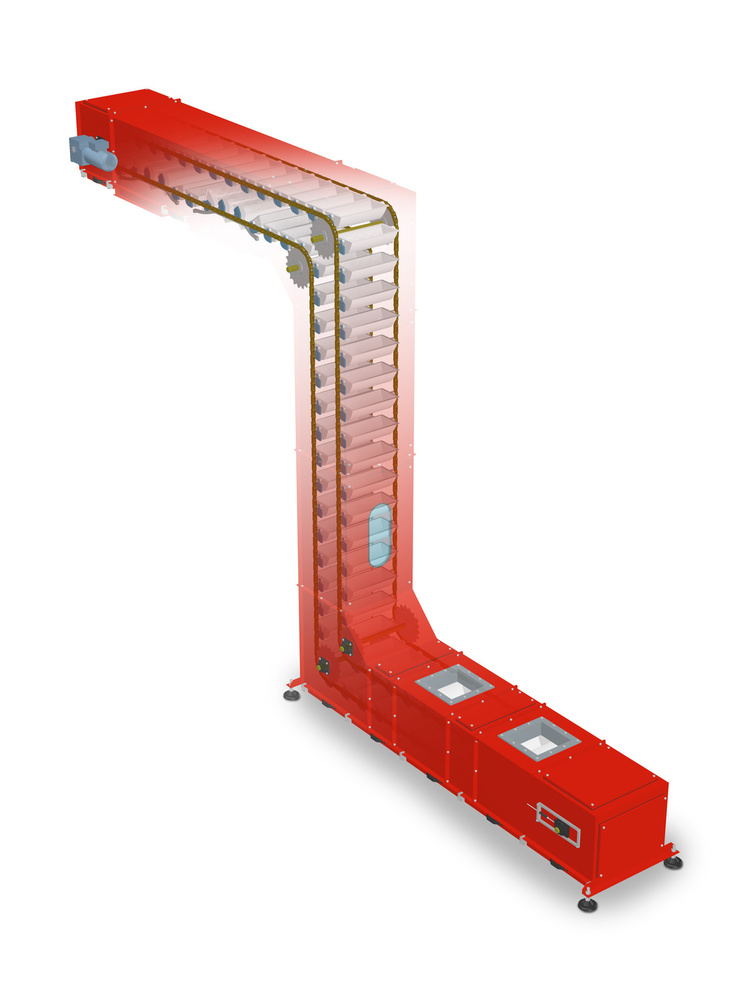
Our spiral conveyors can start and stop fully loaded and facilitate high speed, low noise, and long service life. Our bucket elevators are completely modular, have pivoting buckets, and can have multiple inlets and outlets. They can come in custom configurations, with the most common being the C and Z configurations.
If you look at the lifetime maintenance costs of our equipment, you’ll come out ahead compared to the equipment of some of our competitors. This is primarily because our equipment rolls rather than slides.
Another cost of ownership consideration is our ability to reconfigure a spiral. If a company’s line needs to be changed, it is a simple process to adjust the spiral to new specifications. It is a lot more cost-effective than purchasing a new machine.
TI: How has the rise in e-commerce made you look at your production process differently?
DW: The e-commerce industry has really driven us toward bigger equipment because they need to convey very large products, like kitchen sinks. This industry requires more capabilities and flexibility, and that’s where we’ve made a lot of changes and innovations.
For example, rather than a conveyor that has one entry and one exit, we’ve come up with induction conveyors and diverters that allow customers to load and unload at intermediate elevations. This is particularly valuable in multi-tier pick modules.
Working with the e-commerce market has also forced us to look into speeding some processes up. Our diverters and inverters currently have some throughput limitations, so we are now making changes to accommodate their speed, loading time, and routing requirements.
TI: What trends are you currently seeing in industry and how are they impacting business?
DW: We are seeing a lot of elevation changes in bucket elevators and spiral conveyors. Before, it was very seldom that a customer wanted more than a 30 or 40-foot elevation change. Now, we’re seeing people that want to make elevation changes above 60 feet.
Customers are also moving vertically because they don’t have the square footage anymore. So, we’re seeing a lot of bigger elevation changes and small footprints for the spirals. There’s a limit to how small we can make a spiral because of the load size, but these demands are driving our R&D and helping us grow.
We are also celebrating the 175th anniversary of our parent company, Apollo Group. Ryson has worked with Apollo since our founding, and we became part of the Apollo Group in July 2021. Apollo is a sixth-generation family-owned business with operations in The Netherlands, Thailand, China, India, and now the US, and they were awarded the Royal predicate by the Dutch royal family. Ryson will continue to operate as an American company, but being a part of Apollo gives us a global presence and a better look at supply chain issues, changing demands, and new trends worldwide.