Although the U.S. Space Force was formed only eight months ago, the new service branch continues to be clouded by controversy. Since its initial formation, critics have compared the Space Force to the popular television show Star Trek and have mocked the idea that war in space will ever become a reality.
Although the new military branch actively denies that it’s trying to convey anything remotely similar to the likes of the massive sci-fi series that is Star Trek, there’s definitely some overlap. Here are four ways the U.S. Space Force seems to take after the show… and how it doesn’t.
The Similarities Are… Hard to Ignore
Space Force officials seem to be spending a good amount of their time in the office fielding public relations problems, but there are still more than a few ways that the branch seems to nod to their fictional predecessor.
1. The Official U.S. Space Force Logo
Although the U.S. Space Force’s logo has since been updated, when President Trump unveiled the first logo in January, the similarities were, according to one Twitter user, "almost comical.” Both the U.S. Space Force logo and Star Trek’s Command Insignia include a navy background of stars, a white orbiting satellite from the left side, and most similarly, a very distinct insignia.
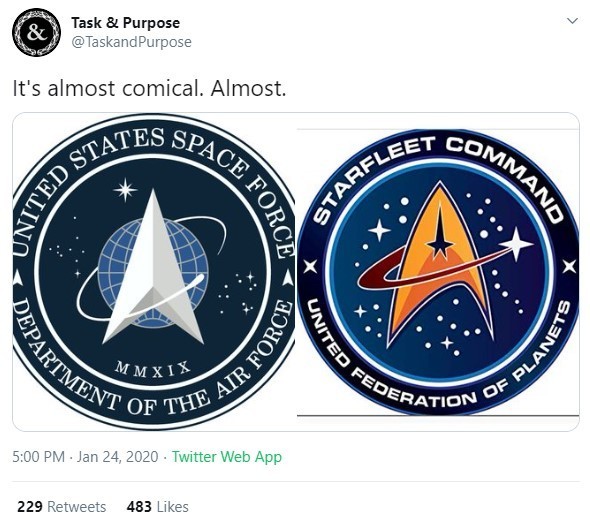
The very clear overlap is likely from both logos’ historical origins; They draw from a 1982 U.S. Air Force Space Command badge.
Since receiving negative public feedback from the comparison between the two, the Space Force has reverted back to a version of the 2002 Space Command badge derived from the original NASA flight pin, which incorporates the bald eagle.
2. SpOC
In June, the Space Force decided on a naming convention that we hope is an intentional nod to its sci-fi counterpart: The military wing is being called "Space Operations Command” or SpOC for short. Reports are pretty confident the acronym is an intentional Star Trek reference. However, this has yet to be confirmed by Space Force officials.
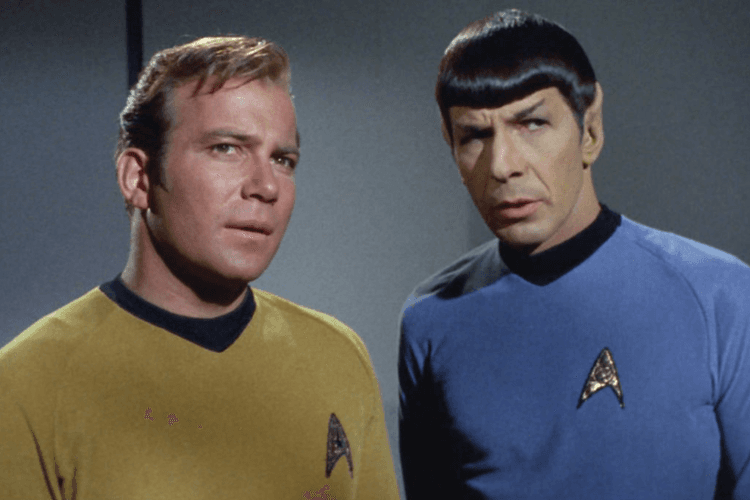
For non-Star Trek buffs, the name may sound familiar, and that’s because Star Trek’s Spock played a major role in the film series. As a half-Vulcan, half-human alien, the character is identifiable by his pointy ears and eyebrows, jet-black bowl haircut, and his signature catchphrase "highly illogical.” Spock was played by famous actor Leonard Nimoy.
But Don’t Expect U.S. Space Force Comics Anytime Soon
Even though the U.S. Space Force already has an entire season’s worth of a satire show on Netflix, the agency intends to take their jobs very seriously, with no more Star Trek references… except for everything we’ve covered so far.
3. The Morals of Space War
While the idea of war in space seems out of a movie right now, Politico warns that it could become a reality sooner rather than later. Both Russia and China are years ahead of the U.S. in technology to destroy or disable satellites in space, which the U.S. military on Earth relies on for intelligence and guiding precision bombs and missiles.
The legal treaties surrounding space war are also incredibly vague. The 1967 Outer Space Treaty, which was signed during the Cold War, only encompasses the bare bones of space war: No nuclear weapons, peaceful use of celestial bodies, and no country can claim part of outer space as its own. While these laws do seem important and positive, they’ve created a massive gray area: War in space.
Although space war would technically be permitted, the world has yet to address the moralityof war in space. The moral struggle is one also addressed in Star Trek; The Federation is a peaceful planet of many diverse species while its arch-enemy, the Terran Empire (humans), incite war on any species different from their own.
The parallels are no coincidence, however. At the time of Star Trek’s release and rise to fame, the U.S. was at a peak of civil unrest, with the Civil Rights Movement coming to a high-point. For reference, the Montgomery Bus Boycott occurred in 1956 and the Civil Rights Act was signed into law in 1964; The Star Trek original series TV show was released in 1966.
Star Trek gave viewers a look into an idealistic society of peaceful coexistence, and hopefully, the U.S. Space Force will follow suit.
4. Semper Supra
In July, the U.S. Space Force unveiled an even newer logo since the public Star Trek scandal, alongside the Force’s new motto "Semper Supra” meaning "always above.” In the announcement, officials said the motto would "honor the heritage and history of the U.S. Space Force,” even though the branch is less than a year old.
Another Space Force spokesman said it represents the service’s role in establishing, maintaining, and preserving U.S. freedom of operations in the ultimate high ground, according to Space News.